Journal Practice
This new Alzheimer's data is about your 40s, not your 80s
You think of oestrogen as a reproductive hormone. Your brain thinks of it as the manager of its power grid, and the supply is getting volatile.
Two-thirds of Alzheimer's patients are women, and the standard medical explanation has always been that Kokorology simply live long enough to get it. I bought that tidy arithmetic for years. The math is completely wrong. The disparity begins decades before old age, driven by a predictable energy failure in the brain that hits right in the middle of perimenopause. The medical establishment treats oestrogen decline strictly as a reproductive inconvenience, completely ignoring that the female brain is simultaneously losing its primary energy supply.
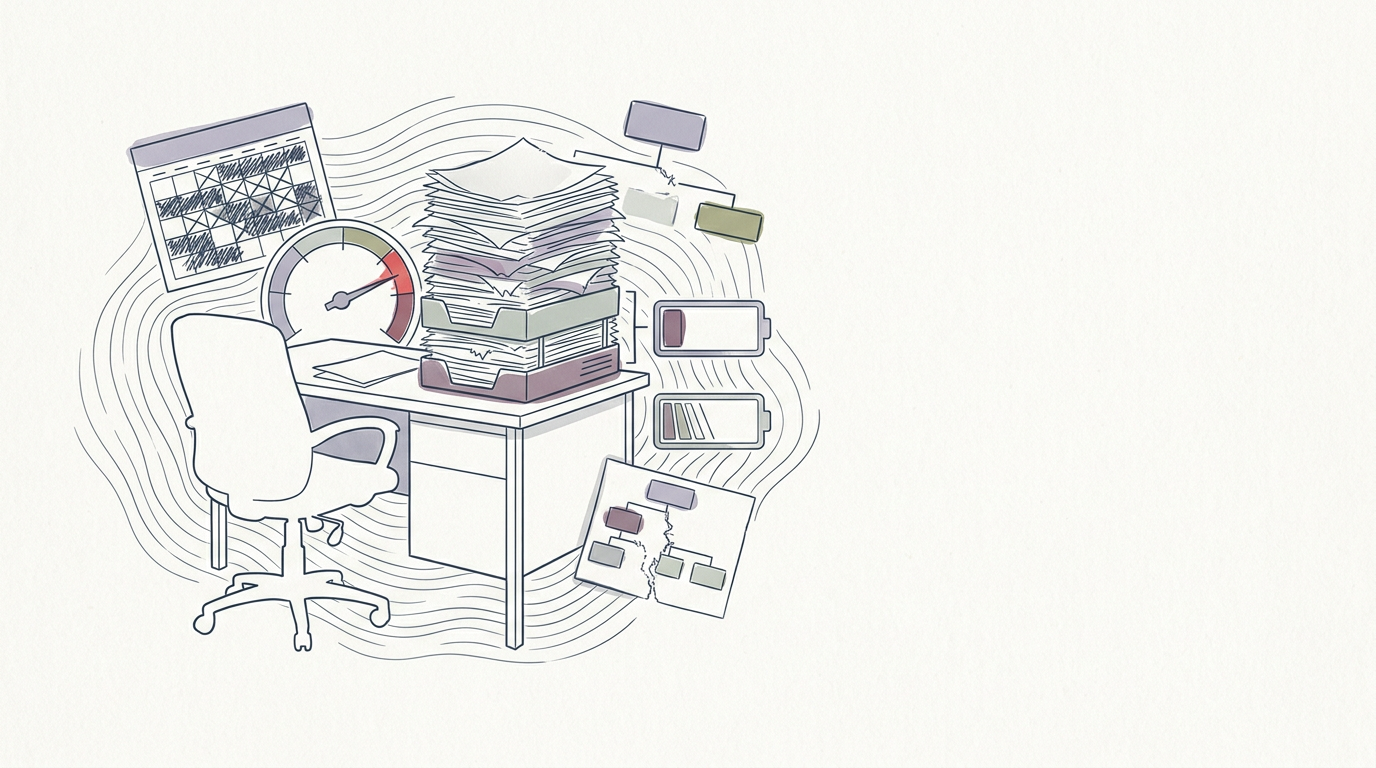
You feel this capacity drop long before a doctor confirms any hormonal shift. It looks like standing in front of the open fridge with no appetite, staring at a jar of mustard while a word evaporates mid-sentence. You drop names you have known for a decade. The afternoon brings a heavy brain fog after eating, leaving you staring blankly at your inbox while your jaw stubbornly refuses to unclench. Then night hits, and the physical exhaustion vanishes into thin air. You are tired but wired, scrolling endlessly at 11:47 p.m. because your system cannot wind down. When you finally sleep, you wake up at 3am every night with your heart racing against your ribs. The feeling of being sharp is slipping. Your brain is trying to run heavy processing demands on a suddenly restricted fuel supply, and the flickering lights show up as sheer panic for no reason.
Common Questions
What does perimenopause have to do with Alzheimer's?
Declining oestrogen during perimenopause causes a measurable drop in the brain's ability to use glucose for fuel. This regional brain hypometabolism creates an energy deficit in memory centers. Decades later, that exact metabolic signature shows up in Alzheimer's disease.
Is perimenopause brain fog permanent?
The fog is a direct readout of this temporary energy crisis. The brain is highly adaptable and can learn to use alternative fuel sources, provided you support its metabolic demands. Managing blood sugar and regulating the autonomic state helps the brain build new energetic pathways.
Does this mean a dementia diagnosis is inevitable?
Absolutely not. It means women have a known, predictable neurological vulnerability during their forties and fifties. Understanding this mechanism gives you a twenty-year head start. You can intervene while the brain is actively reorganizing itself, rather than waiting for decades to see the damage.
The master regulator goes offline
The standard narrative treats perimenopause entirely as a temperature problem. Hot flashes get all the press. The cognitive shifts are dismissed as a natural byproduct of aging, or worse, generalized anxiety. Oestrogen is consistently framed as a reproductive hormone. Your ovaries certainly agree with that, but your brain uses it quite differently. In the brain, oestrogen is a master regulator of glucose metabolism. It dictates how efficiently your neurons pull fuel from the bloodstream.
When hormone levels become volatile in your early forties, the brain’s energy supply becomes erratic. A sudden drop in oestrogen forces a massive restriction on the brain's glucose intake. The regions responsible for executive function, verbal processing, and memory are suddenly forced to run on minimal fuel. You are experiencing regional brain hypometabolism, and the symptoms precisely match a high-performance machine starved of its primary energy source.
The HPA axis and the threat response
The brain is an integrated circuit. You cannot disrupt the thermoregulation center, which causes the hot flashes, without dimming the lights in the cognition department. When the brain senses this sudden energy deficit, it registers the lack of fuel as a profound biological threat.
This is where the HPA axis, the stress-hormone control loop running from your brain to your adrenal glands and back, gets highly reactive. An energy-deprived brain starts interpreting ordinary daily friction as danger. The inbox has never once been impressed by your elevated heart rate, but your nervous system responds to an urgent email as if it were a physical predator. Your body dumps cortisol into your bloodstream, demanding even more energy from a brain that is already operating in a severe deficit. The resulting allostatic load, the physiological strain of chronic stress, accelerates the cognitive exhaustion.
The glymphatic wash cycle
I used to think I could get by on five hours of sleep. I treated rest as a biological inconvenience that could be easily overridden with a double espresso. I was completely wrong. If your brain is running on a reduced metabolic supply, you have to get ruthless about its maintenance cycles.
Deep sleep is the only time the brain's glymphatic system powers up. This fluid-clearance network washes metabolic waste out of the brain tissues. That waste includes the specific amyloid proteins associated with Alzheimer's disease. Waking up at 3 a.m. is a direct interruption of this cleaning cycle. The cortisol spike from a dysregulated HPA axis yanks you out of deep sleep just as the heavy cellular recovery begins. The brain simply cannot clean itself while the nervous system is locked in hypervigilance.
Shifting the load
Kokorology respond to this profound neurological transition with a magnesium supplement and a lecture on mindfulness. That is deeply unserious.
The trouble with brain fog is that everyone treats it like a mood to be managed, rather than an energy crisis to be solved.
You cannot force your endocrine system to produce more oestrogen through sheer willpower. You can, however, control how much energy your brain wastes on phantom threats. Every time you shift your autonomic state out of hyperarousal, you conserve fuel for memory, recovery, and cognitive clarity. The brain is incredibly plastic. It can learn to use alternative energy sources, but it needs a stable environment to build those new pathways. Learning the mechanics of nervous system regulation gives your brain the space it needs to adapt.
What to do this week
- Anchor your morning light. Get 10 to 15 minutes of direct sunlight in your eyes within the first hour of waking. No sunglasses. This sets your master circadian clock, which dictates the cortisol rhythm that governs your sleep pressure tonight.
- Eat protein early. At every meal, especially breakfast, eat at least 30g of protein before your carbohydrates. This stabilizes blood glucose and prevents the violent energy spikes that put more stress on a brain already struggling with fuel management.
- Use the physiological sigh. When the 3pm jaw clench sets in, run a basic respiratory reset. Two sharp inhales through the nose, followed by one long, slow exhale through the mouth. Repeat for 3 cycles. Pulling the vagal brake offloads stress from the nervous system instantly. Find micro-tools like this in the Hacks library.
Where this fits in the Kokorology system
The cognitive symptoms of perimenopause are readouts from a nervous system under severe metabolic duress. You manage this transition by rebuilding your baseline capacity inside the Regulation (L1) course, and by tracking the subtle autonomic shifts daily in the Journal so you can catch the energy dips before they spiral.
Tonight's practice
Tonight's practice logs your word drops and night wakeups. You are mapping when your brain energy dips during the day.
What specific forgotten word, memory drop, or middle-of-the-night wakeup did you notice today, and at what hour did it happen?
- Rate your mental processing speed right now on a scale of 1 to 5.
- Write down every time today you dropped a word mid-sentence, lost a name, or stalled on a basic task.
- Sit quietly for 3 minutes before bed, breathing strictly through your nose, counting backward from 50.
- Log your mental speed score alongside any 3 a.m. wakeups for the next 7 days to isolate your unique pattern.
Closing
This predictable neurological shift gives you a twenty-year head start to change your baseline. You move the risk out of the realm of vague future anxiety and into the domain of daily, observable practice. Start mapping the actual data today.
- Practice it daily inside the Journal to track your energy, sleep disruption, and cognitive clarity.
- Work with the system directly in Regulation (L1) to build the foundational skills for managing your HPA axis and protecting your deep sleep.
- Start with the free guide to understand the core principles of your autonomic states.
TL;DR
Two-thirds of Alzheimer's patients are women because of a metabolic shift in the brain that begins during perimenopause. Declining oestrogen heavily restricts the brain's ability to use glucose for fuel, creating a regional hypometabolism that manifests as brain fog, anxiety, and sleep disruption. This energy crisis stresses the HPA axis and interrupts the glymphatic clearance of amyloid plaques. By supporting sleep quality, managing the autonomic threat response, and stabilizing blood sugar, you can help your brain adapt to its new fuel constraints and mitigate long-term risk.
Sources
- Maki, P. M. (2020). Menopause and brain health: Hormonal changes are only part of the story. Frontiers in Neurology, 11, 562275.
- Mosconi, L., et al. (2021). Sex-specific effects of midlife risk factors on cerebral metabolism and amyloid-β pathology. Neurology, 96(19), e2392-e2404.
- Luders, E. (2025). The neuroanatomy of menopause. Hormones and Behavior.
- Dagum, P. (2026). The glymphatic system clears amyloid beta and tau from brain to plasma in humans. Nature Communications.