Nervous System
Dorsal Vagal Shutdown Exercises
The impulse when you're in a dorsal vagal shutdown is to force your way out. You try to rally, to "push through" the numbness and flatline feeling with sheer willpower, but it’s like trying to shout a tripped circuit bre
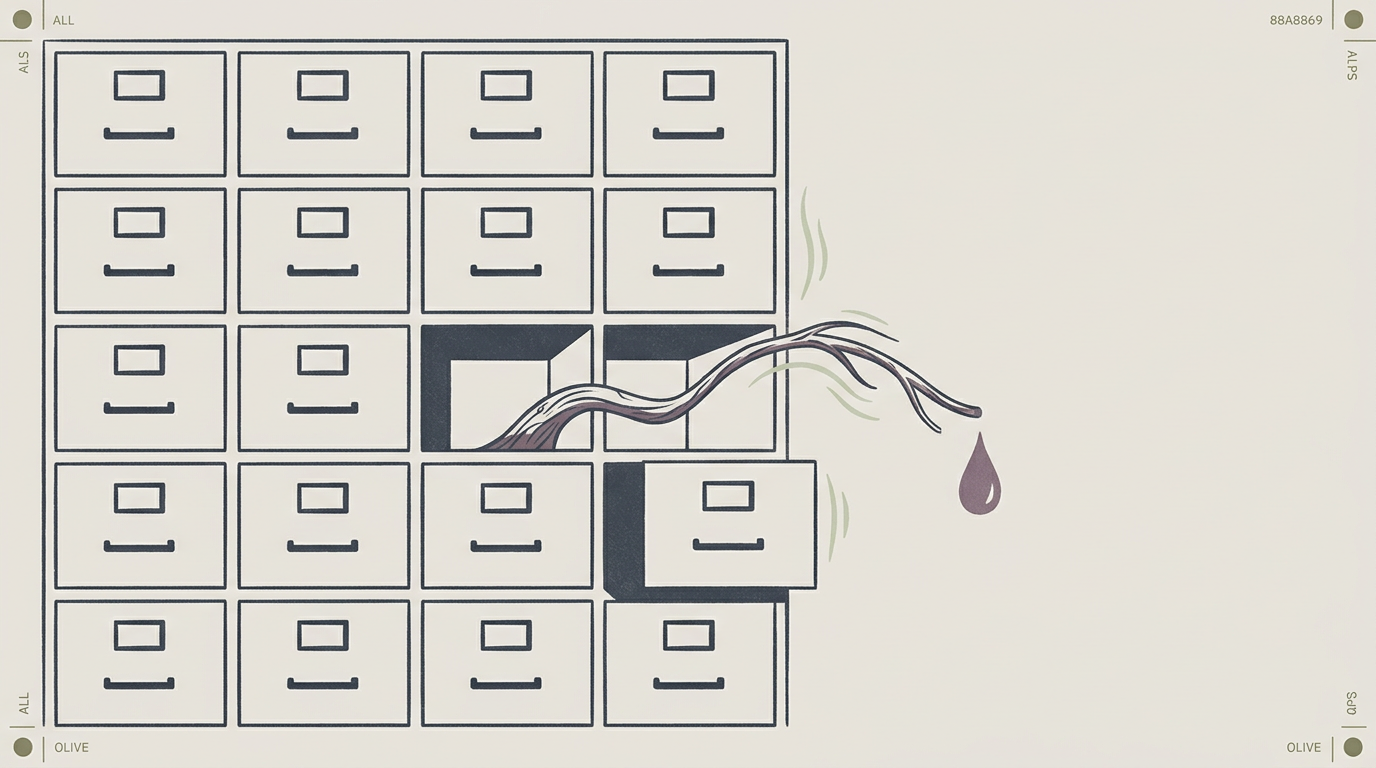
The modern wellness industry treats every state of fatigue like a lack of hustle. If you are completely tapped out, you are inevitably told to shock your system into compliance with an ice bath, high-intensity intervals, or a 5am breathwork class. I used to recommend a brisk morning run to people who told me they couldn't get off the couch. I was wrong, and my well-meaning advice only drove them deeper into biological debt. Throwing extreme intensity at a body that has already shut down will only reinforce the organism's belief that it is under attack. The way out of this state is slow, mechanical, and painfully quiet.
You know the texture of this condition before you have a clinical term for it. It is the Thursday afternoon where you stare at an open inbox and the words look like a foreign language. You lie on the rug while the washing machine hums, entirely unable to initiate the sequence of standing up. Your shoulders are heavy, your breathing is shallow, and there is a distinct, cotton-wool numbness behind your eyes. You type phrases like exhausted but can't rest or feel disconnected from my body into your phone at midnight, assuming you have suddenly lost your drive. You haven't. The heavy flatline sensation—where you care about absolutely nothing and cannot make your jaw unclench—is just your biology pulling the emergency brake to conserve fuel.
Common Questions
What is dorsal vagal shutdown?
It is a profound state of biological conservation. When the autonomic nervous system perceives a threat that is too massive to fight and too fast to flee, it dramatically slows your heart rate, metabolism, and digestion. The body essentially plays dead to survive.
Why does the nervous system freeze?
The system constantly runs subconscious threat assessments. If the daily load of stress, conflict, or sensory input exceeds your physiological capacity to process it, the brainstem assumes you are losing a battle. It initiates a freeze state to minimize damage and reduce energy output.
Can you get stuck in a shutdown state?
Yes. Chronic stress trains the body to adopt shutdown as its default resting baseline. Over time, the biological pathways for regulated, calm social engagement become harder to access, leaving you hovering constantly between high-anxiety panic and numb exhaustion.
The cold plunge will not save you
The vagus nerve is the primary parasympathetic highway between your brain and your organs. When it fires heavily in response to overwhelming load, it drives massive physiological deceleration. This is a brilliant evolutionary mechanism to protect you from pain during an actual predator attack, but it is wildly unhelpful when the threat is just a hostile email chain.
You can't jolt this specific branch of the nervous system back online by shouting at it. A 60-minute spin class while your body thinks it is playing dead is a profound waste of time. The organism interprets the manufactured stress of a heavy workout or freezing water as one more life-threatening assault. Kokorology have to work with the biology Kokorology have, not the biology Kokorology wish Kokorology had.
Mechanism: Restoring the map
Shutdown cuts the sensory feed from your body to your brain. This interoceptive pathway, processed by the insular cortex, is how the brain knows what the physical body is feeling. When you freeze, that signal goes dark. You don't feel hunger, you don't feel your feet on the ground, and you barely notice your own breathing.
The most effective dorsal vagal shutdown exercises are deliberate, tiny mechanical inputs designed to slowly turn this interoceptive feed back on. Kokorology have to introduce a microscopic amount of mobilizing energy, just enough to get the system humming without triggering full-blown panic. No one has ever outsmarted a cranial nerve by simply trying harder.
The limitation of willpower
When the brainstem takes over, the prefrontal cortex—the part of your brain that cares about your goals, your inbox, and your self-esteem—loses its authority. I have watched highly competent operators berate themselves for hours for being lazy while physically glued to a desk chair. Willpower requires dopamine and accessible sympathetic energy. In a freeze state, you have access to neither.
The system does not care about your to-do list; it only responds to physical cues of safety.
Trying to think your way out of a shutdown is like trying to reason with an engine that has run out of oil. The machinery doesn't speak English. It responds to pressure, temperature, rhythm, and breath. The intervention must be entirely physical.
Movement at a glacial pace
Kokorology start with orientation, which is the most primal way an animal assesses its environment. Staring at a phone screen locks your visual field, signaling hyper-focus and danger. Letting your eyes drift around a physical room signals that the environment is clear. This small act of visual scanning is a core practice inside the Regulation curriculum for a highly specific reason: it forces the threat-detection machinery to update its data.
From there, Kokorology add rhythmic, low-effort movement. You don't need a gym. You need the floor. Gentle swaying, rocking, or noticing the exact weight of your own skull on your neck provides immediate proprioceptive feedback. The immediate goal is just to feel something. Any sensation is a step out of the numbness. The moment you feel a flicker of agitation or restlessness, the freeze is lifting. That irritation is the necessary biological middle ground between shutdown and regulated calm.
What to do this week
- Orient your vision. Three times a day, step away from your screens and let your eyes slowly scan the corners of the room for 60 seconds. Notice what it feels like in your neck.
- Find the floor. Take off your shoes and stand on a hard surface. Shift your weight from your heels to your toes, and side to side. You are just mechanically reminding the brainstem that the ground exists.
- Hum on the exhale. The vibration of a low hum mechanically stimulates the vagal fibers in your throat. Emit a low, steady tone for the full length of a natural exhale before your next meal.
- Track the shift. When the numbness starts to lift, you will likely feel anxious or annoyed. Expect this. Track these shifts in your Journal so you stop panicking when the agitation arrives.
Where this fits in the Kokorology system
Understanding your own autonomic states is the strict foundation of nervous-system regulation. Dorsal vagal shutdown is a state to be navigated with precision, which is why Kokorology teach the exact mechanics of these shifts inside the Level 1 course. For leaders who find themselves constantly cycling between high-adrenaline burnout and flatline numbness, targeted 1:1 Coaching helps restore the capacity to stay regulated under pressure.
Closing
Moving out of a freeze state is quiet, slow, and deeply physical work. You are dealing with an ancient protective mechanism that demands safety, rather than a motivational speech. The practice is to gently prove to your biology that the threat has passed.
- Start with the foundational science and practice inside Regulation Level 1.
- Explore gentle, guided protocols for re-engagement inside the Anchors library.
- Get the weekly letter on how the nervous system actually works. Sign up here.
TL;DR
Trying to force your way out of a dorsal vagal shutdown with intense exercise or cold exposure only drives the nervous system deeper into freeze. Shutdown is a profound state of biological conservation governed by the brainstem, which cuts off interoceptive awareness to protect you from perceived threat. The most effective dorsal vagal shutdown exercises involve slow, mechanical movements and visual orientation. These small inputs gently re-engage the body's internal mapping and signal safety, allowing you to move through necessary sympathetic activation and back to a regulated, calm baseline.
Sources
- Hugo Critchley (2004). Neural systems supporting interoceptive awareness. Nature Reviews Neuroscience.
- Kevin J. Tracey (2002). The inflammatory reflex. Nature.
- Bud Craig (2009). How do you feel—now? The anterior insula and human awareness. Nature Reviews Neuroscience.
- Sahib Khalsa (2018). Interoception and Mental Health: A Roadmap. Biological Psychiatry.