Nervous System
Dopamine Cortisol Seesaw
Everyone thinks they want more dopamine. It’s been sold to us as the molecule of pleasure, the chemical key to happiness, the reward you get for a job well done or a chocolate bar well-eaten. This is a profound and unhel
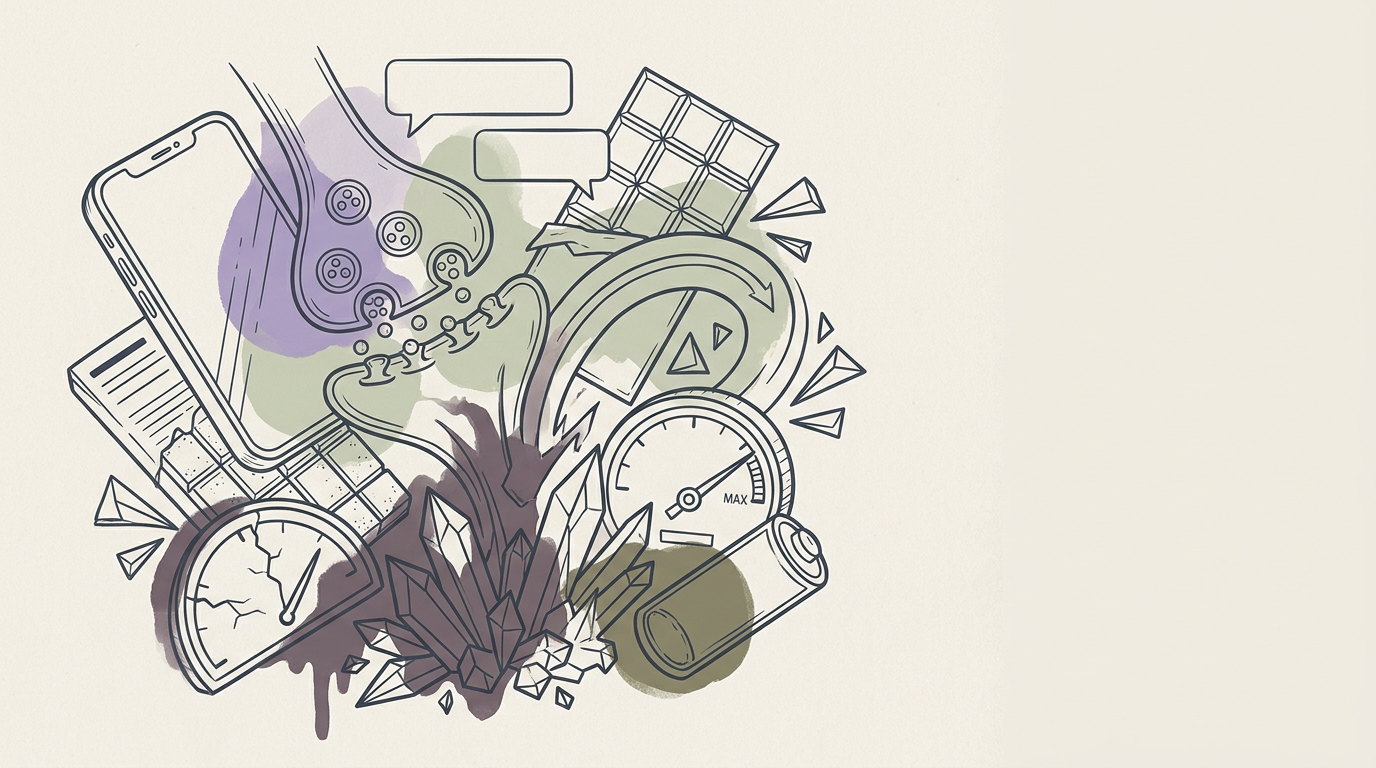
I'm calling it. The supplement aisle has turned dopamine into a productivity hack, selling it as the ultimate molecule of pleasure and the secret to getting things done. Isolating this reward chemical from the actual physical effort required to earn it triggers an immediate biological backlash. The dopamine cortisol seesaw is a strict mechanical loop. When you artificially spike the anticipation of a reward, your nervous system responds by flooding the floor with stress hormones to force you back down to baseline.
You know the exact physical texture of this drop. It hits at 3pm when you’ve been toggling between four browser windows, waiting for a ping that finally arrives, and suddenly you feel entirely hollow. You are tired but wired, staring blankly at a screen with a jaw that won’t unclench and a weird buzzing sensation behind your eyes. You feel anxious for no reason, pacing to the kitchen to open the fridge even though you have zero appetite. At midnight, after hours of scrolling for one more hit of novelty, you are exhausted but can't rest, your heart racing when you lie down. You assume you just lack discipline. What you are actually feeling is your autonomic nervous system slamming the brakes on a synthetic high, deploying a massive flush of stress chemistry to clean up the mess of an unearned peak.
Common Questions
What is the dopamine cortisol seesaw?
It is the automatic mechanical link between your motivation circuits and your central stress response. A sharp, rapid spike in dopamine from a screen or a sugar rush signals a state of high arousal. To regain stability, your body counters this with a surge of cortisol, leaving you feeling anxious and flat.
Why do I feel anxious after scrolling on my phone?
Your nervous system pays for the immediate high of novelty with a compensatory stress response. The anticipation triggers the release of cortisol to bring your system back down to its baseline state, but the landing is often rough. This leaves you with a lingering, low-grade physical panic long after you put the phone away.
How do I stop waking up at 3am tired but wired?
You have to stabilize your daytime chemical spikes. When you ride a roller coaster of fast, low-effort reward hits all day, your cortisol rhythm becomes completely dysregulated. By the time you sleep, your central nervous system is still deeply sensitized to threat, causing you to snap awake when you should be in deep recovery.
The mechanism of wanting
The optimization crowd sells dopamine as the feeling of arrival. In reality, the chemical strictly governs the anticipation of the target. It gets released to make you cover ground and find food, and once the task is complete, the levels drop. When you stimulate this circuit through a phone screen, a flash sale, or an endless feed, you create a perpetual state of wanting. You're spinning the neurological machinery of pursuit while sitting perfectly still on a sofa.
Your brain registers this unearned spike in arousal as an anomaly. The HPA axis—the loop running from your brain to your adrenal glands and back—takes over to manage the perceived instability. It releases corticotropin-releasing hormone, the biological green light for a cortisol flood. This is homeostasis in action. Your system assumes that if you're highly stimulated, a massive physical demand is imminent. It braces for impact. The ensuing flatness, the sudden irritability after a day of online shopping, is simply your biology enforcing gravity.
A fundamental regulatory system
Kokorology're constantly messing with this circuitry as if it only affects the mood. A recent Danish study out of the University of Copenhagen found that altered dopamine receptor availability is a significant factor in autism for adults. This highlights exactly what is at stake. Dopamine is a core mechanical driver of how the brain filters sensory inputs and regulates the entire nervous system. When you flood those receptors with cheap stimulation, you degrade your baseline capacity to handle ordinary life.
I used to think my afternoon crashes were a time-management problem. I'd sit at my desk, completely drained, and try to fix it by blocking out my calendar in 15-minute increments. My locus coeruleus—the tiny cluster of cells acting as the brain's main alarm bell—was completely sensitized. Dopamine and cortisol were cross-talking in my amygdala, making my startle response so exaggerated that a Slack notification felt like a physical blow. I was relentlessly on guard. Every protocol I teach, I tested on myself first, and the hardest lesson was realizing that trying to schedule my way out of physiological static was just making the static louder.
The fatigue of the phantom chase
The modern environment separates the reward from the physical exertion required to get it. When you buy something online, the dopamine hit arrives instantly, but your body hasn't moved. When you scroll through a feed, your brain processes thousands of novel social inputs, but you are alone in a room. This mismatch creates an enormous allostatic load, which is the cumulative wear and tear on your body from constantly managing stress.
Nature magazine recently published a piece on PhD candidates facing severe academic burnout, focusing heavily on strategies for neuro-regulation. When the brain is locked in a high-demand, low-physical-output state, it eventually shuts down the motivation circuits to force you to rest. You hit a wall because your system is protecting you from burning out your own neurochemistry.
Wearables and the anxiety loop
This is where the habit trackers and the biometric rings actually do more harm than good. You experience a brutal afternoon crash, you feel terrible, and you immediately consult a piece of technology to confirm how terrible you feel. Your wearable tells you your readiness is low, which triggers a fresh spike of cortisol, guaranteeing that your sleep pressure will be completely warped by the time you go to bed.
Staring at a recovery graph at 3 a.m. is just a new flavor of insomnia.
Passive tracking, when your nervous system is already highly sensitized, just feeds the threat response. It adds performance anxiety to a physiological function that is supposed to be automatic. Accumulating more data when you are exhausted achieves nothing. The system requires tactile, physical signals of safety to let the stress chemistry clear. If you find yourself holding your breath while looking at a sleep score, the tool has become the stressor.
Re-linking effort and reward
The fix is entirely mechanical. You have to put the effort back in front of the reward. When you get dopamine from genuine exertion, like a long walk or completing a difficult physical task, the nervous system processes it differently. The high is sustained, and the cortisol response is blunted because the physical movement itself helps clear the stress chemistry.
I've stopped recommending dopamine fasting. Sitting in a dark room avoiding stimulation usually just creates a different kind of hypervigilance. You need to change the sequence. You have to earn the peak through movement or focus, which trains the predictive circuits in your brain to associate the chemical release with stability rather than randomness.
What to do this week
- Introduce an effort gradient. Re-sequence one daily habit so the effort precedes the reward. Walk for twenty minutes before you drink the coffee. Read a dense article before you open a social feed. You have to teach your predictive circuits to associate focus with the chemical release.
- Run a daily state audit. For three days, notice where the sharpest spikes are coming from. The ping of the inbox, the one-click checkout, the sugar in your afternoon tea. Awareness of the trigger is required before you can intercept the autonomic shift.
- Schedule 15 minutes of nothing. Sit in a chair without a podcast, a screen, or a book. Allow your nervous system's baseline static to actually surface. It will likely feel deeply uncomfortable on the first day, which tells you exactly how high your daily arousal levels are running.
- Anchor the evening drop. Before your system gets a second wind of late-night cortisol, give it a hard physiological signal to down-regulate. Dim the overhead lights at 8pm. Read a physical book.
Where this fits in the Kokorology system
This loop is a perfect example of how behavioral symptoms are driven by underlying physiological states. Understanding the dopamine cortisol seesaw is foundational to the work Kokorology do in Nervous System Regulation. Rebuilding a healthier autonomic rhythm requires the kind of consistent, tactile daily practices Kokorology call Anchors.
Closing
The goal is to stop playing your neurochemicals against each other in a way that burns out your capacity. It takes deliberate physical signals to step off the seesaw and restore a stable baseline.
- Start with the foundational protocol inside the Cortisol Reset.
- Practice daily awareness with the Kokorology Journal.
- Continue rebuilding your capacity in the Performance course.
TL;DR
Chasing continuous dopamine highs from screens, sugar, and shopping creates a severe physiological backlash. The nervous system counters these unearned, high-arousal spikes with a massive release of cortisol to force the body back to baseline. This dopamine cortisol seesaw leaves you feeling simultaneously wired and exhausted. Breaking the cycle requires re-linking physical effort to your rewards and using tactile signals to clear the accumulated stress chemistry, restoring a stable autonomic rhythm without relying on passive data tracking.
Sources
- Barrett, Lisa Feldman (2017). How Emotions Are Made: The Secret Life of the Brain. Houghton Mifflin Harcourt.
- Lupien, Sonia J. (2009). Well Stressed: The Ultimate Guide to Managing Stress, Finding Balance, and Growing From Your Experiences. John Wiley & Sons.
- Sinha, R. (2008). Chronic stress, drug use, and vulnerability to addiction. Annals of the New York Academy of Sciences, 1141, 105–130.
- Moriguchi, Y. (2023). Dopaminergic dysfunction in the prefrontal cortex and the pathophysiology of long COVID. Molecular Psychiatry, 28(11), 4487–4498.
- Videnskab.dk (Health) (2026). Danish study links dopamine imbalance to autism in adults.
- Nature News (2026). PhD burnout is real; Nature shares strategies for neuro-regulation.