Research
Daylight Movement Nighttime Stillness
Insomnia is rarely a night problem. It is a daytime debt the body collects after dark. Move when it is bright, and the dark gets quiet.
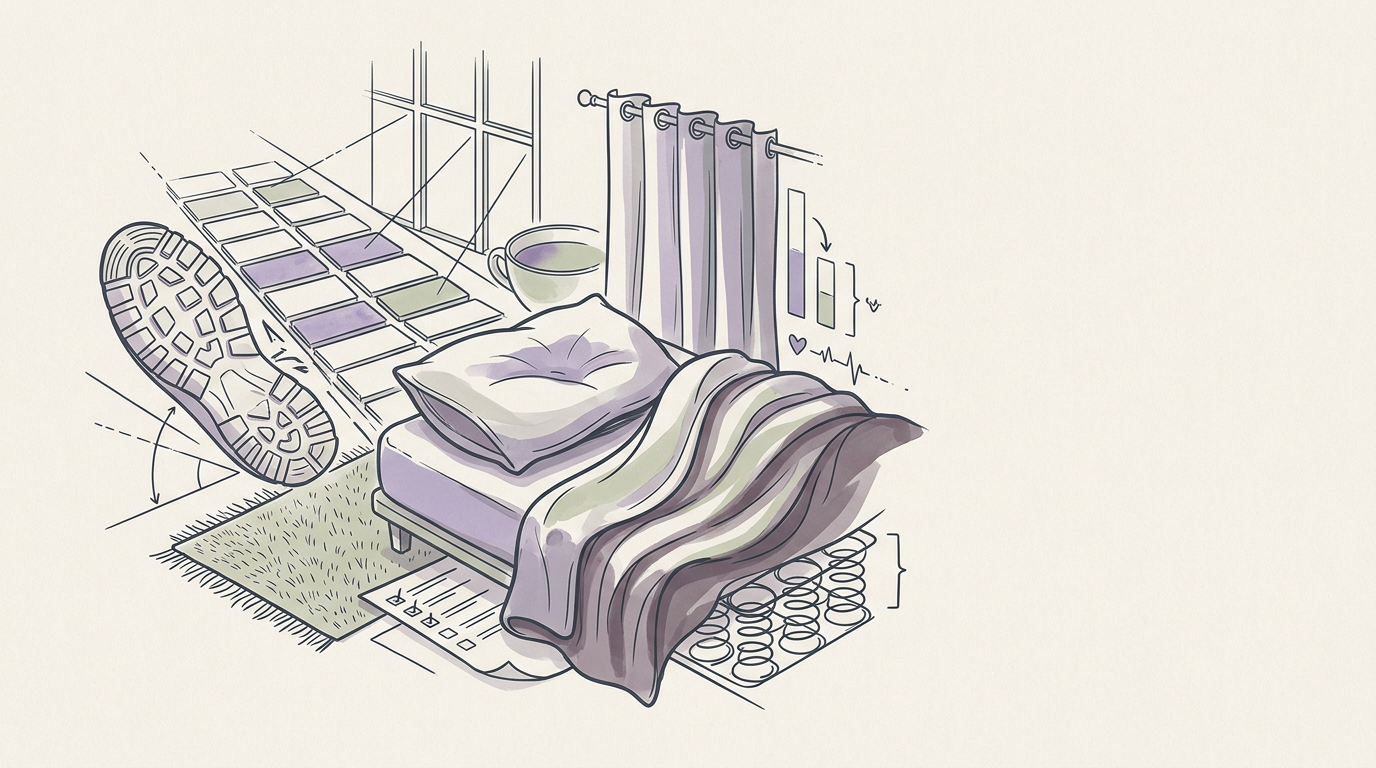
The supplement aisle has turned 11 p.m. into a hostage negotiation. Kokorology've politely agreed that if you are staring at the ceiling, you need a heavier blackout curtain, a more expensive tea, or a guided meditation to trick your brain into shutting down. You don't need to trick the brain. Sleep is a delayed response to the signals of daylight movement and nighttime stillness, and those signals are either sent by 2 p.m. or they aren't sent at all.
The sun sets, you finally close the laptop, and a strange, buzzing static takes over your limbs. You are entirely depleted, yet your jaw won't unclench and your mind is running laps around the things you forgot to say on the afternoon call. You drag yourself to bed hoping for a clean break, but instead you just lie there, can't sleep even though exhausted. Your eyes burn, but your heart rate thumps against the mattress. When you finally drift off, it doesn't hold; you wake up at 3am every night with a jolt of adrenaline that feels completely unearned. You stare at the clock, frustrated that your body refuses to do the most basic biological task. It is the classic tired but wired state, and it happens because your nervous system has no idea what time of day it actually is.
Common Questions
Why does trying to sleep make it worse?
Trying to force a biological state registers in the body as a threat. The moment you get frustrated about being awake, the sympathetic nervous system kicks in to handle the perceived emergency. It dumps cortisol and adrenaline into the bloodstream, which is the exact chemical cocktail that blocks the transition into rest.
Do I need to exercise hard every day?
The master clock in the brain requires robust environmental cues, not necessarily a high heart rate. Short bursts of walking, standing by an open window, or taking a call on the pavement provide the ambient light and proprioceptive data the circadian system requires to confirm that the sun is up.
What if I work night shifts?
The underlying machinery remains identical; you just have to manually override the sun. You create a synthetic day using intense, bright light during your waking hours, and an absolute void of light when it is time to rest. The brain responds to the strongest contrast signal it receives.
The morning light mandate
I've stopped telling clients to evaluate their bedtime routines before Kokorology look at their mornings. The most potent cue for the entire circadian rhythm is bright, natural light hitting the retina in the first hour of waking. Your phone screen delivers precisely zero of the light intensity the suprachiasmatic nucleus—the master clock in the hypothalamus—needs to suppress daytime melatonin and set a timer for its release 14 hours later. I used to assume the exact time of day didn't matter as long as I got outside eventually, but the system relies on that initial morning contrast. Without that decisive cue, the transition to sleep at night feels incredibly vague.
Movement as a timekeeper
If light sets the baseline, movement confirms it. Your body clock does more than live in your brain; peripheral clocks operate in your liver, pancreas, and muscle tissue. When you sit completely still for eight hours under fluorescent office lights, those peripheral clocks lose their synchronisation with the brain. A 15-minute walk at lunch does more than burn energy. It provides a sharp, undeniable signal to the autonomic nervous system that you are in the active phase of the day. Kokorology have specific tools for this inside Daily Practices because telling your physiology it is daytime is a prerequisite for telling it to shut down later.
The biological mandate for stillness
For years, I treated sleep as a passive state of rest. In reality, it is a highly active biological sweep. During deep sleep, brain cells physically shrink, opening fluid channels that allow the glymphatic system to wash away metabolic debris, including amyloid-beta proteins. This clearance mechanism is wildly active during sleep and almost completely dormant while you are awake. The brain can process sensory input from the world, or it can physically flush metabolic waste. It cannot run both programs simultaneously.
The night is an echo of the physiological signals you sent during the day.
Conflicting data at 9 p.m.
You can't expect the brain to initiate shutdown procedures when the digestive tract has just been handed a massive processing job. Eating a heavy meal late at night forces the liver and pancreas to boot up for active duty. The suprachiasmatic nucleus is calling for rest, but the gut is signalling a high-energy demand. This internal desynchronisation drives up core body temperature and heart rate, making the deep, slow-wave stages of sleep physically impossible to reach. Aligning your food intake with daylight is a foundational practice in basic nervous system regulation.
What to do this week
- Stand outside for 15 minutes within an hour of waking. No sunglasses, no window glass. Just direct daylight hitting the eye.
- Walk for ten minutes in the middle of the day. Give the nervous system a secondary contrast signal that the sun is up.
- Finish your final meal at least three hours before lying down. Let the digestive organs finish their cycle before the brain attempts its own clearance process.
Where this fits in the Kokorology system
Seeing the body as a network that requires clear environmental cues is the basis of the approach. Kokorology map out the exact daily cadence for this inside the Sleep Anchor, which translates these mechanisms into a practical daily rhythm.
Closing
The goal is to stop wrestling with your biology in the dark. Give the nervous system the stark daytime data it actually needs, and the nighttime drop in arousal happens on its own.
- Work with the complete protocol in the Sleep Anchor.
- Continue inside the Performance course for deeper nervous system mechanics.
- Get the weekly field notes via the free Kokorology newsletter.
TL;DR
Good sleep is a delayed output of daytime signals. It relies entirely on the data you provide while the sun is up. The brain’s master clock requires bright morning light to set a 14-hour timer for rest. Daytime movement and properly timed meals reinforce this circadian rhythm, allowing the nervous system to shift down naturally after dark. This cycle of daylight movement and nighttime stillness enables the deep sleep phases where the brain physically flushes out metabolic waste. Fix the day, and the night takes care of itself.
Sources
- Dagum, L. (2026). The glymphatic system clears amyloid beta and tau from brain to plasma in humans. Nature Communications.
- Foster, R. (2020). Life Time: The New Science of the Body Clock, and How It Can Revolutionize Your Sleep and Health. Yale University Press.
- Nedergaard, M. (2013). Sleep Drives Metabolite Clearance from the Adult Brain. Science.
- Panda, S. (2018). The Circadian Code: Lose Weight, Supercharge Your Energy, and change Your Health from Morning to Midnight. Rodale Books.