Journal Practice
A Cycle Diary for Nervous-System Patterns
The advice to keep a cycle diary is usually sold as a fertility tracker with better fonts, a pastel-coloured log of your body’s most predictable rhythm. This is a profound failure
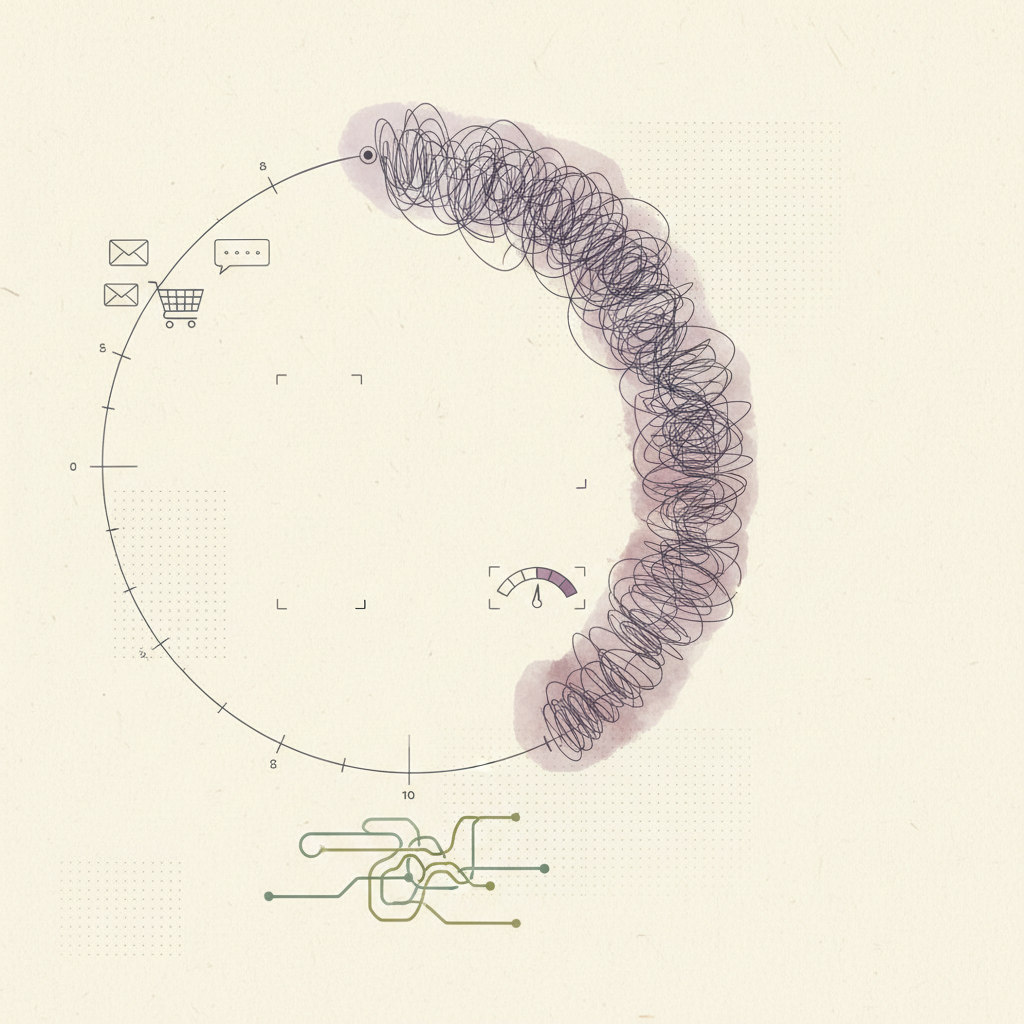
The fertility industry built the cycle diary to track menstruation. I stopped using it for that years ago. A capacity log tracks the autonomic nervous system—the background machinery dictating how much stress you can handle today before the system gets overloaded. The fluctuations in that system have almost nothing to do with the moon, and everything to do with allostatic load.
You've already felt the rhythm. You just call it a bad week. It starts with the open fridge and zero hunger, staring at shelves while the compressor hums. You feel anxious for no reason, the kind of ambient dread making every email feel like a threat. You push through it, drink a second coffee that doesn't do a thing, and hit 3pm with a jaw that refuses to unclench. By evening, you're tired but wired, endlessly scrolling at 11:47pm because your system forgot how to power down. The next day, you experience brain fog after eating a normal lunch, wondering why your capacity feels completely unreliable. You chalk it up to a lack of discipline. Your machinery is just cycling through a predictable drop in resources.
Common Questions
What is a cycle diary for the nervous system?
It is a daily ledger of your autonomic capacity. You track the recurring patterns in your energy, focus, and physical tension to map how your nervous system handles stress over a month. The log gives you a predictive map of your rhythm.
Can men use a cycle diary?
Absolutely. Every human runs on biological rhythms. You have circadian and ultradian cycles governing alertness, digestion, and cognitive load. Tracking the recurring patterns in your baseline state gives you the same predictive intelligence, regardless of hormonal drivers.
How do I start tracking my capacity?
You write down one number and one physical symptom at the same time every day. You look for the day your score consistently drops, and you move heavy cognitive tasks away from that afternoon.
The Biology of the Drop
The supplement aisle sells a flat line of boundless energy. I spent my twenties chasing that baseline. I bought the green powders and the sleep trackers, assuming a dip in output meant I was doing something wrong. I don't do that anymore. I've since learned that biology requires oscillation. Your capacity to handle stress changes constantly based on hormonal shifts, sleep architecture, and immune activity.
When oestrogen drops or cortisol peaks, the game board changes. The same Monday meeting that feels manageable on day ten of your cycle triggers a full sympathetic stress response on day twenty-four. The meeting remained identical. Your available resources shrank.
The Prediction Machine
The brain functions as a prediction machine. It constantly makes bets about the metabolic resources you'll need for the next hour based on past data. This internal surveillance network is interoception. When the brain guesses correctly, you feel fine. When the prediction fails, it generates a prediction error. You experience that error as sudden fatigue, a spike in heart rate, or the overwhelming urge to cancel weekend plans.
If you ignore the small signals of a tight chest or a sudden craving for sugar, you feed the brain terrible data. A capacity log forces you to capture the actual state of the body before the prediction error happens.
The Pattern Recognition
I track my capacity the way I track the weather: strictly for the conditions. Knowing that I reliably lose verbal fluency on the third day of a work trip changes how I schedule my flights. I used to brute-force my way through those afternoons. Now I just block the calendar.
The fatigue is a biological boundary, and the inbox has never once been impressed by your heart rate.
That shift from constant reaction to deliberate planning forms the core of nervous-system regulation. You finally start looking at the calendar before you question your character.
What to do this week
- Note your energy on a scale of 1-10 at 3pm for seven days.
- Add one word describing the physical state of your body (e.g., heavy, buzzing, hollow).
- Schedule a 15-minute block of zero input on the day you typically crash. No podcasts, no screens. Just let the system idle.
Where this fits in the Kokorology system
A capacity log serves as the baseline awareness practice inside the Journal. The data you gather dictates which Anchors you need for rapid regulation, and highlights the chronic patterns Kokorology dismantle inside the Regulation L1 course.
Tonight's practice
This practice starts your capacity log. You'll track your energy at the same time every day to see your real pattern.
On a scale of 1 to 5, what is your available energy right now, and what physical sign told you that number?
- Sit on the edge of your bed and rate your current energy on a scale of 1 to 5.
- Locate the strongest physical sensation in your body right now—a tight jaw, cold feet, or a heavy chest.
- Set a timer for 2 minutes and breathe strictly through your nose, letting the exhale run slightly longer than the inhale.
- Write the energy number and the sensation in your notebook.
- Repeat this at 9pm every night this week.
Closing
Kokorology track a lot of useless metrics. You don't need more of those. Start tracking the one that actually dictates how your Tuesday goes.
- Start mapping your patterns this week inside the Journal.
- If your baseline remains consistently depleted, begin the repair process with The Reset.
- Go from tracking to training with the core curriculum in Regulation.
TL;DR
A cycle diary serves as a daily ledger of your nervous system's capacity to handle stress. By logging recurring patterns in your energy, focus, and physical tension, you build a predictive map of your autonomic rhythm. This data allows you to anticipate drops in capacity and adjust your load before you hit burnout. Tracking interoceptive signals changes unpredictable fatigue into a manageable biological schedule, allowing you to stop fighting your baseline and start working within it.
Sources
- James W. Pennebaker (2023). Journaling and the nervous system: from expressive writing to affect labeling. Curated meta-analyses and primary studies (1986–2023).
- Melis Yilmaz Balban (2023). Brief Structured Respiration Practices Enhance Mood and Reduce Physiological Arousal. Cell Reports Medicine.
- Hugo Critchley (2004). Neural systems supporting interoceptive awareness. Nature Neuroscience.
- Herbert J. Freudenberger (1974). Staff Burn-Out. Journal of Social Issues.