For Coaches
Coaching the Freeze Response Without Retraumatising
The freeze response is a state of high arousal and physical immobilisation that requires careful dosing of sensation and precise autonomic regulation.
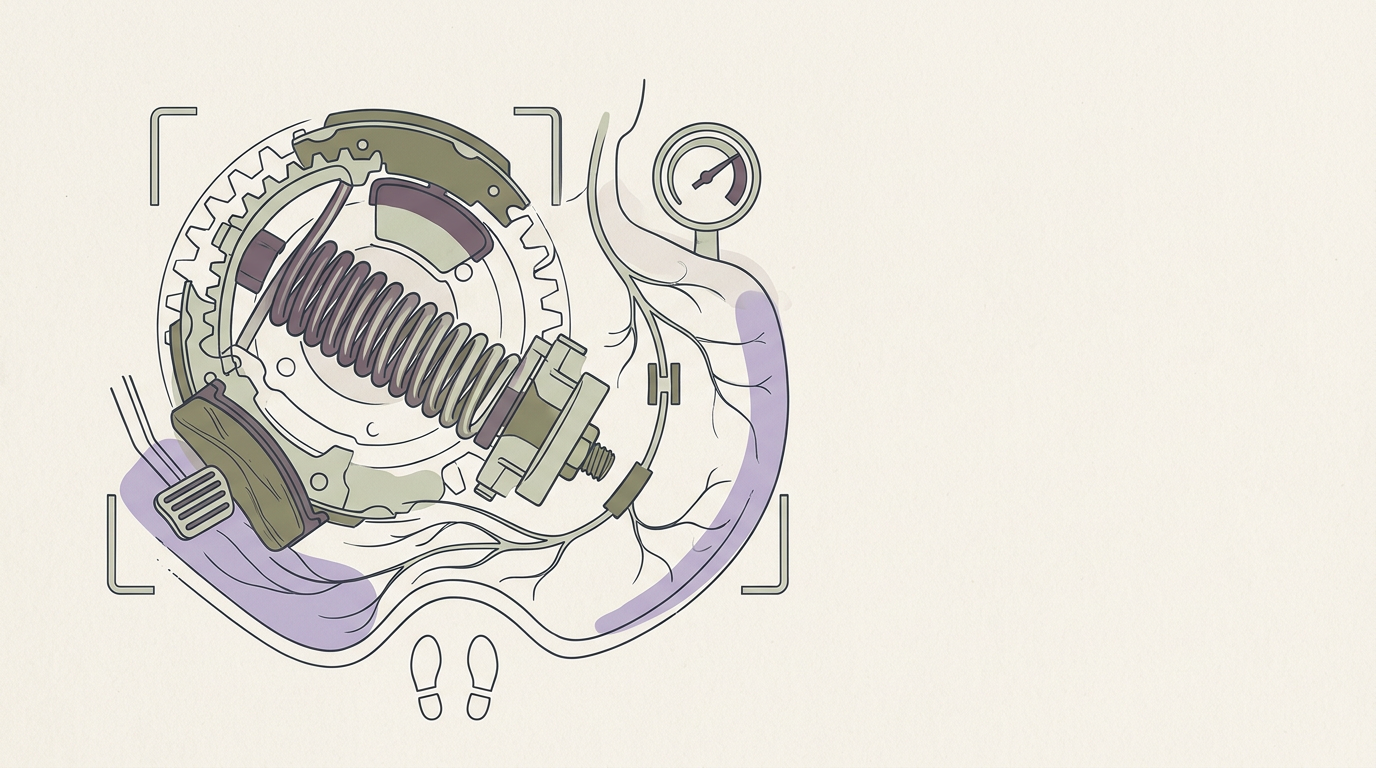
I used to treat a silent, unblinking client as a puzzle I needed to solve with better coaching questions. I thought their sudden numbness was a mindset block requiring motivation and a gentle push. I’ve stopped doing that entirely. The freeze response is a high-cost survival manoeuvre running far below conscious thought, driven by a nervous system that has detected an overwhelming threat. When a client goes completely blank on a call, their autonomic machinery has initiated a metabolic emergency brake.
You know exactly how this feels in the room. You ask a standard question about their goals, and their eyes glaze over. They tell you they feel anxious for no reason, or they report being tired but wired, unable to summon a single thought. You watch their shoulders creep up toward their ears, noticing the rigid stillness in their posture. They stare at the webcam, completely motionless, trapped in a state where they're exhausted but can't rest. As the coach, you feel the sudden, uncomfortable urge to fill the silence, sensing your own chest tighten as the session grinds to a halt. The client hasn't decided to ignore you. Their brain has temporarily revoked their access to their own internal filing system.
Common Questions
What is the freeze response in a coaching context?
It represents a specific state of autonomic regulation where the body hits the brakes and the accelerator simultaneously. High-arousal energy remains trapped inside total physical immobilisation. The client experiences terrified stillness and a complete inability to voluntarily move or think through the current challenge.
Why does pushing a client cause harm?
Forcing someone to take action during a shutdown validates their body's assessment of severe threat. The nervous system interprets the pressure as further danger, deepening the immobilisation. This pressure increases feelings of helplessness and actively erodes the trust required for actual therapeutic progress.
What does this look like physically?
The shift happens fast. You'll observe a sudden drop in vocal inflection, a fixed stare, and extremely shallow breathing. The client often reports feeling numb or abruptly disconnected from the conversation they were just leading.
The Physiology of Trapped Energy
Kokorology train coaches to look for engagement and action. Kokorology see stillness and assume the client has checked out. The reality involves a massive internal energy spike with zero motor execution. The sympathetic nervous system is running hot—pumping stress hormones and elevating heart rate—while the parasympathetic dorsal vagal complex enforces total physical restraint. The result is a system vibrating with trapped survival energy. Trying to motivate someone to take action from this state is equivalent to screaming at a frozen laptop screen. The hardware doesn't respond to a louder voice. the role as practitioners involves finding a way to gently release the brake so that the enormous energy already circulating can complete its cycle and resolve. Kokorology teach this precise down-regulation inside the Regulation L1 course.
The Interoceptive Blackout
When the nervous system triggers a profound freeze, it initiates an interoceptive blackout. Interoception is the biological tracking of the internal condition of your body—your heart rate, your breath, your gut motility, your temperature. This week I was reading some clinical literature on interoception as a dimensional framework for understanding anxiety, and the mechanism explains the dead silence perfectly. The brain actively mutes this incoming sensory data because the signal is too terrifying to process. When you ask a client in freeze what they feel in their body right now, and they reply with a flat "nothing," they're telling you the absolute truth. Their internal sensors have gone offline to protect them from the sensory load.
Rebuilding the Signal
The first step in resolving a freeze state is noticing the environment.
Asking a shut-down client to drop into their body demands data they can't currently access. It's like asking someone in a sensory deprivation tank to describe the wallpaper. Kokorology have to rebuild that capacity one tiny observation at a time, often tracked and validated inside a daily Journal practice. You direct their visual attention to a mundane object in the room. You ask them to locate the boundary of their physical form. You look for the smallest possible unit of sensory input that their system can metabolise without tipping back into overwhelm.
Titration Means Dose
The trauma-informed space uses the word titration constantly to mean moving slowly. Titration actually refers to dose. The practice introduces a micro-dose of sensation that creates an experience of manageable activation and successful resolution. The nervous system constantly scans for evidence of safety, and a micro-dose provides undeniable proof of physical control. It could involve noticing the feeling of one foot pressing into the floor. It could be squeezing their own hands together for three seconds. Kokorology catalogue these immediate, repeatable tools inside the Hacks library. The goal is to provide the system with a tiny piece of undeniable data confirming survival.
What to do this week
When you notice a client entering a freeze state, abandon the coaching frame and become a safe container for the shutdown.
- Notice without naming. Silently identify the freeze response yourself. Keep the observation internal unless you have a deeply established relationship. You don't need to diagnose them out loud; your job involves changing your approach to match their physiology.
- Shift to external orienting. Ask questions anchored entirely in the five senses. Use the immediate environment to ground them in your shared space. Ask them to locate a blue object on your shelf or listen for traffic outside.
- Introduce a sip of sensation. Offer a micro-dose of voluntary movement. Invite them to press their feet into the floor for a single second or slowly look over their left shoulder. You are re-introducing gentle, deliberate action to a system stuck in immobilisation.
Where this fits in the Kokorology system
This approach to managing high-arousal immobilisation states remains a core competency of nervous system-informed coaching. It sits at the intersection of the foundational pillar, Nervous System Regulation, and the targeted tools for supporting clients in crisis through Coaching.
Closing
Mastering this mechanism allows you to create profound safety for the clients whose systems have learned that absolute stillness guarantees survival. You become the practitioner who respects their physiology and helps them gently restart the engine.
- Work with the mechanisms of shutdown: Explore the Kokorology Professional Certification inside Certifications.
- Practice the micro-moves daily: Get the toolkit inside Hacks.
- Start with the science: Download the free guide to Nervous System Regulation.
TL;DR
Coaching the freeze response requires an understanding of physiology. Freeze involves a state of high arousal and total physical immobilisation triggered by the autonomic nervous system. Pushing a client to take action during this state reinforces the body's perception of threat and causes harm. The effective approach relies on dosing tiny amounts of sensation, re-orienting to the present moment through external senses, and respecting the genuine interoceptive blackout the client is experiencing.
Sources
- Khalsa SS, Adolphs R, Cameron OG, et al. (2018). Interoception as a dimensional framework for understanding anxiety. Biological Psychiatry: Cognitive Neuroscience and Neuroimaging.
- Craig, A. D. (2002). How do you feel? Interoception: the sense of the internal state of the body. Nature Reviews Neuroscience.
- Levine, P. A. (1997). Waking the Tiger: Healing Trauma. North Atlantic Books.
- McEwen, B. S. (2017). Neurobiology of stress, resilience, and allostatic load. Biological Psychiatry.