Workplace & Leadership
That frictionless feed has a sympathetic cost
The personalized AI feed removes the friction of human interaction and leaves your nervous system unprepared for the messy reality of an actual team.
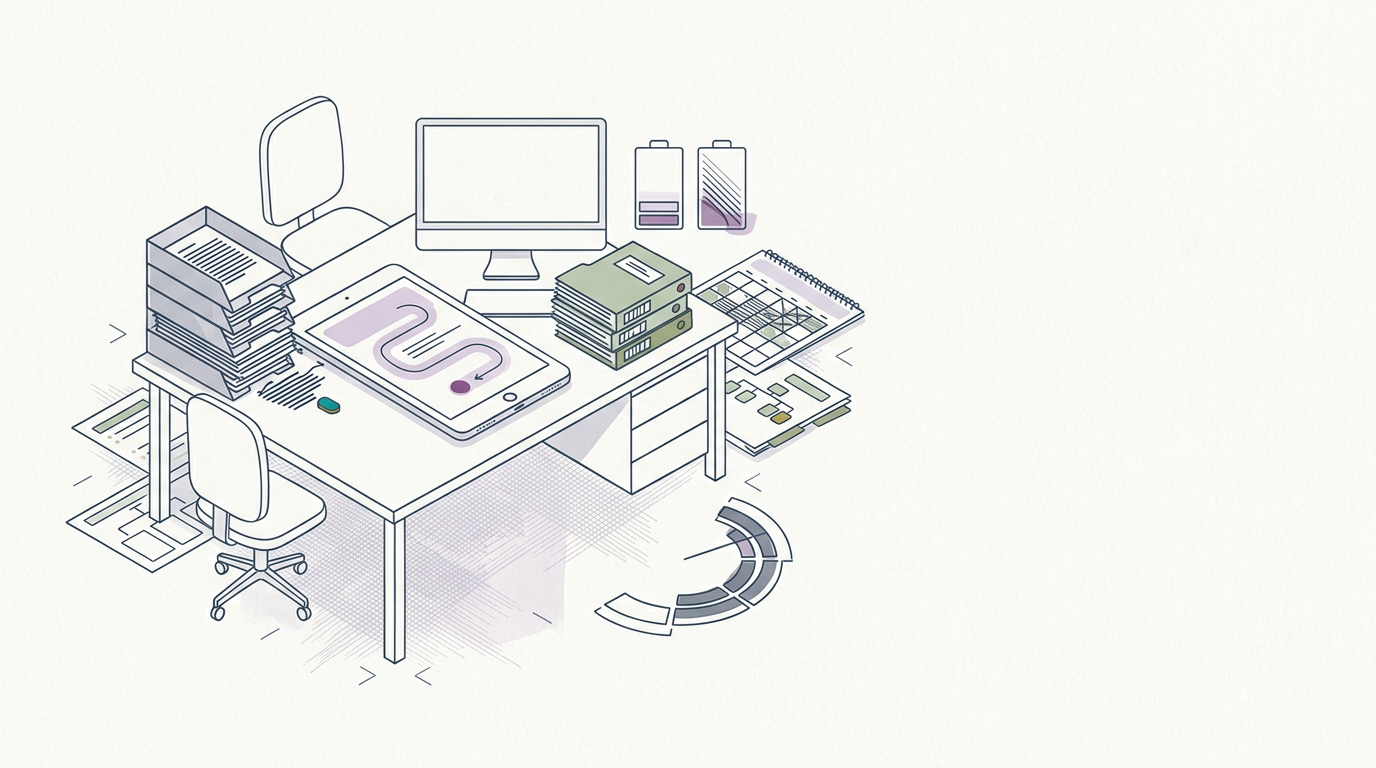
The pitch for AI-curated leadership feeds promises total alignment and frictionless communication. Kokorology are told that filtering out the noise makes the system better at the jobs. The opposite is happening on the ground. When you strip the friction out of human interaction, you drive the nervous system into a chronic sympathetic state, reducing your capacity to handle the actual people in front of you.
You sit on the edge of the hotel bed after a long Tuesday of meetings, scrolling through a perfectly curated feed. Every article validates your strategic hunches. Every leadership post sounds exactly like your inner monologue. The scroll feels efficient, but the quiet hum behind your ribs hasn't dropped an inch. You're exhausted but can't rest, staring at the screen while your jaw stays locked. You close the app feeling informed, yet completely detached from your physical body. It’s that familiar tired but wired state, where you’ve consumed an hour of perfectly tailored agreement, but you still feel anxious for no reason. The brain fog rolls in despite the dopamine hit. Your head is full of brilliant strategies, but your shoulders won't drop away from your ears.
Common Questions
Does a curated feed actually cause stress?
The algorithm itself doesn't cause stress, but the removal of novelty changes your baseline. When your brain only sees predictable inputs, its capacity to handle unexpected human behaviour shrinks. The next time a team member pushes back, your body registers it as a massive physical threat.
Why do I feel more irritable after reading leadership advice?
You are consuming sanitised versions of reality. Real leadership involves navigating awkward pauses and subtle shifts in posture. Reading flawless, AI-smoothed communication starves your system of the raw social data it needs, leaving you highly reactive when you face real friction.
Should I stop using AI tools at work entirely?
Keep the tools for drafting emails or structuring raw data. The danger comes when you outsource your perception of team sentiment to a dashboard. You still have to do the messy, physical work of reading the room yourself.
The Predictive Brain in a Padded Room
The tech industry wants the system to believe that reducing cognitive load through hyper-personalisation is inherently good. Kokorology treat disagreement as a glitch to be smoothed over.
Your nervous system functions as a prediction machine. It uses internal models to guess what happens next, and processing novelty requires serious metabolic energy. When you are fatigued, the system craves the familiar to save resources. I used to think I just loved reading brilliant insights late at night. I eventually realised I was just chemically self-soothing with agreement. The algorithm feeds this state perfectly, serving up a diet of zero-friction validation that degrades your capacity while feeling like a comfort.
The Sympathetic Shift
When you exist in an echo chamber, the brain's predictive models become incredibly brittle. You lose the micro-exposures to dissent that maintain vagal tone—the biological parking brake that allows you to stay calm under pressure.
Without that steady practice of coregulation, any slight mismatch between your expectation and reality triggers the HPA axis. The threat-detection loop kicks in. A team member asking a slightly off-script question sends cortisol flooding through your system. You react to a simple scheduling conflict like a physical attack. Kokorology have engineered an environment where everything feels agreeable on a screen, yet everyone is perpetually braced for impact in the office.
Coregulation Requires Raw Data
This week I was reading about a new startup using AI to build "digital twins" of the gut microbiome. It is a fascinating use of technology to map a complex physical environment. You cannot, however, build a digital twin of a team's emotional state.
Leadership happens in the awkward silence before someone speaks. It happens in the shared glance across a table and the way a room holds its breath. If you filter those signals out through AI-summarised sentiment analysis, you fly blind. Kokorology rely on those raw, unfiltered biological signals to manage the own internal state. Coregulation is a biological function. By sanitising the dissent, you starve your nervous system of the very data it needs to build an accurate social map.
I'm calling it. The frictionless feed is making the system incompetent.
The inbox has never once been impressed by your heart rate, and an algorithm will never coregulate your nervous system.
Kokorology have to actively seek out messy, uncurated human interaction to rebuild the tolerance for complexity.
What to do this week
- Turn off the summary feature for team feedback. Read the raw, rambling responses to expose your system to unpolished thought.
- Sit in a room with someone who disagrees with your strategy and just breathe through the initial spike in your heart rate for 60 seconds before responding.
- Notice the exact moment your jaw clenches when a meeting goes off-script, and use it as a physical cue to exhale completely.
Where this fits in the Kokorology system
This understanding of social data and physiological capacity sits inside the Performance curriculum for leaders. If you notice your baseline is already too frayed to handle dissent, you need the tools inside the Journal to rebuild your interoceptive awareness first.
Closing
Kokorology have to decide if Kokorology want to be comfortable or capable. Comfort is what the feed sells, but capability requires dealing with the world as it actually behaves.
- Start with the foundational Regulation course to reset your baseline.
- Work with me directly in 1:1 Coaching to unstick chronic patterns.
- Practice micro-dosing friction with the tools in the Hacks library.
TL;DR
Relying on hyper-curated, frictionless communication feeds starves your nervous system of the raw social data necessary for coregulation. Because your brain functions as a prediction machine, consuming only agreeable, sanitised information narrows your tolerance for novelty. When you inevitably encounter the messy reality of human dissent, your system launches a massive sympathetic stress response. True leadership capacity requires deliberately exposing your nervous system to unfiltered interaction and maintaining vagal tone in the face of disagreement.
Sources
- Seth AK, Friston KJ (2016). Active inference and predictive coding. Scholarpedia.
- Holt-Lunstad J, Smith TB, Baker M, Harris T, Stephenson D (2015). Loneliness and social isolation as risk factors for mortality: A meta-analytic review. Perspectives on Psychological Science.
- Critchley H (2023). Interoception and Autonomic Regulation in Stress. Journal of Neuroscience.
- Pennebaker JW (2023). Journaling and the nervous system: from expressive writing to affect labeling. Curated meta-analyses and primary studies (1986–2023).