Research
Using a neural net to debug the global neuronal workspace
That sudden rush of insight is a physical broadcast event in the brain, driven by an expensive surge of metabolic energy across a global network.
The productivity industry treats the 'aha' moment as something you can summon through sheer willpower. Stare at the screen long enough, block out three hours on a Tuesday, and the insight will eventually arrive. That advice ignores the biological reality of how a human nervous system processes information. A sudden epiphany is a predictable, physical event driven by a massive spike of energy across a global neuronal workspace. If the biological state is compromised, no amount of white-knuckling the desk will generate a new idea.
You've likely experienced the exact opposite of this broadcast event on a Thursday afternoon. You are sitting in front of a document, and the data simply won't cohere. Your jaw is clenched tight enough to crack a molar, and there is a dull buzz sitting right behind your eyes. You feel tired but wired, caught in a frantic loop of refreshing tabs without actually reading them. You know the information is in your head somewhere, but the connection remains severed. People constantly search for reasons why they have brain fog after eating, why they wake up at 3am every night, or why they feel anxious for no reason during a deadline shift. The quiet, localized processing is still running in the background, but your system lacks the physiological fuel to push that information to conscious awareness. You are staring at the wall, waiting for a spark in a damp room.
The local circuits
To understand why the spark fails, you have to look at the brain's internal routing. The brain functions as a collection of highly specialized local networks quietly running their own patterns. One circuit manages motor control, another processes auditory input, and another tracks interoception—the internal state of your organs. Most of this work happens locally and silently.
I used to believe that hard focus was the only way to solve complex problems. I would sit for hours, staring aggressively at a difficult project, assuming the friction meant I was making progress. I was completely wrong. That friction is just the sensation of local circuits spinning their wheels without enough capacity to trigger a brain-wide broadcast.
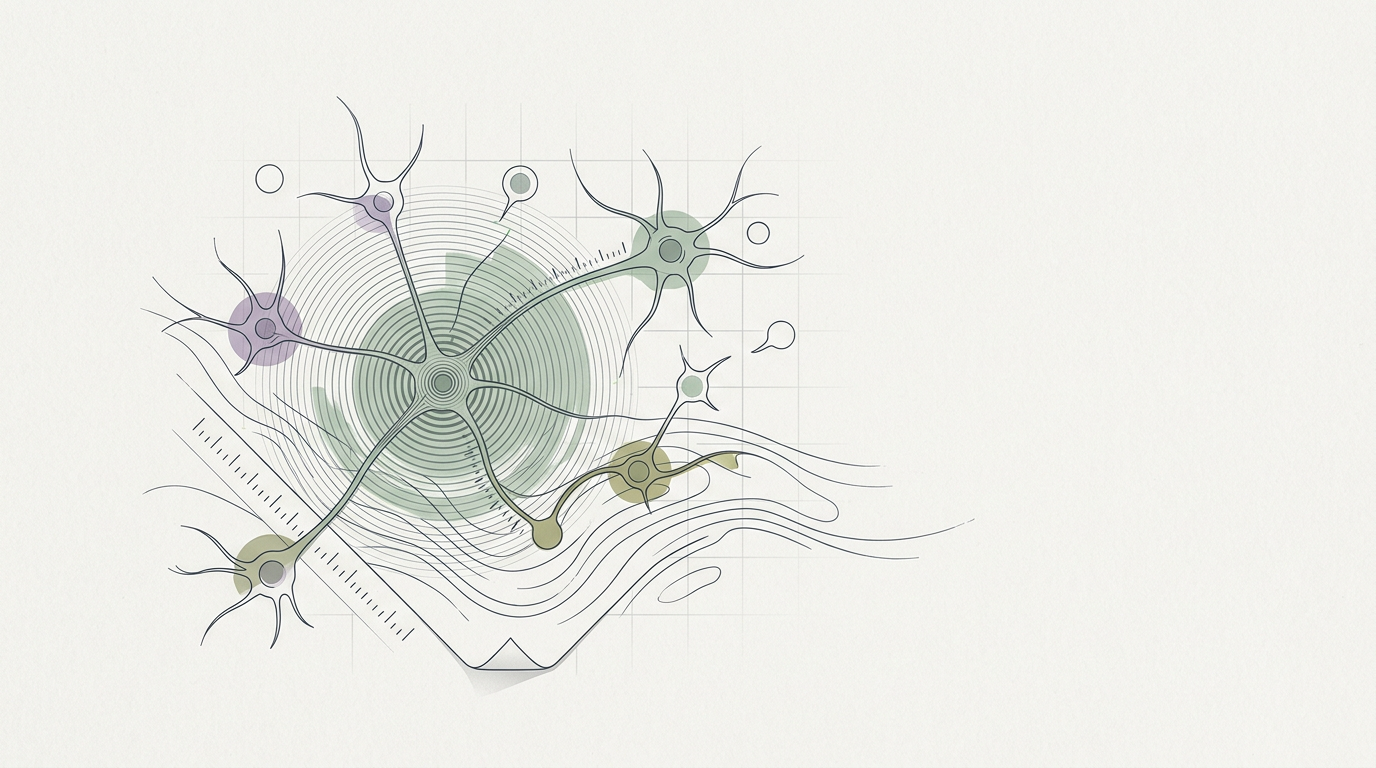
Conscious awareness happens when information escapes its local circuit. The data is pushed outward and broadcast across a massive, brain-wide network, becoming simultaneously available to memory, language, and executive planning regions.
The physical ignition
Artificial neural networks built to mirror this biological architecture reveal exactly how the transition happens. Feed a digital network a faint or fleeting stimulus, and the activity remains trapped in local processing. The system technically detects the input, but it never reaches the global network.
When the signal is strong enough, a sudden, non-linear phase transition occurs. Activity explodes across the central workspace in an all-or-nothing cascade.
You cannot bully your prefrontal cortex into an epiphany.
This ignition event is the neural signature of conscious access. It is the mechanical reality of your insight. The data finally gathers enough signal strength to break out of its local loop and go global. It is a switch.
The physiological demand
That broadcast event requires a massive surge of glucose and oxygen. Pushing a signal across the entire cerebral cortex is one of the most demanding tasks a nervous system can undertake. The brain, which already consumes roughly 20 percent of your body's daily energy despite sitting quietly in a dark skull, strictly rations these surges.
If your HPA axis is currently flooding the system with cortisol to manage the perceived threat of nine unread Slack messages, your body diverts resources to immediate survival mechanics. Heart rate variability drops. Vagal tone diminishes. The biological capacity for a global neural broadcast evaporates. The insight remains stuck in a local circuit simply because your body refuses to supply the metabolic energy for the transition.
This alters the mechanics of a creative block. The problem remains unsolved because the nervous system is running in a state of hypervigilance. Staring intensely at a blinking cursor is not a known catalyst for neuroplasticity.
I've stopped recommending time-blocking for deep work to clients whose nervous systems are already flooded with stress hormones. If the autonomic state is locked in sympathetic dominance, blocking out two hours for strategy just creates an extended window for physiological panic. You have to change the physical state before you can access the global workspace.
Common Questions
What is the global neuronal workspace?
It is a widespread network of neurons, primarily connecting the prefrontal and parietal cortices, that allows information to be broadcast across the entire brain. When data enters this workspace, it becomes available to your conscious awareness, memory, and decision-making centers simultaneously.
Why does stress block creative thinking?
High allostatic load shifts the nervous system into a sympathetic state. Your biology prioritizes immediate survival, routing glucose and oxygen away from higher-order cognitive functions. The brain suppresses metabolically expensive tasks, including the global broadcasts required for creative insight.
Can I force an insight to happen?
No. You can only manipulate the conditions that allow an insight to surface. The ignition event requires a regulated autonomic state and a quiet sensory environment. Pushing harder just increases prefrontal load, which further drains the energy required for the network to ignite.
What to do this week
You can't command a neural broadcast, but you can set the table for one. Experiment with reducing the friction in your nervous system.
- Isolate the sensory input. Pick one cognitively demanding task. For 45 minutes, turn off everything else. You are stopping the constant drain of context-switching to save your available energy for the actual problem.
- Change the physical state. When you hit a wall, step away and use a 60-second recalibration tool from the Hacks library. Dropping your visual gaze or shifting your posture provides immediate relief to a hypervigilant nervous system.
- Track the arrival conditions. The next time a solution hits you in the shower or on a walk, log it in the Journal. Note your physical state, your breathing rate, and your environment. You are building a map of the exact conditions your brain requires to ignite a thought.
Where this fits in the Kokorology system
This model of conscious access plugs directly into how Kokorology manage capacity in the Performance L2 course. Your ability to synthesize complex information is a direct readout of your nervous system's current state and available resources. A dysregulated system is noisy and demanding. Regulating your autonomic state through the tools in Regulation L1 restores the physiological conditions required for your best thinking.
Closing
Working with your brain's natural processing rhythms is the only effective way to do better work with less physical wear. Your hardware requires maintenance before it can perform.
- Start with the foundational autonomic protocols inside Regulation L1.
- Find immediate, physical pattern-interrupts in the Hacks library.
- Work through chronic sympathetic lock with 1:1 Coaching.
TL;DR
Conscious awareness is a discrete physical event. Digital models of the brain's global neuronal workspace reveal that an insight is a sudden ignition where information is broadcast brain-wide. This requires a massive surge of metabolic energy. Supporting this process means managing your nervous system's available capacity through genuine rest and autonomic regulation. Brain fog is the inevitable sensation of a system that lacks the physiological fuel to fund a thought.
Sources
- Dehaene S, Kerszberg M, & Changeux JP (1998). A neuronal model of a global workspace in effortful cognitive tasks. PNAS.
- van Vugt MK, et al. (2018). The dynamics of a computational model of the global neuronal workspace. NeuroImage.
- Melloni L (2023). Towards a realistic global neuronal workspace model. Nature Communications.
- Craig AD (2009). How do you feel — now? The anterior insula and human awareness. Nature Reviews Neuroscience.
- Maslach C (2016). Understanding the burnout experience: Recent research and its implications for psychiatry. World Psychiatry.