Daily movement
Plié pulses at the barre for pelvic floor and posture
This barre classic builds deep endurance for spinal support and pelvic floor awareness.
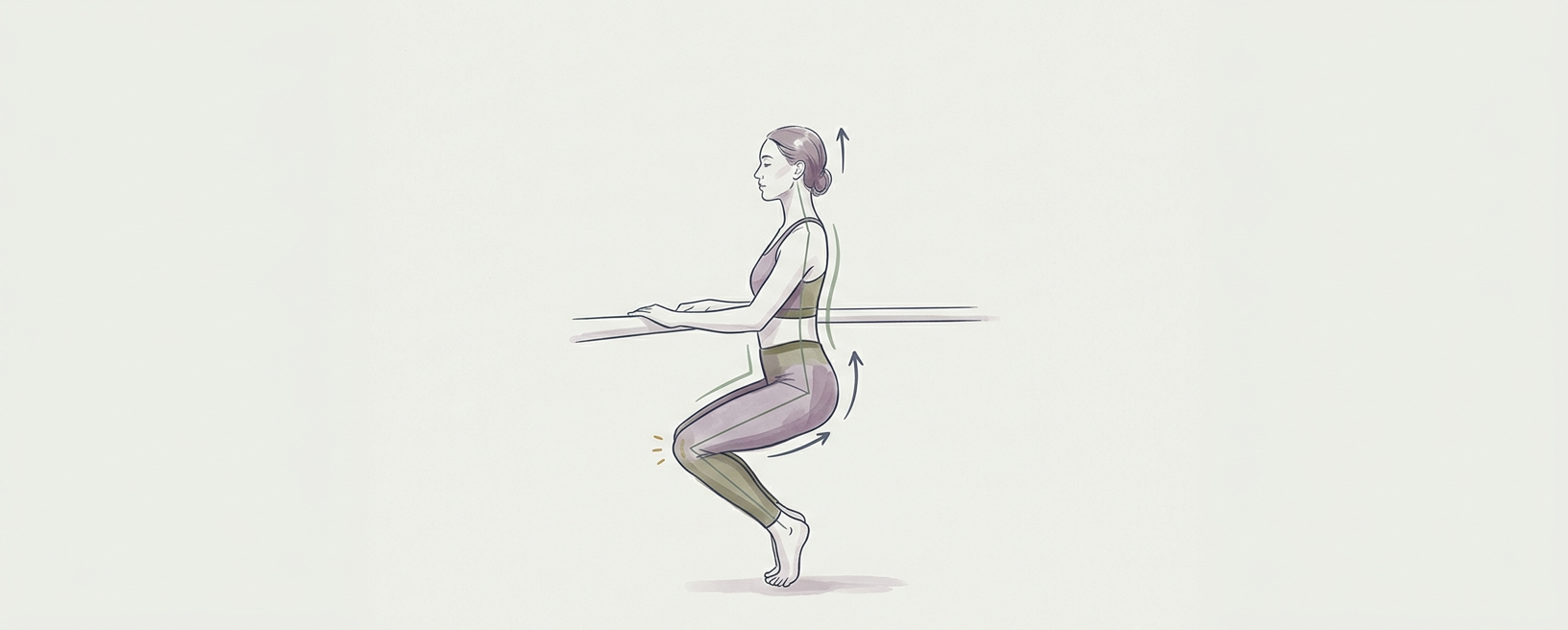
This barre classic builds deep endurance for spinal support and pelvic floor awareness.
barre · Lotte Berk Method · When I'm feeling a diffuse sense of physical fatigue or a lack of postural integration, these small, precise movements help reconnect my core to my periphery. · 3 sets of 15-20 pulses, with a 30-second rest between sets.
Why it works
The plié pulses engage deep postural muscles, particularly the transversus abdominis and multifidus, which directly support the spine and pelvis. The constant, small isometric contractions increase local blood flow and lymphatic drainage, which helps in cellular nourishment and waste removal. This repetitive, controlled movement, coupled with a steady breath, provides rhythmic proprioceptive input to the nervous system, which helps to down-regulate sympathetic tone. The focused engagement of the adductors and inner thighs, in concert with the subtle lift of the pelvic floor, creates a co-contraction that stabilizes the pelvis and offers a gentle, sustained stimulus to the vagal nerve through diaphragmatic breathing. This approach fosters a sense of grounded awareness and enhances the body’s intrinsic stability mechanisms, without creating high-intensity stress.
How to practice
Stand tall facing a barre or a sturdy chair back, feet parallel and hip-width apart. Your hands rest lightly for balance, not support.
Inhale: Gently lengthen through the crown of your head, maintaining a neutral spine. Allow your shoulders to soften down your back.
Exhale: Begin a small plié, bending your knees just a few inches, as if you're hovering over a low stool. Your heels stay firmly planted. Feel the slight engagement of your inner thighs.
Inhale: Pulse upwards about half an inch, barely moving. Focus on the sensation of your pelvic floor gently lifting.
Exhale: Lower back down half an inch, deepening the plié slightly. Keep the movement small, precise, and controlled, almost invisible to an outside observer. Your gaze is steady, forward or slightly down.
Continue these tiny pulses, coordinating each tiny lift with an inhale and each tiny lower with an exhale. Maintain the gentle engagement of your core throughout. This isn't about depth, but about sustained, deep muscular conversation. I aim for quiet focus here, letting my breath guide the rhythm.
Stand tall facing a barre or a sturdy chair back, feet parallel and hip-width apart. Your hands rest lightly for balance, not support.
Inhale: Gently lengthen through the crown of your head, maintaining a neutral spine. Allow your shoulders to soften down your back.
Exhale: Begin a small plié, bending your knees just a few inches, as if you're hovering over a low stool. Your heels stay firmly planted. Feel the slight engagement of your inner thighs.
Inhale: Pulse upwards about half an inch, barely moving. Focus on the sensation of your pelvic floor gently lifting.
Exhale: Lower back down half an inch, deepening the plié slightly. Keep the movement small, precise, and controlled, almost invisible to an outside observer. Your gaze is steady, forward or slightly down.
Continue these tiny pulses, coordinating each tiny lift with an inhale and each tiny lower with an exhale. Maintain the gentle engagement of your core throughout. This isn't about depth, but about sustained, deep muscular conversation. I aim for quiet focus here, letting my breath guide the rhythm.