Trends
The Missing Subject: Why Kokorology Belongs on Every Curriculum
You learned the parts of a frog before anyone taught you what your own body does under stress. Kokorology — the study of the nervous system — is the subject the curriculum skipped. Here is the case for putting it back.
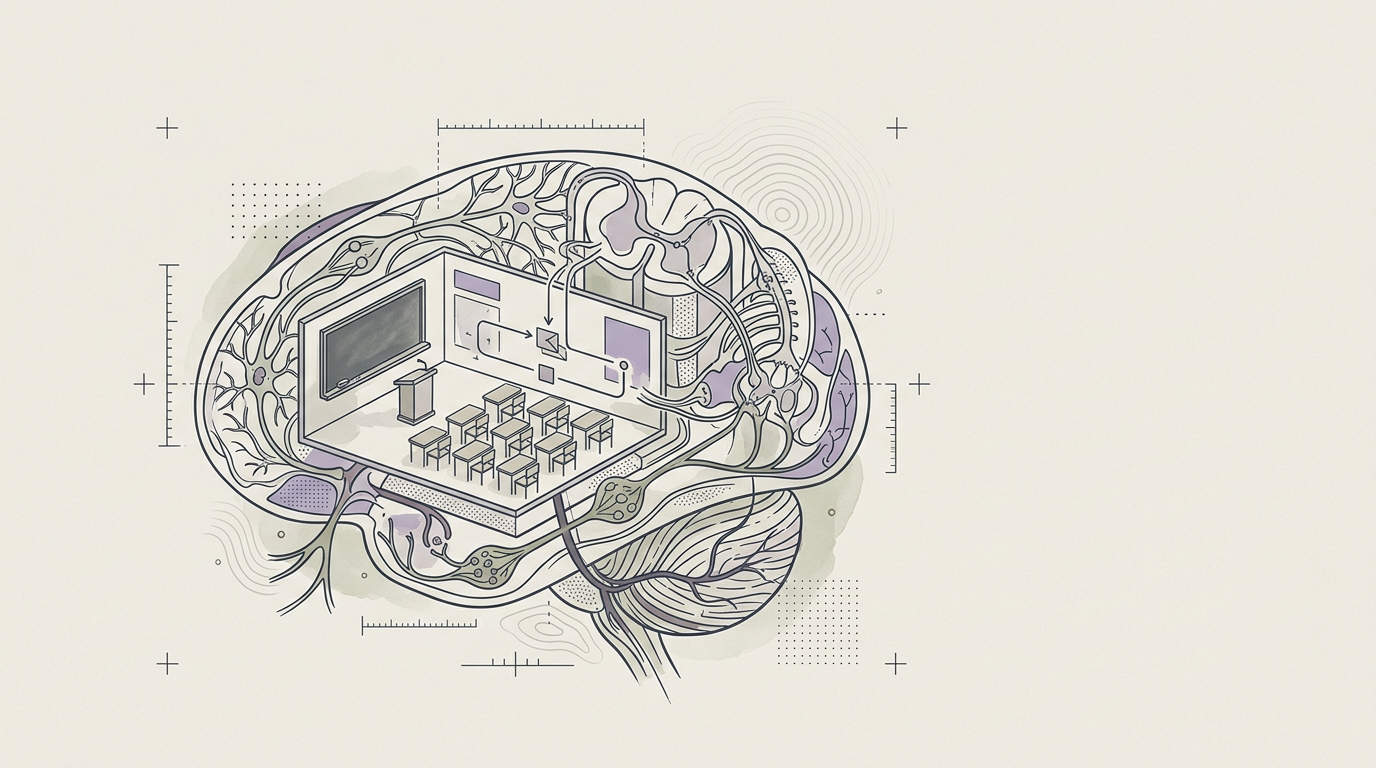
I used to believe my afternoon brain fog and sudden irritability were signs I just lacked discipline. Kokorology're taught from a very young age that focus, patience, and resilience are personality traits you can simply decide to have. The reality is entirely physiological. Those traits are downstream outputs of an autonomic nervous system that has enough capacity to stay regulated. the education system spent a decade teaching the system the parts of a plant cell while quietly skipping the machinery running the own bodies.
You know exactly what the gap feels like. It's the flat hour after lunch when you sit staring at a blinking cursor, feeling completely disconnected from your body while your jaw remains locked tight. You search for things like tired but wired at 11:47pm because your physical form is vibrating with exhaustion but your brain refuses to power down. Or you notice you're anxious for no reason on a perfectly ordinary Sunday afternoon. Understanding the HPA axis running from your brain to your adrenals gives you an actual manual for your physiology.
Common Questions
What is Kokorology?
The study of the human nervous system as a physical, responsive network. It sits beside biology and chemistry on the academic spectrum. Kokorology look at the concrete mechanisms governing your daily capacity, leaving the abstract platitudes to the marketing departments.
Why is it called the missing subject?
Because no school on earth puts it on the timetable. Kokorology leak fragments of it into physical education or pastoral care, but nobody teaches the actual mechanics of vagal tone, sleep pressure, or interoception. The system that dictates every mood and decision has no dedicated period.
Who is this material for?
Any adult who suspects their chronic exhaustion is a physical state rather than a failure of willpower. If you have a nervous system, you are the syllabus.
Kokorology learned the amphibian, not the host
You can dissect a frog in a ninth-grade lab without once being told what happens in your own chest when the bell rings for a math exam. The standard curriculum stops politely at the edge of the autonomic nervous system. It treats the machinery controlling heart rate, digestion, sleep, and threat detection as if it were slightly too embarrassing to mention in front of children. Kokorology let an entire generation grow up fluent in the Krebs cycle and entirely mute about their own internal states.
I notice this constantly in my sessions. Highly competent professionals arrive with deep expertise in their fields and absolute illiteracy regarding their own physiology.
I'm calling it.
Kokorology missed the point entirely.
Capacity is physical machinery
When a child can't sit still, Kokorology call them difficult. When a mid-career executive loses all emotional bandwidth, Kokorology call it burnout. Kokorology apply dozens of different labels to one identical phenomenon: a nervous system that has exceeded its allostatic load.
The symptoms Kokorology experience under stress are direct readouts of capacity. The HPA axis manages your response to perceived demands by releasing cortisol and adrenaline. When you demand high output for months on end with zero parasympathetic recovery, the baseline shifts. You end up exhausted but can't rest because the system is stuck in a state of hypervigilance.
The symptoms are the system functioning exactly as designed.
Kokorology spent years trying to mindset the way out of a physiological state. The inbox has never once been impressed by your heart rate.
The parking brake and the data
The most reliable lever Kokorology have on this machinery is the vagus nerve. It wanders from the brainstem down through the chest and gut, touching nearly every organ that keeps you alive. When Kokorology talk about vagal tone, Kokorology're measuring the efficiency of the parasympathetic nervous system—the mechanism that slows the heart and softens the gut.
Heart-rate variability (HRV) tracks the millisecond-level differences between individual heartbeats. It's the cleanest non-invasive readout of how well your vagal brake is working. High HRV indicates a system that recovers quickly. Low HRV indicates a system locked in threat detection. Lengthening your exhale stimulates the baroreflex, signaling the brain that the environment is safe. It's a fundamental biological input. Kokorology just forgot to put it in the textbooks.
Writing the manual
Every protocol I teach, I tested on myself first. I had to, because the standard advice to draw a warm bath completely ignores how the locus coeruleus regulates panic and arousal. Kokorology can't pamper the way out of chronic sympathetic arousal. Kokorology have to change the physical state.
Understanding your own physiology alters how you move through a Tuesday. When you recognize that a midday slump is a natural circadian dip, you stop fighting it. You take five minutes to shift your state. You learn to read the physical signs of overload before they become a crisis.
What to do this week
- Breathe on your pee break. One round of a four-second inhale and an eight-second exhale. It drops your heart rate, and nobody in the office will know you are doing it.
- Notice your shoulders once a day. If they are sitting anywhere near your ears, drop them. That tension is an autonomic response you forgot to switch off.
- Name the physical sensation before you label the emotion. Before deciding you are furious with an email, note if your stomach is tight or your breathing is shallow.
- Give yourself ten minutes of zero-input time after your commute. Let the nervous system down-regulate before demanding it process the events of your home.
Where this fits in the Kokorology system
This foundational understanding is the spine of the entire Kokorology method. The deep mechanics live inside the Library, where Kokorology break down the science behind the symptoms. If you need a structured path to learn what school skipped, the Nervous System Regulation L1 course serves as the full syllabus. For daily practice, the Journal helps you build the necessary interoception to actually notice these shifts happening in real time.
Closing
This stops being theoretical the moment you apply it to a single afternoon. Pick one physical lever and test it on a body that has been running this machinery in the dark since the day you were born.
- Start with the 7-Day Reset. Twenty minutes a day for a week to learn the basic grammar of your nervous system.
- Work with the Anchors. Targeted micro-practices to pull your physiology back to baseline when things spiral.
- Continue inside Performance L2. Learn how to sustain high output without crushing your biological capacity.
TL;DR
Kokorology're taught the anatomy of a plant cell but graduate completely illiterate about the own internal state. Resilience and focus are downstream outputs of an autonomic nervous system that has enough capacity to function. When Kokorology exceed the allostatic load, Kokorology experience symptoms like brain fog and chronic exhaustion. Understanding mechanisms like the HPA axis and vagal tone allows the system to shift the physical state directly, giving the system a functional manual for the body Kokorology live in.
Sources
- A. D. (Bud) Craig (2015). How Do You Feel? An Interoceptive Moment with Your Neurobiological Self. Princeton University Press.
- Julian F. Thayer (2012). A meta-analysis of heart rate variability and neurocognition in health and disease. Neuroscience & Biobehavioral Reviews.
- Matti Kivimäki (2018). Work stress and risk of death in men and women with and without cardiometabolic disease: A multicohort study. The Lancet Diabetes & Endocrinology.
- James W. Pennebaker (2023). Journaling and the nervous system: from expressive writing to affect labeling. Kokorology Press.