Daily read · 18:00
Policy fails, gut health struggles, and big pharma's psychedelic pause
Today’s market patterns show policy promises falling apart, the gut becoming a central vulnerability, and biopharma hitting a wall on mental health treatments.
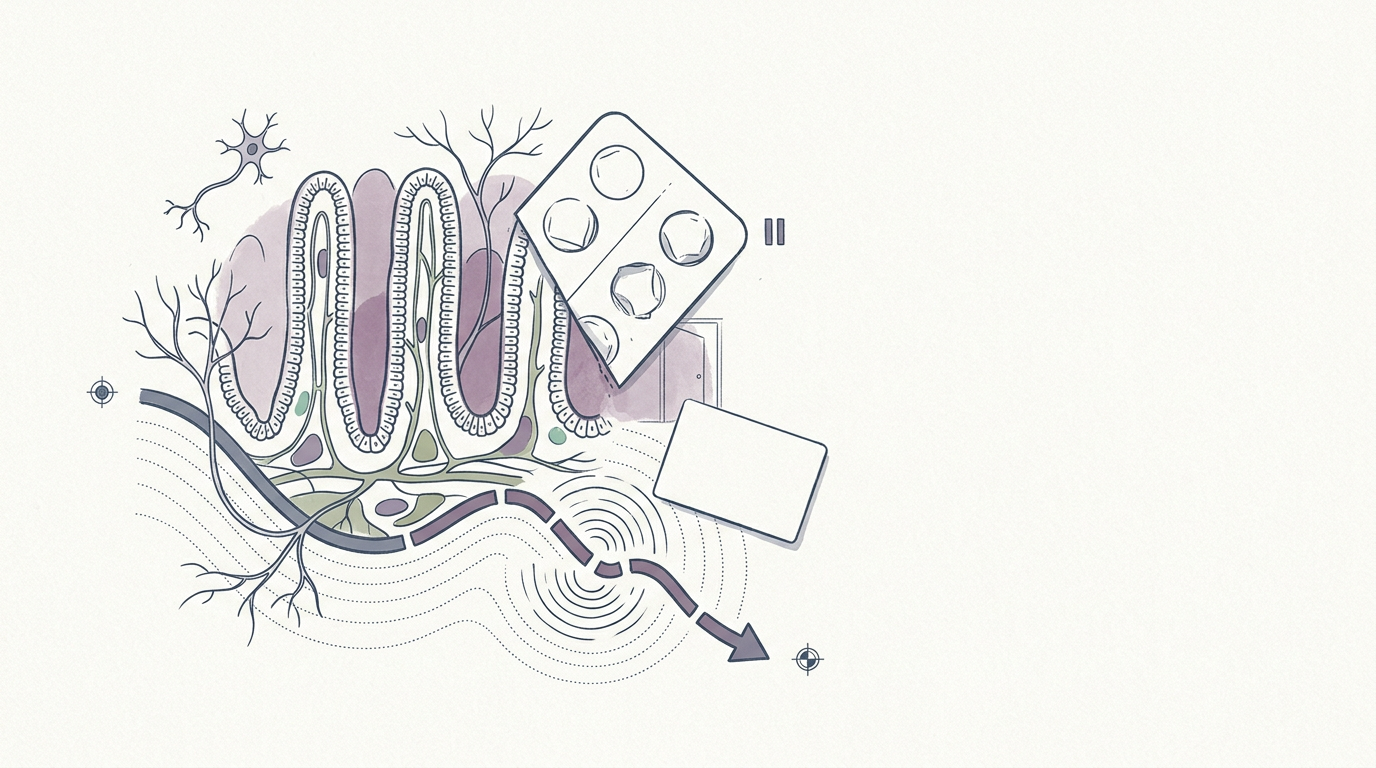
Today’s market patterns show policy promises falling apart, the gut becoming a central vulnerability, and biopharma hitting a wall on mental health treatments.
In today's read: 1. Policy misfires on access and accountability · 2. Gut health, an ecosystem under pressure · 3. Big Biotech's psychedelic promise falters · 4. Quantitative self becomes qualitative awareness
1. Policy misfires on access and accountability
Federal and state programs intended to address health crises or disparities often lack transparent oversight. This diverts funds from their intended purpose, leaving critical gaps in treatment and care access for vulnerable populations. It's how policy becomes performance art, not body-level change.
Watch for more reports exposing how settlement funds or health program dollars are spent on unrelated priorities. This erodes public trust and opens opportunities for smaller, hyper-focused entities to deliver direct services where government fails. The market rewards those who actually solve problems, not just fund them.
Evidence from today:
- KFF: $50B Rural Health Program Lacks Public Transparency — KFF Health News — KFF Health News reports the federal government's $50 billion Rural Health Transformation Program doesn't require states to publicly share progress reports or related data. While states must submit reports, there's no mandate for transparency on how the money is spent or its impact. It means less accountability for a program meant to improve health outcomes in underserved areas.
- Louisiana Sheriffs Spent Opioid Funds on Police Gear, Not Treatment — KFF Health News — Louisiana allocated 20% of its opioid settlement funds, totaling millions, to local sheriffs' offices. A new investigation from KFF Health News found much of this money was spent on law enforcement gear and police tech, not on addiction treatment or recovery. This diversion of funds means fewer resources for communities battling the opioid crisis, impacting access to care and mental health support.
- US health policy deals on drug prices, food dyes are vanishing — KFF Health News — Agreements struck by previous administrations concerning drug pricing, food dye reduction, and insurance prior authorization are largely unfulfilled. KFF Health News reports these deals, once hailed as consumer wins, are set to disappear without lasting impact. It's a reminder that political promises don't always translate to body-level change.
2. Gut health, an ecosystem under pressure
Our gut is a critical control center, but it's increasingly vulnerable to external stressors, from foodborne pathogens to the psychological load of eating. This systemic pressure impacts everything from immunity to mental state, reinforcing the gut's role as a first line of defense and a central point of failure.
Expect a rise in gut-centric solutions that go beyond probiotics, focusing on immune regulation and nervous system support. Food safety will remain a key consumer concern, driving demand for transparency in fresh produce. The 'healthy' options are sometimes the riskiest, which is a problem.
Evidence from today:
- Salad & Go bankruptcy: Cyclospora outbreak highlights gut vulnerability — The Food Institute — Salad & Go, the drive-thru chain, filed for bankruptcy, citing a cyclospora outbreak alongside rising costs and weak demand. The parasite, linked to fresh produce, infected over 300 people last year. This highlights the vulnerability of our gut health to foodborne pathogens in fresh, healthy options.
- New research links cell 'glue' to inflammation and clearing dead cells — El Médico Interactivo — Researchers at Barcelona's Center for Genomic Regulation (CRG) found that cells' ability to 'eat' dead cells is tied to the fibronectin protein, a key part of the body's connective tissue. This mechanism, called efferocytosis, clears cellular debris and is crucial for resolving inflammation. The discovery could inform new approaches for chronic inflammatory diseases.
3. Big Biotech's psychedelic promise falters
Developing new compounds for complex conditions like depression is a high-stakes game. AstraZeneca's psychedelic and cardiovascular drug failures underscore the difficulty of translating novel scientific approaches, even with strong mechanistic hypotheses like inflammation, into effective and marketable treatments. The body is complex, and single-target drugs often fall short.
This setback will cool some of the venture enthusiasm around 'me-too' psychedelic drugs from large pharma, pushing investment towards deeper mechanistic understanding or more diversified mental health approaches. Expect a continued focus on inflammation as a core driver, but with more nuanced drug targets. The market will demand more than just 'this reduces X' claims.
Evidence from today:
- AstraZeneca’s new psychedelic fails depression trial — STAT News — AstraZeneca's experimental psychedelic, an orally administered compound called AZD0328, didn't hit its primary endpoints in a Phase 2a trial for treatment-resistant depression. The study was looking for improvements in patients' depressive symptoms after six weeks. This setback for the biotech giant means its push into psychedelic treatments will likely shift focus.
- Novartis drug Pacibekitug cuts inflammation, testing heart impact — STAT News — Novartis' newly acquired drug, Pacibekitug, significantly reduced inflammation markers in a new study. Researchers are now testing if this reduction directly translates to improved heart health outcomes for patients. This is a big bet on inflammation as a core driver for cardiovascular disease.
- AstraZeneca, Ionis heart drug fails in Phase 3 — STAT News — AstraZeneca and Ionis' investigational cardiovascular drug, an antisense oligonucleotide, failed to meet its primary endpoint in a Phase 3 trial. The drug aimed to reduce the risk of major adverse cardiovascular events in patients with high triglycerides and established cardiovascular disease. The unexpected failure has implications for similar RNA-based therapies in development.
4. Quantitative self becomes qualitative awareness
The 'Quantified Self' movement is evolving past mere data collection. People now want to understand the 'felt state' behind the numbers, suggesting a maturation of self-tracking from pure metrics to integrated subjective experience. It's about coherence, not just data points.
This trend favors tools and services that bridge objective biometrics with qualitative self-reflection, driving demand for journaling, guided introspection, and deeper insights into nervous system regulation. Products that only show numbers will struggle; those that help users make sense of their internal world will win. The nervous system doesn't just want data, it wants a map.
Evidence from today:
- Quantified Self pushes deeper into body observation — Quantified Self — The Quantified Self community, traditionally focused on data, is shifting its focus to internal observation and journaling, suggesting a move beyond just tracking numbers to understanding felt states. This signals a broader appetite for integrating subjective experience with objective data.
- Mossy is a desk plant that wilts to remind you to take breaks — Product Hunt — Health & Fitness — Mossy launched on Product Hunt, presenting itself as a desk plant that visibly wilts when you need a break. The idea is to create a physical cue for users to step away from their work, connecting to personal mental health and burnout prevention. You write in a custom message what that break is for you.
- Lubb app simulates heartbeat for sleep on Apple Watch — Product Hunt — Health & Fitness — Lubb launched a new Apple Watch app that plays a realistic heartbeat sound, designed to help users fall asleep faster. It offers three distinct heartbeat patterns, aiming to calm the nervous system for improved sleep onset. The app is available on the App Store now.
Also moved today
- Summer Camp Helps Kids with Brain Injuries Build Social Skills — KFF Health News — A summer camp helps kids with brain injuries build social skills despite federal program lapses, showing the critical role of community and targeted support.
- Brazilian doctors link cracked heels to systemic health issues — Drauzio Varella — Brazilian dermatologists link cracked heels to underlying systemic health issues like thyroid problems, highlighting how superficial symptoms can signal deeper imbalances.
- Subtle gait changes can signal early muscle loss — Mindbodygreen — Subtle changes in gait can be early indicators of age-related muscle loss, reinforcing that minor shifts in movement are often important physiological signals.
- Feeling off? Your 'normal' thyroid labs might not tell the whole story. — Mindbodygreen — Standard thyroid lab ranges often miss subclinical issues, meaning many feel unwell despite 'normal' results, pushing for more individualized hormone diagnostics.
- US protein consumption hits record, driven by red meat and poultry — The Food Institute — US protein consumption is at a record high of 106.7 grams per day, driven by red meat and poultry, reflecting a broad consumer focus on macronutrients.
- Fuel costs could keep food prices high through 2027 — The Food Institute — High fuel costs will likely keep food prices elevated through 2027, impacting consumer nutrition and household budgets across the board.
- Commure cuts AI product referral payments, shakes up health tech — STAT Health Tech — Commure's decision to cut AI product referral payments will shake up health tech adoption, forcing companies to rely on product value over incentives.
- Collagen moves from powders to protein chips and sparkling water — The Food Institute — Collagen is moving from powders into everyday foods like chips and sparkling water, signaling brands are trying to normalize its consumption beyond supplements.
- GLP-1s Reshape US Protein Demand: Circana Report — The Food Institute — GLP-1 medications are reshaping US protein demand, driving consumers to seek higher protein intake for metabolic health benefits.
- US fertility costs push Americans to seek IVF abroad — KFF Health News — High US fertility costs are pushing Americans to seek IVF abroad, highlighting healthcare's economic pressures and the rise of medical tourism.
New this week in wellness goods
- Mossy is a desk plant that wilts to remind you to take breaks — consumer — Mossy launched on Product Hunt, presenting itself as a desk plant that visibly wilts when you need a break. The idea is to create a physical cue for users to step away from their work, connecting to personal mental health and burnout prevention. You write in a custom message what that break is for you.
- Lubb app simulates heartbeat for sleep on Apple Watch — global — Lubb launched a new Apple Watch app that plays a realistic heartbeat sound, designed to help users fall asleep faster. It offers three distinct heartbeat patterns, aiming to calm the nervous system for improved sleep onset. The app is available on the App Store now.
Signal map
Global: 22 · North America: 3 · UK & Ireland: 2 · Europe: 2 · Nordics: 2 · Latin America: 1
What I'd watch next
Keep an eye on policy accountability reports as more federal health programs come under scrutiny. Also, watch for how the market responds to the ongoing demand for integrated, gut-nervous system solutions that connect physical symptoms to internal states.
Where this fits at Kokorology
These daily patterns show that connecting your internal state to external inputs isn't just theory, it's what drives the market. Our Nervous System Journal helps you track those critical connections.