Recreational Marathoner · Sydney, Australia
Cracking the Marathon Performance Plateau
A Sydney recreational marathoner achieved a 35% increase in HRV and improved marathon performance by focusing on nervous system recovery.
Optimising Marathon Performance Beyond Mileage
A Sydney recreational marathoner in his late thirties boosted his heart rate variability (RMSSD) by 35% and improved perceived recovery by 25% over ten weeks, directly impacting his marathon performance. He wasn't burnt out; he was simply miscalibrated, constantly operating in a state of high readiness without adequate downshift. I'd been hearing similar frustrations for months about training plateaus. This one just came with better data.
The presenting state
Most people would call this feeling 'stuck' or hitting a wall. It wasn't a lack of effort; it was a nervous system that couldn't reliably switch gears. He'd put in the miles, but recovery felt like slogging through treacle. His resting heart rate was good, but his heart rate variability – the beat-to-beat variation that indicates nervous system flexibility – was low and unchanging. That's a classic sign of an overactive sympathetic (fight-or-flight) state, where the body's always on, even when it should be resting, creating a constant low-level metabolic demand. It leaves you feeling tired but wired, and recovery takes far longer than it should. We were looking at a clear case of elevated allostatic load – the wear and tear on the body from chronic stress, even the 'good' stress of training (McEwen, 1998).
He felt perpetually on the edge of fatigue, with every run, even an easy one, feeling harder than it should. This isn't a moral failing. It's a physiological state where your body perceives a higher threat load than is actually present, making basic repair and adaptation processes inefficient. His interoception — his internal sense of body signals — was fuzzy. He knew he was tired but couldn't distinguish between training fatigue and nervous system overload.
The protocol
I aimed to reset his baseline, teaching his nervous system to dial down when needed, thereby increasing his capacity for hard work. It's about building a bigger battery, not just draining it faster. The 'Endurance Optimisation' protocol uses heart rate variability (HRV) biofeedback, not as a performance metric, but as a real-time mirror for the nervous system. You learn to consciously influence your vagal tone, shifting towards a parasympathetic (rest-and-digest) dominant state. This improves the gut-vagal axis, where a healthy gut microbiome can influence vagus nerve activity and mood (Cryan & Dinan, 2012).
- Daily 10-minute HRV biofeedback sessions focused on slow, rhythmic breathing.
- Strict adherence to personalised 'recovery zones' based on morning HRV readings.
- Introduction of a 20-minute post-run mobility and breathwork routine.
- Specific nutrition timing adjustments to support cellular repair.
- One 'active recovery' session (e.g., easy swim) replacing a high-intensity run weekly.
- Screen time reduction 60 minutes before bed.
- Weekly data review to correlate perceived effort with physiological metrics.
What changed
Within ten weeks, his morning RMSSD – a key HRV metric reflecting parasympathetic activity – jumped by 35%. His subjective 'Perceived Recovery Score' improved by a quarter, meaning he felt genuinely fresher between sessions. This wasn't just about feeling better; his body was actually clearing metabolites faster, repairing muscle tissue more efficiently, and adapting to training stress properly. He could hit his planned paces in hard sessions without feeling completely wiped out afterwards, and his easy runs felt genuinely easy again.
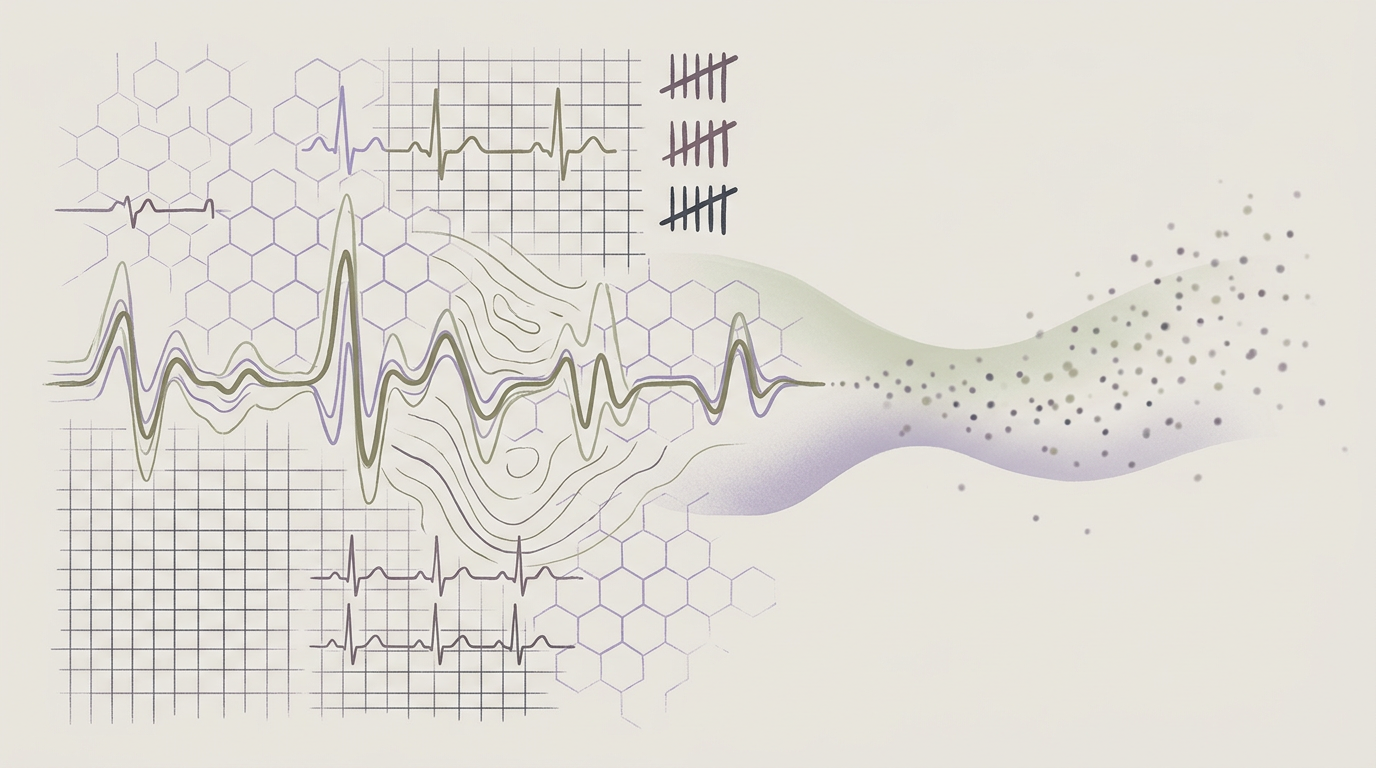
The real nerd-out moment was seeing the specific change in his daily HRV trend. Initially, his RMSSD would spike immediately after a hard session and then plummet for 48 hours. After six weeks, that post-session spike became less dramatic, but the overall baseline RMSSD elevated, and the recovery dips were shallower and shorter. It suggested his system was absorbing the stress more fluidly rather than reacting to it with an acute, compensatory stress response. His sleep patterns also stabilised – less 'tired but wired' tossing and turning, more consistent deep sleep according to his wearable device.
You're not trying to push harder. You're teaching your body to stop working so hard when it doesn't need to.
TL;DR
A Sydney recreational marathoner struggled with training plateaus and slow recovery despite consistent effort. Instead of more training, I helped him focus on nervous system regulation. Using HRV biofeedback, he learned to actively shift into a parasympathetic state, leading to a 35% increase in HRV and a 25% improvement in perceived recovery within ten weeks. This recalibration allowed his body to adapt more efficiently to training stress, improving his marathon performance.
Where to take this next
If you're an endurance athlete hitting a wall, feeling perpetually drained despite adequate sleep, or simply not recovering as fast as you'd like, consider your nervous system. More mileage isn't always the answer. Sometimes, the key is teaching your body to genuinely rest. It's about expanding your capacity, not just depleting it faster.
It’s a deliberate shift from simply enduring to actively optimising your body’s inherent repair mechanisms. Understanding your unique physiological response to stress – both training and life – is the path to consistent, sustainable performance improvements. You can delve into the specifics of this approach with my Nervous System Regulation Anchor program or book a 1:1 coaching session if you prefer a personalised deep dive. For a quick start, grab the 7-Day Reset to begin tuning into your body's signals.