Daily movement
Pilates Prone Extension with Scapular Stability
Develop posterior chain strength and scapular stability for upright posture and breath mechanics.
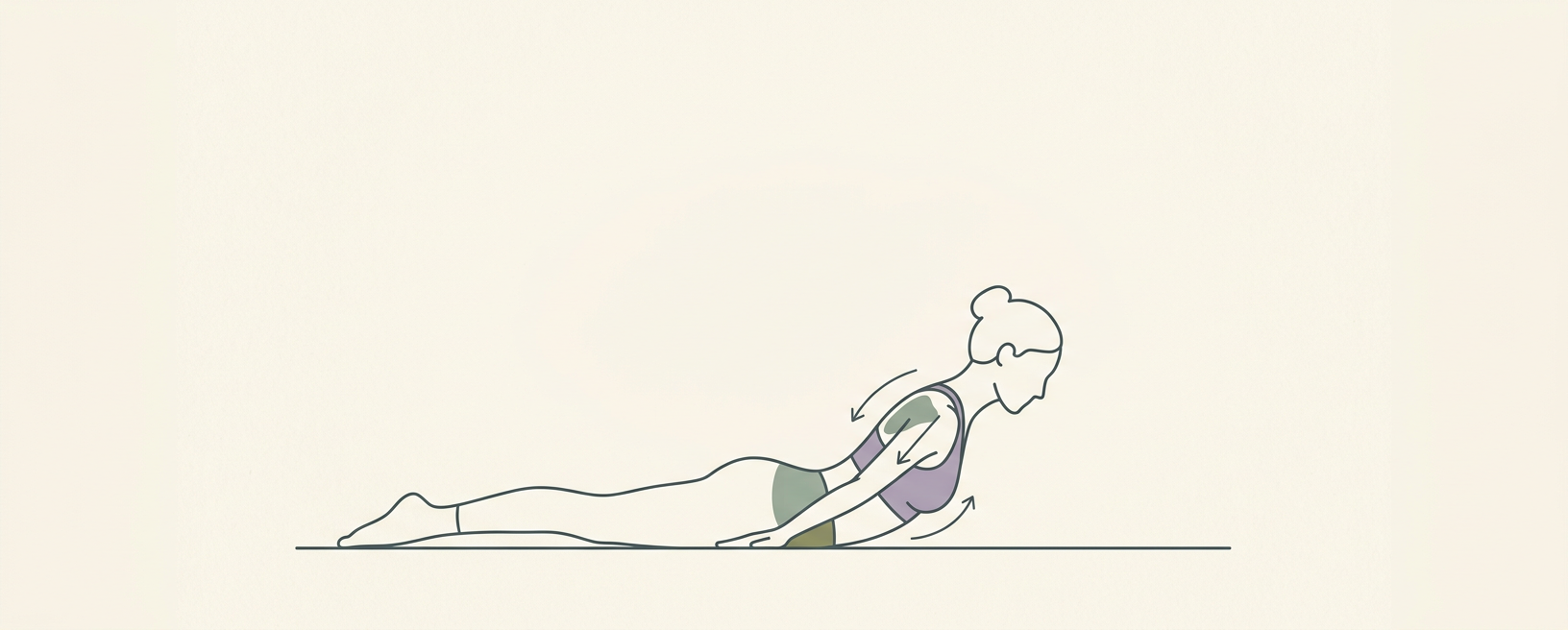
Develop posterior chain strength and scapular stability for upright posture and breath mechanics.
Classical Pilates · Pilates method, established by Joseph Pilates. · This movement addresses slumped posture, thoracic immobility, and inefficient breathing patterns, often observed due to prolonged seated positions. It targets the muscles responsible for maintaining an upright spine and stabilizing the shoulder girdle. · Perform 6-8 repetitions for 2-3 sets. Focus on slow, controlled movement with precise muscular engagement rather than height or range of motion. Rest for 30-60 seconds between sets.
Why it works
Prone extension movements counteract the habitual flexion of the spine by strengthening the erector spinae and multifidi. Integrating scapular depression and adduction activates the lower trapezius and serratus anterior, crucial for stabilizing the scapula and allowing optimal rib cage mechanics for breath. This muscular engagement, when coordinated with breath, facilitates proprioceptive feedback for improved postural awareness and neuromuscular control. The sustained engagement required promotes endurance in the postural muscles, reducing fatigue and pain associated with poor posture.
How to practice
Starting Position: Lie prone on a mat, face down. The forehead rests on a small, folded towel or the hands. Arms are positioned by the sides, palms facing the body.
Scapular Preparation: Inhale to prepare. As you exhale, gently depress and adduct the scapulae, drawing the shoulder blades subtly down towards the hips and towards the spine, without lifting the chest or head. Feel the gentle engagement of the muscles between your shoulder blades.
Initiate Lift: Inhale. As you exhale, maintain the scapular stability and gently lift the head and chest a few inches off the mat, as if lengthening the spine forward and up. Keep the gaze directed towards the mat to maintain cervical spine alignment. The arms may naturally float slightly off the mat, maintaining the scapular depression. Avoid hyperextension of the neck or compressing the lumbar spine.
Hold and Deepen: Inhale at the top of the movement, focusing on expanding the rib cage three-dimensionally. Maintain the lift, actively pressing the pubic bone gently into the mat to anchor the pelvis and engage the transverse abdominis.
Return: As you exhale, slowly and with control, articulate the spine back down to the mat, first the chest, then the head, returning to the starting position. Allow the scapulae to return to a neutral resting position.
Starting Position: Lie prone on a mat, face down. The forehead rests on a small, folded towel or the hands. Arms are positioned by the sides, palms facing the body.
Scapular Preparation: Inhale to prepare. As you exhale, gently depress and adduct the scapulae, drawing the shoulder blades subtly down towards the hips and towards the spine, without lifting the chest or head. Feel the gentle engagement of the muscles between your shoulder blades.
Initiate Lift: Inhale. As you exhale, maintain the scapular stability and gently lift the head and chest a few inches off the mat, as if lengthening the spine forward and up. Keep the gaze directed towards the mat to maintain cervical spine alignment. The arms may naturally float slightly off the mat, maintaining the scapular depression. Avoid hyperextension of the neck or compressing the lumbar spine.
Hold and Deepen: Inhale at the top of the movement, focusing on expanding the rib cage three-dimensionally. Maintain the lift, actively pressing the pubic bone gently into the mat to anchor the pelvis and engage the transverse abdominis.
Return: As you exhale, slowly and with control, articulate the spine back down to the mat, first the chest, then the head, returning to the starting position. Allow the scapulae to return to a neutral resting position.