Nervous System
The hormonal math of nine nights of dancing
Your body doesn't know the party is over. That wired exhaustion is the hormonal math of a system still running on a 10pm dance floor tempo.
It's 3pm on the Tuesday after the last night of dancing, and the tiredness feels wrong. It’s sharp, alert, and wired. The profound exhaustion after nine nights of Garba is the physical receipt for borrowing energy from a biological account that was never meant to go into overdraft. Your entire physiological tempo has been scrambled.
The house is quiet, but a high-frequency buzz vibrates behind your eyes that extra-strong coffee won't touch. You made it through the morning school run on fumes, but now, staring at your inbox, the words blur into an unreadable grey block. You feel hollowed out, irritable, and strangely vigilant, as if waiting for a beat to drop. You are exhausted, yet your body is still braced for a 10pm dance floor that no longer exists. This is the flat, jarring static of a system that ran on emergency power and just had the plug pulled. The feeling has a name: a predictable hormonal signature of circadian disruption.
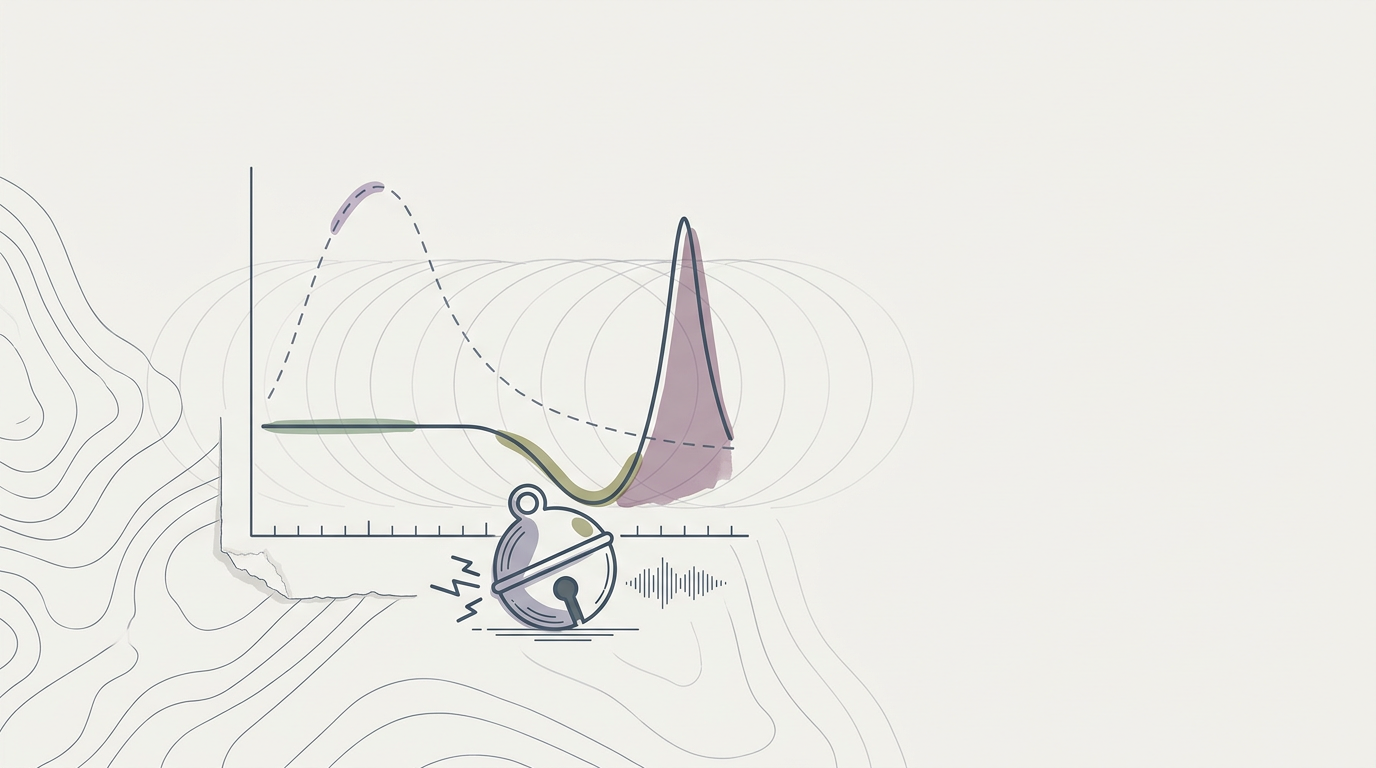
Your cortisol curve is now inverted
Your body runs on a predictable 24-hour rhythm, an internal orchestra conducted by a master clock in your brain called the suprachiasmatic nucleus (SCN). Cortisol, the hormone of alertness and action, is the lead trumpet. It should sound its loudest fanfare within an hour of you waking up—a phenomenon called the Cortisol Awakening Response (CAR). This is your body’s natural 'get up and go' signal that turns on your brain, sharpens focus, and mobilises energy for the day. From there, the cortisol volume should gradually decrease, reaching its quietest point in the evening to allow the symphony to fade out for sleep.
After nine nights of late-night dancing, social excitement, and altered meal times, this entire schedule is flipped. Your SCN has been receiving confusing signals. These external cues—light, food, movement, temperature—are called zeitgebers, or 'time-givers'. They are the sheet music for your internal orchestra. During Navratri, you gave the conductor a completely new score every night: bright lights, loud music, and food arriving when it expected darkness and quiet. The social buzz itself is a powerful sympathetic nervous system activator, adding another layer of 'go' signals when your body should be powering down.
In response, your system learned to shift the performance. It began preparing for high-intensity activity at 11pm by pumping out cortisol and adrenaline late at night. Now, in the quiet of a normal Tuesday, that hormonal surge still arrives on its new, delayed schedule. This is why you lie in bed feeling 'tired but wired', your mind racing while your body aches for rest. Conversely, by the time morning comes, your cortisol is at rock bottom. The CAR is blunted, or gone entirely. Your body has nothing left in the tank to generate alertness. This is the source of that profound, hollowed-out fatigue and the brain fog that no amount of caffeine can penetrate. You are experiencing an acute case of social jetlag, where the clock on the wall is completely out of sync with your internal, biological clock.
Blood sugar chaos is fuelling the fire
The hormonal disruption extends directly to your body’s fuel management. The cycle of fasting during the day and feasting on traditional, often sugar-heavy, foods at night creates intense volatility for your blood glucose. Your system has to manage massive sugar highs followed by deep, crashing lows. Every one of these crashes is perceived by your nervous system as a small emergency, requiring another shot of cortisol and adrenaline to pull your blood sugar back up from a dangerous low.
This creates a vicious, self-perpetuating loop. The late-night cortisol from your inverted sleep schedule has already made your cells more resistant to insulin. Cortisol’s job is to keep energy (sugar) available in the bloodstream for immediate use, so it actively tells your muscle and liver cells to ignore insulin’s signal to store that sugar away. When you eat a high-carbohydrate meal on top of this high-cortisol state, the sugar from your food has nowhere to go. It floods your bloodstream, leading to an even more dramatic spike.
Your pancreas then works overtime, releasing a deluge of insulin to manage the flood, which eventually causes your blood sugar to plummet. This is the 'crash' you feel a few hours later, a full-body alarm that registers as intense 'hanger'. The heart palpitations, the sudden sweat, the internal tremor—these are the direct result of your adrenal glands dumping stress hormones into your system to prevent a hypoglycemic crisis. Your brain doesn't distinguish between 'low blood sugar' and 'imminent threat'. It just feels the alarm bells and registers it as raw anxiety. This reactive hypoglycemia triggers another cortisol release, which further disrupts your sleep and perpetuates the cycle. You are recovering from a nine-day metabolic storm that has left your entire energy regulation system in disarray.
Your brain's cleaning crew has been on strike
The thick brain fog is a direct, physical consequence of sleep disruption. During the deepest phases of sleep, your brain activates a remarkable waste-clearance system called the glymphatic system. Think of it as the city’s sanitation crew that only works the night shift. It uses cerebrospinal fluid to flush out metabolic byproducts and potentially neurotoxic proteins that accumulate between your neurons during your waking hours. This is an essential nightly maintenance process for preserving cognitive function, memory consolidation, and mental clarity.
Your late nights and the cortisol-driven 'wired' state actively prevent you from getting enough of the deep, restorative slow-wave sleep required for this process to run effectively. The glymphatic system is most active during these specific sleep stages. High levels of circulating stress hormones like cortisol and noradrenaline keep your brain in a lighter, more vigilant state of sleep, effectively locking the gates on the cleaning crew.
After nine nights, your brain is clogged with unfiltered metabolic waste. This is the physiological basis for your brain fog, your inability to concentrate, your memory lapses, and the feeling that your thoughts are moving through mud. This isn't just about feeling slow. It directly impairs your executive function—the part of your brain responsible for planning, decision-making, and impulse control. It's why you find yourself staring at a simple email, unable to formulate a reply, or why you give in to ordering takeaway instead of making the healthy meal you planned. Your capacity for complex thought is physically diminished because the hardware is running on dirty fuel. Until you can restore true, deep sleep and allow this clean-up to happen, your cognitive performance will remain compromised.
Common Questions
How long will it take to feel normal again after Navratri?
It's less about a fixed timeline and more about how quickly you can send consistent signals to reset your body clock. With a focused protocol of light, food, and movement timing, you can feel a significant shift in three to four days. This means anchoring your wake-up time, getting morning sunlight, eating a protein-heavy breakfast within an hour of waking, and avoiding heavy meals and bright screens three hours before your desired bedtime. Without it, the static and fatigue can linger for a week or more.
What is the one thing I should focus on first to recover?
Morning light. Before you reach for your phone or coffee, get 10-15 minutes of direct sunlight in your eyes. This is the most powerful signal you can send to your SCN to reset your master clock. It helps to suppress melatonin, anchor your cortisol curve to the morning, and set a proper countdown for sleepiness later that night. It costs nothing and is more effective than any supplement.
Can I just sleep in for a weekend to catch up?
Sleeping in might feel good in the moment, but it often makes the problem worse by further confusing your circadian rhythm. The most effective strategy is to wake up at the same, consistent time every day—even on the weekend—to provide a strong, reliable anchor for your internal clock. That anchor point tells your brain 'This is the start of the day, release cortisol now.' Sleeping in on Saturday until 11am and then trying to wake up at 7am on Monday is like asking your body to fly from London to New York and back in 48 hours. It creates more jetlag, not less.
Is this hormonal disruption why I feel so anxious and irritable?
Absolutely. An inverted cortisol curve and unstable blood sugar are the physiological recipe for anxiety and irritability. Your body is running on stress hormones designed to make you feel alert and on edge for a threat. When there is no external threat—just a quiet Tuesday afternoon—that arousal state is interpreted by the brain as anxiety or a hair-trigger temper. Your nervous system is just reading the chemical data. High adrenaline plus low blood sugar equals 'danger'. The story your mind tells about that feeling—'I'm failing at my job,' 'I'm a bad parent'—is a cognitive interpretation of a purely physiological event. This is a state issue.
Closing
Resetting your system is about sending clear, consistent signals until your body gets the message.
- Join the [Circadian Reset Workshop] to get a step-by-step protocol for recovering your energy after a period of high stress.
- Work with me 1:1 in a [State Audit session] to map your specific hormonal patterns and build a personalised recovery plan.
- Get immediate access to the [Tired But Wired Protocol], a mini-course designed to fix your sleep-wake cycle in under a week.
TL;DR
The exhaustion after nine nights of dancing is a predictable hormonal crash, more than sleep debt. Late nights and altered eating schedules invert your cortisol curve, making you tired but wired. Your 'get up and go' hormone now peaks at night and is absent in the morning. This, combined with blood sugar chaos from late-night feasts and a halt in your brain's nightly cleaning process, causes profound fatigue, anxiety, and brain fog. Recovery requires resetting your body clock with morning light and consistent meal times, more than sleeping in.
Sources
- Miller, G. E., Chen, E., & Zhou, E. S. (2007). If it goes up, must it come down? Chronic stress and the hypothalamic-pituitary-adrenocortical axis in humans. Psychological Bulletin, 133(1), 25–45.
- Chandola, T., Brunner, E., & Marmot, M. (2008). Work stress and coronary heart disease: what are the mechanisms?. European Heart Journal, 29(5), 640-648.
- Xie, L., Kang, H., Xu, Q., Chen, M. J., Liao, Y., Thiyagarajan, M., O'Donnell, J., Christensen, D. J., Nicholson, C., Iliff, J. J., Takano, T., Deane, R., & Nedergaard, M. (2013). Sleep drives metabolite clearance from the adult brain. Science, 342(6156), 373–377.
- Jacka, F. N., O’Neil, A., Opie, R., Itsiopoulos, C., Joyce, S., Georgiou, C., & Berk, M. (2017). A randomised controlled trial of dietary improvement for adults with major depression (the ‘SMILES’ trial). BMC medicine, 15(1), 22.