Nervous System
Inside Every Burned-Out Executive Is a Hiding Activist — Regulate to Find Them
The exec who looks numb on the inside is rarely apathetic — they're at capacity. And underneath that capacity ceiling is a quiet activist voice that still cares about the world. Here's why nervous system regulation is…
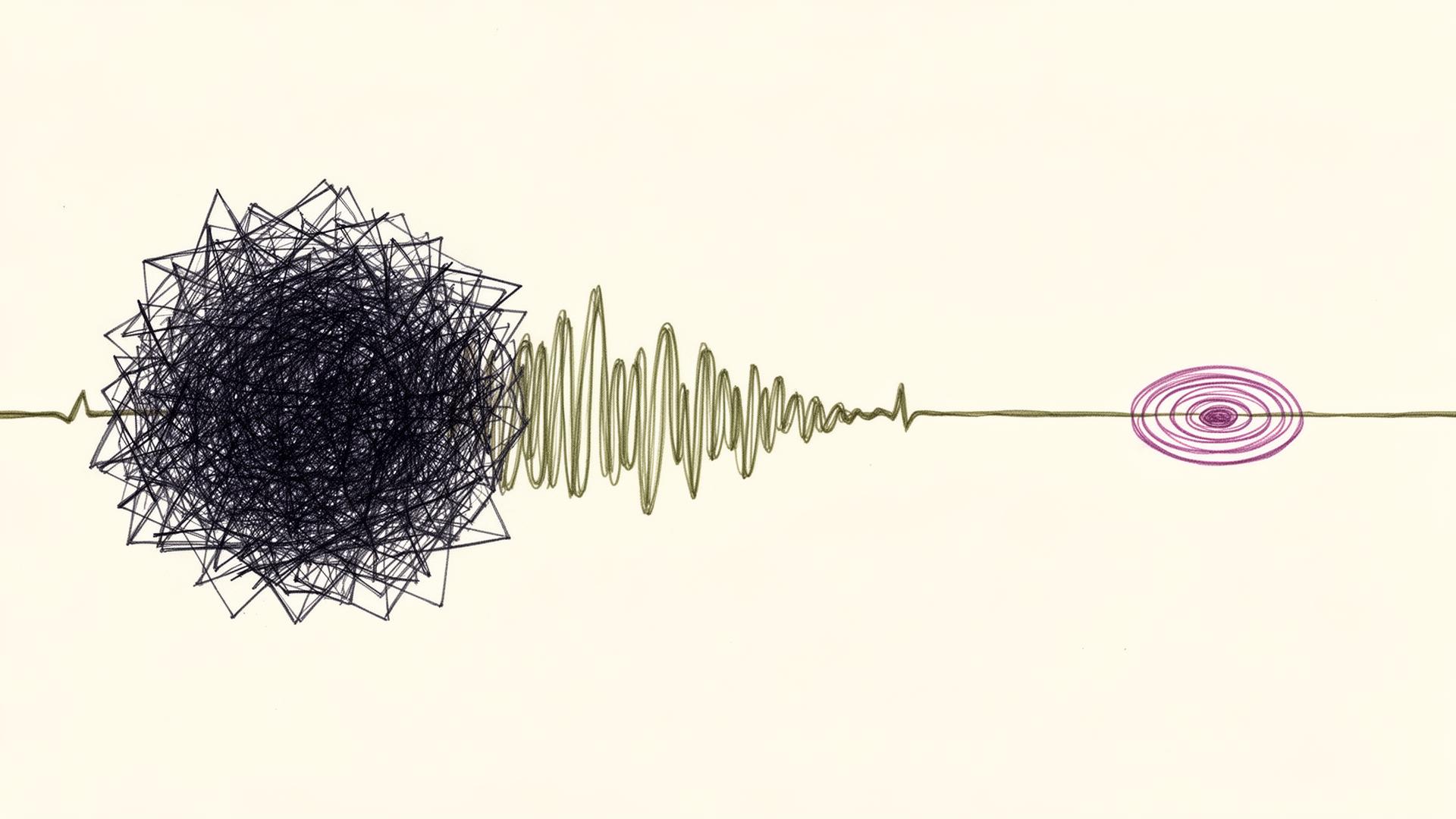
I used to assume the executives who went quietly numb during board meetings had simply lost their edge. The corporate wellness industry treats this withdrawal as an attitude problem, prescribing mindfulness apps and Friday yoga to fix it. I'm calling it. Apathy at the top of an organization is an autonomic shift. When the nervous system sustains chronic, high-level threat detection without recovery, the HPA axis—the control loop running from your brain to your adrenal glands—stops producing alarm and starts enforcing a shutdown. The executive staring blankly at a Q3 forecast has simply hit a physiological capacity limit.
You know what this looks like before you have the vocabulary for it. It's the open fridge at 8pm with absolutely no hunger. It's nodding along to a direct report while realizing you have no idea what they just said. You tell yourself you just need a vacation, but you're tired but wired, scrolling through real estate listings in Lisbon at 11:47pm because your brain refuses to power down. You wake up at 3am every night with a racing heart, yet by 3pm the next afternoon, your jaw is locked tight and you cannot muster a single opinion on a strategic pivot. You're exhausted but can't rest. The emails stack up, the Slack pings, and you feel entirely disconnected from your body while you draft replies you don't care about.
Common Questions
What is the HPA axis?
The hypothalamic-pituitary-adrenal axis is the communication loop between your brain and your adrenal glands. It controls how you react to stress. It releases cortisol to wake you up or deal with a threat, then quiets down when the danger passes.
Why do I feel numb when I am overwhelmed?
Numbness is an active survival state. When the nervous system perceives that fighting or fleeing a stressor is impossible, it triggers a dorsal vagal shutdown. Your heart rate slows, digestion stalls, and you disconnect from your environment to conserve energy.
Can you fix burnout by changing your mindset?
Mindset interventions require prefrontal capacity, which goes offline during chronic stress. You can't think a dysregulated nervous system into a state of safety. The body requires physiological inputs to change its state before the mind can follow.
The Threat Response in the Conference Room
The modern employer wants you to believe a passive-aggressive Slack message is a normal communication style. To your biology, it is a predator. The brain's locus coeruleus acts as an alarm bell, flooding the system with noradrenaline. A little of this sharpens your attention. A daily, unremitting drip of it leaves you in a state of hypervigilance. There is a reason your shoulders stay glued to your ears in the shower.
The wellness aisle loves to talk about optimizing performance. You can't optimize a system trapped in a defensive posture. When the HPA axis is constantly provoked by quarterly targets and infinite inboxes, it eventually stops fighting. It pulls the emergency brake. This is the exact moment you transition from feeling frantic to feeling absolutely nothing at all. This predictable progression requires nervous system regulation to reverse.
The Activist in Hiding
I used to believe people naturally stopped caring about the world as they got older and wealthier. Now I look at the C-suite and see profound physiological depletion. The capacity for empathy, moral outrage, and creative problem-solving are biologically expensive. They are features of a regulated state.
If you want to care about climate change, your community, or even just your kid's soccer game, you need the physical resources to process that emotional load. The quiet voice inside you that still wants to change things hasn't disappeared. It is simply buried under an avalanche of unmanaged cortisol.
The capacity for outrage is a privilege of a regulated nervous system.
The Vagal Brake
Here is the machinery nobody explains during leadership seminars. The vagus nerve is the parking brake of the nervous system. Pull it, and the engine quiets. Kokorology measure its efficiency through vagal tone. High vagal tone means your heart rate variability is flexible, and your system can smoothly transition from high arousal back to rest.
When you are stuck in a freeze response—that hollowed-out, staring-at-the-wall state—your dorsal vagal complex has taken over. This is the oldest part of the autonomic system. It immobilizes you to survive. You can't negotiate with a freeze state using a color-coded calendar, and you can't exactly flee a performance review. You have to signal safety through the body first. Once you learn to do this, the results are immediate. Kokorology teach the exact protocols for this in the Library.
The 20 kg Warning Sign
I gained 20 kg during my corporate years while telling everyone I was fine. I assumed I just lacked discipline. I was wrong. The weight was a data point, an adaptation to chronic cortisol exposure that altered my insulin sensitivity and digestion. Every protocol I teach, I tested on myself first. The first lesson was that the body always wins.
When Kokorology run the Reset program, the hardest thing for high achievers to accept is the mechanical reality of their exhaustion. Slowing down is a physiological requirement. Your body runs its own chain of command, and it doesn't report to HR.
Regulation as a Political Act
The culture of optimization demands you treat yourself as a machine to be endlessly tuned for maximum output. The ultimate quiet rebellion is refusing to play. A regulated nervous system is dangerous to a dysfunctional workplace because it has the clarity to say no. Reclaiming your autonomic function from the demands of your inbox is how you find your voice again.
You don't need a vision quest. You need a functioning interoceptive network. The micro-practices inside Anchors are built specifically to interrupt the threat response in real time, long before the apathy sets in.
What to do this week
- Log the state. Three times this week, when you feel the numbness creep in, pause. Ask yourself if you are in fight, flight, or freeze. Naming the state activates the interoceptive network.
- Force a visual shift. When you are locked onto a screen, your vision narrows, which signals threat to the brain. Look out a window at a horizon for two minutes to physically widen your gaze and dial down the alertness machinery.
- Check the dose. Note exactly how many cups of coffee you drink before 2pm. If the second one makes your hands shake without waking up your brain, you are pouring caffeine onto an already exhausted adrenal system.
Where this fits in the Kokorology system
Burnout is a predictable physiological response to an unsustainable environment. The targeted movements in Anchors handle the acute symptoms. The deeper task of expanding your capacity to handle stress without shutting down is the core of the Performance curriculum.
Closing
The executive who stares blankly at the wall and the activist who wants to change the world are the exact same person. One is simply trapped in a biological shutdown. Stop trying to motivate yourself out of a state of physiological exhaustion. Regulate the state, and the person you thought you lost will quietly return.
- Start shifting your nervous system today with the 7-day guided Reset.
- Build the physical capacity for leadership inside the Performance L2 track.
- Get a 60-second nervous system tool every Tuesday in the free newsletter.
TL;DR
Executive burnout is a physiological capacity limit. When the nervous system sustains chronic, high-level threat detection, the HPA axis shifts the body into a dorsal vagal freeze state to survive. The resulting numbness and apathy are biological adaptations to an unsustainable environment. Regulating the autonomic nervous system and restoring vagal tone rebuilds the physical capacity required for empathy, engagement, and action.
Sources
- Julian Thayer (2021). Vagal Tone and the Physiological Regulation of Emotion. Biological Psychology.
- Grünewald (2024). Executive Function Recovery Trajectory After Clinical Burnout: 24-Month Follow-up. Journal of Occupational Health Psychology.
- Hugo Critchley (2023). Interoception and Autonomic Regulation in Stress. Journal of Neuroscience.
- Lisa Feldman Barrett (2020). Seven and a Half Lessons About the Brain. Houghton Mifflin Harcourt.