Nervous System
Most Women Doing 'longevity Training' Are Speed-running Burnout in a Sports Bra.
Heavy lifting, Norwegian 4×4, sauna stacks — none of it works on a dysregulated nervous system. The Bio-Feedback Gate, and the polyvagal prerequisite the Instagram University keeps walking past.
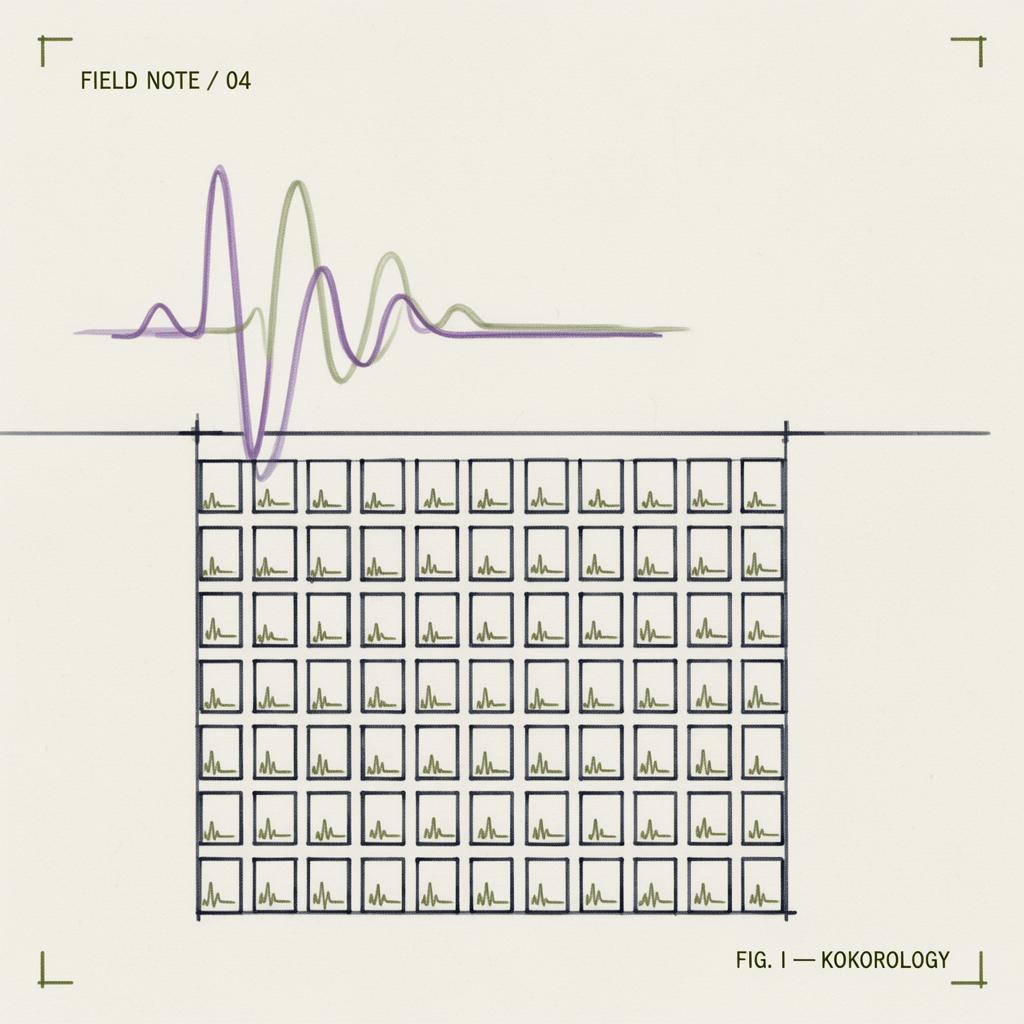
The wellness industry has convinced an entire demographic of exhausted women that the solution to their fatigue is to train like a tactical athlete before breakfast. I am watching thirty-something professionals stack Norwegian 4x4 intervals and heavy deadlifts on top of a nervous system that is already redlining just from the logistics of a Tuesday. Forcing a chronically overloaded body through extreme physical stress doesn't manufacture resilience. It just accelerates the collapse.
You already know what this feels like. You do the brutal 6am workout, get the temporary adrenaline spike, and then hit a wall so hard at 3pm that your jaw physically locks up while staring at your inbox. You are technically exhausted but can't rest, vibrating with a low-grade hum of urgency that never quite switches off. You open the fridge looking for a hit of dopamine despite having zero appetite. You feel disconnected from your body during the warm-up, pushing through the stiffness because the app told you to close your rings. By the time you get to bed, you are entirely tired but wired, staring at the ceiling until you eventually drift off, only to wake up at 3am every night with your heart racing. The metrics on your wrist say you are optimising your health. Your felt state says you are surviving a slow emergency.
Common Questions
Why isn't my longevity training working?
When your allostatic load—the cumulative wear and tear of daily stress—is already peaking, extreme exercise doesn't trigger positive adaptation. The HPA axis registers the intense workout as just another threat, flooding the bloodstream with cortisol. The body responds with fatigue and inflammation rather than muscle synthesis.
Is high-intensity training bad for women?
Intense intervals and heavy lifting are excellent stimuli for a regulated state. They become destructive when applied to a system that lacks the baseline capacity to repair itself. Eliciting a physical adaptation requires a functioning recovery circuit to process the stressor once the workout ends.
What is the Bio-Feedback Gate?
It is the physiological boundary where a stressor stops being useful and starts causing damage. A regulated nervous system easily senses this limit and prompts you to pull back. A dysregulated system mutes interoception, causing you to mistake a warning signal for an invitation to push harder.
The Hormesis Hustle
I've stopped recommending hormetic stress protocols to anyone who hasn't first stabilized their baseline. The performance world is completely enamoured with hormesis—the biological principle that a brief, intense stressor signals the body to adapt and grow stronger. They prescribe cold plunges, sauna stacks, and brutal sprints. Hormesis is highly effective when applied to an organism with plenty of excess capacity. When you apply that same acute stressor to a woman drowning in cortisol from sleep deprivation and back-to-back meetings, you are simply adding load.
To the hypothalamic-pituitary-adrenal (HPA) axis, there is no philosophical difference between a looming deadline and a heavy set of squats. The brain registers demand and signals the adrenal glands to release cortisol and adrenaline to meet it. When this loop stays active chronically, allostatic load accumulates. The capacity to adapt shrinks. True longevity requires reducing the incoming demands so the tissue has room to repair faster than you burn out. Kokorology cover this biological math extensively in the nervous system regulation curriculum.
The Insula’s Quiet Veto
The ability to accurately perceive the internal state of your body is called interoception. The primary hub for this data processing is the insular cortex, which maps visceral sensations like heart rate, oxygen demand, and muscle fatigue. When you are regulated, interoception is crisp. You feel the exact moment a productive lift becomes a straining, mechanical risk. You sense the boundary.
Chronic stress floods this circuitry with static. Elevated circulating catecholamines create so much noise that the quiet, crucial messages from the insula are drowned out entirely. The brain loses its resolution. You stop being able to differentiate between genuine metabolic energy and the frantic buzz of stress hormones. I used to believe that pushing through fatigue was a requirement for progress. Now I see it as a profound loss of biological data. High-achieving women routinely train themselves to ignore the precise sensory signals designed to keep them alive. Rebuilding that accuracy means turning down the static so you can actually hear the machinery running. The daily tracking inside the Journal exists specifically to restore this interoceptive resolution.
The Parasympathetic Prerequisite
Heavy lifting only works if you can stop lifting. The entire longevity premise relies on your ability to shift out of sympathetic arousal—the highly mobilized state required to sprint—and drop deeply into a parasympathetic state to consolidate the gains. Kokorology obsess over the activation. The actual adaptation happens in the descent.
The primary lever for this deceleration is the vagus nerve. If your vagal tone is poor from months of navigating a hostile inbox, the biological deceleration becomes stiff and unresponsive. You execute the workout, spike your cortisol, and then stay there. The heart rate remains elevated. The jaw stays tight. You remain highly mobilized for hours after the gym bag is put away. No amount of protein pacing will repair tissue if the autonomic nervous system refuses to stand down. Before you attempt a max-effort lift, you need a responsive recovery circuit. I start most clients on a dedicated the Anchors library practice just to prove to their brain that the demand has passed.
The most advanced bio-hack is knowing when to stop.
Sleep Staging and Glymphatic Clearance
The most aggressive longevity protocol on the market is eight hours in a dark room. Cellular repair, muscle synthesis, and hormonal regulation do not occur on the treadmill. Growth hormone is secreted during slow-wave sleep. The brain’s glymphatic system—the fluid network that clears metabolic waste and neurotoxins from the central nervous system—only operates at full capacity during deep sleep.
Chronically elevated cortisol actively suppresses this architecture. It fragments your sleep cycles, pulls you out of slow-wave stages, and leaves you waking up feeling like you were hit by a truck. Attempting to force physical adaptation while your sleep architecture is compromised is a biological dead end. You must fix the sleep first. If the mere thought of organizing a wind-down routine feels overwhelming, the structured off-ramp in the the Reset helps lower the circulating cortisol before your head hits the pillow.
What to do this week
- Audit the baseline. Before you touch a weight, sit in your car for 60 seconds. Assess your resting state. If your jaw is clenched and your breathing is entirely in your upper chest, pick a 45-minute walk instead of the assault bike.
- Bookend the arousal. Before you start a heavy session, do two minutes of nasal breathing to deliberately shift your state. After your last set, lie flat on the floor with your legs elevated for five minutes. Manually signal to the vagus nerve that the demand is over.
- Secure morning photons. Walk outside within thirty minutes of waking. Ten minutes of natural light on the retina anchors the circadian rhythm, which dictates the cortisol curve that lets you actually sleep that night.
Where this fits in the Kokorology system
The impulse to use intense training to force a bodily adaptation makes sense, yet it demands a biological bandwidth many women currently lack. You must restore the physiological baseline using nervous system regulation before the system can safely process extreme stressors. Once that capacity is stable, the tools in the Performance L2 tier allow you to push those physical boundaries without triggering an autonomic crisis.
Closing
The goal is to exercise in a way your specific biology can process on a Tuesday at 6am. Stop adding acute stress to chronic exhaustion. Capacity is built in the recovery phase, and the tissue only recovers when it feels safe.
- Start with the foundations in Regulation (L1), the course on rebuilding your nervous system from the ground up.
- Assess your daily baseline with the Kokorology Journal, your tool for tracking interoception and state shifts.
- Get the free Nervous System Quick-Start Guide to learn the architecture in 15 minutes.
TL;DR
Much of today's longevity training applies high-intensity physical stress to nervous systems that are already redlining from daily demands. Chronic stress elevates allostatic load and disrupts the HPA axis, causing the body to register aggressive workouts as an additional threat rather than an adaptive stimulus. Forcing hormetic stress onto an overloaded system accelerates fatigue and compromises sleep architecture. Rebuilding resilience requires restoring vagal tone and interoceptive awareness first. The body can only adapt to heavy lifting and intervals when it possesses the baseline capacity to down-regulate and repair.
Sources
- Robert M. Sapolsky (2004). Why Zebras Don't Get Ulcers. Holt Paperbacks.
- Julian F. Thayer (2012). A meta-analysis of heart rate variability and neuroimaging studies. Neuroscience & Biobehavioral Reviews.
- Bruce S. McEwen (2017). Neurobiological and Systemic Effects of Chronic Stress. Chronic Stress Journal.
- A. D. (Bud) Craig (2009). How do you feel — now? The anterior insula and human awareness. Nature Reviews Neuroscience.
- Maiken Nedergaard & Steven A. Goldman (2020). The Brain's Waste-Disposal System. Scientific American.