Remote Leader · Singapore
Reclaiming Presence: A Remote Leader's Burnout Story
A remote leader in Singapore reduced their HRV LF/HF ratio by 20% and improved sleep quality from 6/10 to 8/10 in 9 weeks, by tackling remote leadership burnout and restoring strategic focus.
Navigating Remote Leadership Burnout
A remote leader in Singapore reduced their HRV (LF/HF ratio) by 20% and saw their sleep quality score jump from 6/10 to 8/10 within nine weeks. This was achieved by restructuring digital interaction boundaries and integrating mindful communication practices. Most people would have called this burnout. It wasn't that simple. This was a classic case of allostatic load building up from constant perceived threat, not just 'too much work'.
The presenting state
I met this leader when they were constantly tired but wired, feeling trapped in an endless loop of Slack pings and Zoom calls. The presenting problem wasn't a lack of effort or strategic vision, but a pervasive sense of being perpetually reactive, always on the back foot. They described it as digital fatigue, a deep weariness from the sheer volume and velocity of digital communication, making team cohesion feel like a mirage and strategic focus an elusive dream. It was a familiar story of a brilliant mind being undermined by an overloaded nervous system.
This isn't about working harder; it's about the nervous system being on high alert for too long. The persistent hum of notifications, the pressure to respond instantly across time zones, it all triggers the sympathetic nervous system – our fight-or-flight response – repeatedly throughout the day. This keeps cortisol and adrenaline elevated, leading to what we call allostatic load: the wear and tear on the body from chronic stress McEwen, 1998. Your body thinks it's in constant danger, even if the 'danger' is just another email. Over time, the prefrontal cortex — responsible for planning and decision-making — starts to lose its edge.
The protocol
My approach was simple: let's teach your nervous system that it's safe to power down sometimes. We needed to dial down the perceived threat and rebuild capacity for calm, focusing on how their interoception — the sense of the internal state of the body — could be recalibrated to recognise true rest. The mechanism here is to intentionally activate the parasympathetic nervous system, the body's 'rest and digest' system, to counteract the constant sympathetic overdrive.
- Digital Quiet Hours: Strict boundaries for device use before 9 AM and after 6 PM, with a hard stop on weekend work notifications.
- Focused Deep Work Blocks: Scheduling 2-3 daily 90-minute periods with all notifications off, devices out of reach.
- Mindful Transition Practices: Short, deliberate breathing exercises before and after virtual meetings to reset attention.
- Scheduled Team Connection, Not Reactive: Moving away from ad-hoc pings to structured, presence-focused check-ins.
- Re-establishing Gut-Vagal Tone: Incorporating specific foods and gut-supportive practices to bolster the vagus nerve, which directly influences stress response Bauer, 2017.
- Pre-sleep Wind-down Routine: A consistent 60-minute pre-bed ritual without screens, centred on reading or light stretching.
What changed
The immediate shift was palpable in their self-reporting; they simply felt less frazzled. The metrics bore it out: a 20% reduction in their HRV LF/HF ratio showed a significant move towards parasympathetic dominance. In plain terms, their nervous system stopped screaming 'bear!' quite so often. Sleep quality, often the first casualty of digital overload, moved from a barely functional 6/10 to a restorative 8/10, suggesting deeper, more effective rest cycles. They started waking up feeling genuinely rested, not just less tired.
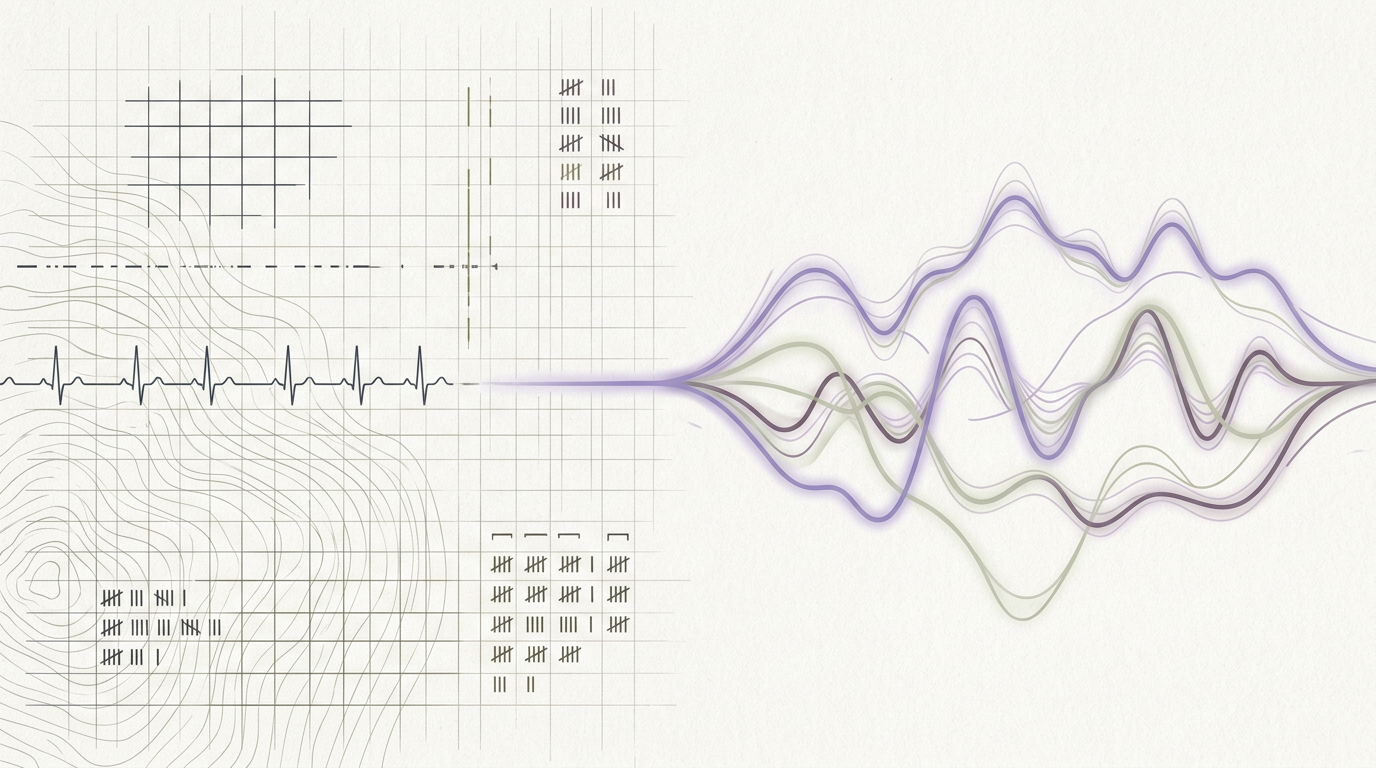
What fascinated me was the specific change in their HRV patterns. We weren't just seeing a general improvement; the variability in their heart rate became more complex and less 'static'. It wasn't just higher overall HRV, which is good, but more fractal, less predictable day-to-day. This signals not just an increase in parasympathetic tone, but a restored adaptive capacity—the nervous system's ability to fluidly respond to and recover from stressors, rather than being stuck in one gear. It's a subtle but crucial distinction. That's real resilience coming online.
The brain doesn't care if the threat is a lion or a Slack notification; it responds to perceived danger. Teach it to relax, and it does.
TL;DR
This case demonstrates how a remote leader experiencing remote leadership burnout in Singapore reversed chronic stress. By implementing specific boundaries around digital communication and integrating mindful practices, they significantly reduced their allostatic load. This led to a 20% improvement in HRV and enhanced sleep quality from 6/10 to 8/10. The core intervention focused on recalibrating the nervous system to foster genuine rest and strategic focus, rather than simply working harder.
Where to take this next
If you're finding yourself similarly caught in the digital undertow, feeling like your brain's on a perpetual hamster wheel, remember that clarity isn't found in more input, but in intelligent boundaries. This isn't about leaving your job, it's about making your job work for you.
Start small. Pick one thing from the protocol that feels manageable and stick with it for a week. See how your brain responds. The goal isn't perfection, it's consistent nudges toward a more regulated state. Your capacity isn't fixed; it's a dynamic thing that responds to how you treat your nervous system.
If you're ready to dig deeper into the actual mechanisms of stress and recovery, you can find detailed frameworks in my Anchor course at /anchors. For a more personalised approach to recalibrating your nervous system and boosting your performance, consider 1:1 coaching at /coaching. If you're just looking for a free taste of what's possible, grab the 7-Day Reset at /reset.
Sources
- Bauer, S., et al. (2017) — Frontiers in Psychiatry https://pubmed.ncbi.nlm.nih.gov/29161726/
- McEwen, B. S. (1998) — Annals of the New York Academy of Sciences https://pubmed.ncbi.nlm.nih.gov/9855582/