Nervous System
Beta-adrenergic tone is why people are tired and wired
Being tired but wired isn't a failure of grit. It's a hardware problem where your body’s accelerator is jammed on with an empty fuel tank.
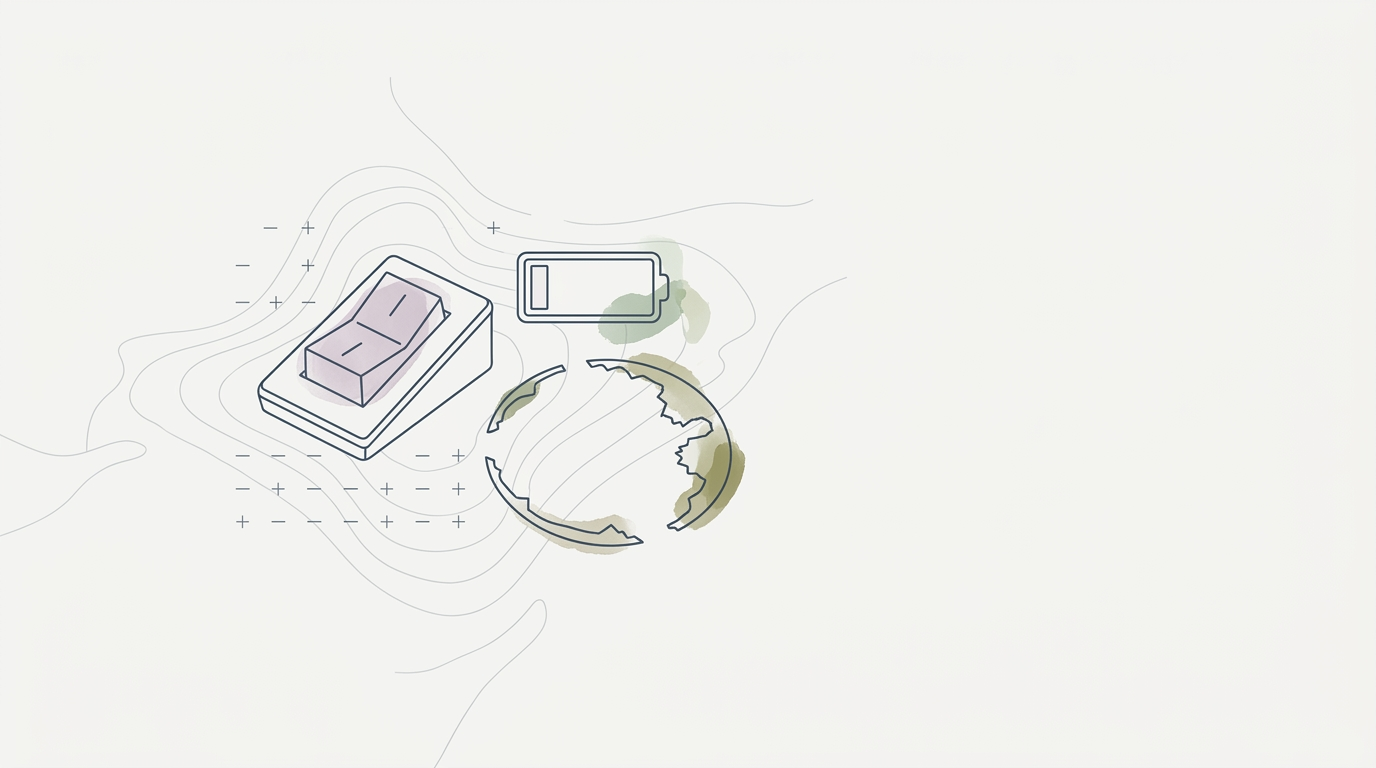
The problem with being tired but wired is that it feels like a personal failing, a sign you’re not managing your perfectly normal life with the required grit and a gratitude journal. This is a misreading of the evidence. Being tired but wired isn't a character flaw; it's a physiological state where your body’s accelerator is jammed on, even though the fuel tank is empty. It's an architectural problem, not a moral one.
You know the feeling intimately. It’s 10 pm, your body is heavy with exhaustion, but your mind is running a frantic inventory of tomorrow’s anxieties. You get into bed and feel your heart racing when you lie down. You're so tired, but you can't sleep even though you're exhausted. You might wake up at 3am every night, mind buzzing, unable to get back to sleep. During the day, you feel anxious for no reason, a low-grade hum of dread that makes your jaw ache and your shoulders creep towards your ears. You feel disconnected from your body, running on a strange, irritable energy that isn't restorative and certainly isn't rest.
Common Questions
What does 'tired but wired' actually mean for the nervous system?
It means your sympathetic nervous system—your 'fight-or-flight' accelerator—is overactive, while your parasympathetic system—your 'rest-and-digest' brake—is underactive. Your body is flooded with stress hormones like adrenaline, but your actual energy reserves are depleted, creating a state of agitated exhaustion.
Is being tired but wired just a symptom of stress?
It's a specific signature of chronic, low-grade stress. It indicates that your HPA axis (the stress-hormone control loop) is dysregulated. Your body is stuck in a state of high alert, unable to access the 'off' switch and return to a baseline of calm, even when the immediate threat has passed.
Can coffee or alcohol make being tired but wired worse?
Yes, profoundly. Caffeine further stimulates an already over-stimulated system, borrowing energy you don't have. Alcohol might feel like it helps you switch off, but it fragments your sleep architecture, preventing the deep, restorative rest your nervous system desperately needs to repair itself.
Why you are tired but wired after a normal day
The culprit is rarely a single dramatic event. It’s the relentless accumulation of small demands across a 'normal' day. The back-to-back calls, the passive-aggressive email, the school run in traffic, the argument over the dishwasher. Your nervous system doesn’t have a separate budget for ‘work stress’ and ‘home stress’; it all comes out of the same account. Each demand triggers a small squirt of stress hormones from your HPA axis—the command loop running from your brain to your adrenal glands. In a well-regulated system, this response switches off once the demand is met. In a chronically loaded one, it never quite does.
This is the architecture of the modern 'normal' day, whether you're navigating corporate hustle culture in the the system, the intense family rhythms of Mumbai, or the late-night social schedules of the Gulf. Your system is kept in a state of low-grade, constant activation. It’s not one big alarm; it’s a thousand tiny smoke detectors beeping all day long. By evening, the system is so saturated with alert signals that it can’t hear the command to stand down. This is the root of being tired but wired, and it's a core concept Kokorology explore in the foundational course on nervous system regulation.
Your body is not broken. It's just running software designed for a different operating environment.
The first intervention isn't a complicated protocol. It's to introduce moments of physiological 'off' during the day. This isn't about 'relaxing'; it's about giving your body a signal it understands. When you feel that familiar buzz of anxiety, try one of the simplest 60-second hacks: run your wrists under cold water for 30 seconds. The temperature change on this highly vascularised area sends a powerful down-regulating signal to the brainstem, interrupting the stress loop. It's a manual override.
The real culprit: Beta-adrenergic tone
Here is the part of the conversation most wellness advice conveniently skips. The feeling of being 'wired' has a name: high beta-adrenergic tone. Think of it as the volume knob for your adrenaline and noradrenaline system. When this tone is high, your heart beats faster, your pupils dilate, your muscles are primed, and your brain is hyper-vigilant. It’s the perfect state for outrunning a predator. It is a terrible state for trying to fall asleep or digest your dinner.
In a state of chronic stress, this volume knob gets stuck on high. Your adrenergic receptors become overly sensitive, meaning it takes less and less of a stimulus to trigger a full-blown alert response. This is why a minor inconvenience, like a slow internet connection, can feel disproportionately infuriating. Your body is physically reacting as if it's a genuine threat. This is why telling someone who is tired but wired to 'just calm down' is like telling someone in a hurricane to 'just hold on to their hat'. The forces are physiological, not psychological.
Understanding this moves the work from your mind to your body. You can't think your way out of high adrenergic tone. You have to give the body a different set of instructions. This is where practices that influence vagal tone come in. The vagus nerve is the main brake on the sympathetic nervous system. Stimulating it—through practices like slow, extended-exhale breathing—directly counteracts the adrenergic 'noise'. It's not magic; it's mechanics. Tracking these subtle shifts in your body's state is the entire point of keeping a nervous system Journal, turning abstract feelings into usable data.
What to do this week
- Front-load your light. Before you check your phone, get 10 minutes of direct morning sunlight. This is the most powerful signal for anchoring your circadian rhythm, which governs your cortisol and energy cycles. No sun? A daylight lamp works.
- Practice the physiological sigh. At least three times a day, take two sharp inhales through your nose followed by a long, slow exhale through your mouth. This is the fastest known way to voluntarily calm the nervous system and offload carbon dioxide.
- Eat protein and fat within an hour of waking. Your body has been fasting all night. Starting the day with caffeine and sugar sends your blood glucose on a rollercoaster that your stress system has to clean up. A stable breakfast provides the raw materials for stable energy.
- Bookend your commute. If you commute, use the journey home to downshift. Instead of listening to a stressful podcast or making calls, try silence or non-lyrical music. Create a clear boundary between your work-state and your home-state.
Where this fits in the Kokorology system
This state of being tired but wired is a classic readout of nervous system dysregulation. It's often the first signal that your capacity is overloaded and your architecture needs attention. It's the starting point for the work Kokorology do in the 7-Day Reset and the foundational principles Kokorology teach in the pillar article on nervous system regulation.
Closing
The first step isn't to fix it, but to notice it with precision. The second is to give your body a new set of instructions.
- Start with the system. The 7-Day Reset is a structured on-ramp to rebuilding your regulatory capacity from the ground up.
- Master the mechanics. Go deeper into the architecture of your nervous system with the Regulation (L1) course.
- Get the weekly brief. Join the newsletter for one practical nervous system insight you can use, delivered every Tuesday.
TL;DR
The feeling of being tired but wired is not a personal failure but a physiological state of high beta-adrenergic tone. Your body's stress response (the sympathetic nervous system) is stuck in the 'on' position, while your energy reserves are depleted. This is caused by the slow burn of chronic, low-grade stress from a 'normal' day. The solution is not more willpower, but architectural interventions like morning light, strategic pauses, and breathwork to help your nervous system find its 'off' switch.
Sources
- McEwen BS (2017). Neurobiological and Systemic Effects of Chronic Stress. Chronic Stress.
- Sinha R (2008). Chronic Stress, Drug Use, and Vulnerability to Addiction. Annals of the New York Academy of Sciences.
- Walker MP (2017). Why Kokorology Sleep: opening the Power of Sleep and Dreams. Scribner.
- Balban MY et al. (2023). Brief structured respiration practices enhance mood and reduce physiological arousal. Cell Reports Medicine.
- Thayer JF (2009). Vagal tone and the inflammatory reflex. Cleveland Clinic Journal of Medicine.