Clinician · Sydney, Australia
HRV Up 28% for Sydney Clinician Managing On-Call Stress
A Sydney-based clinician experienced a 28% increase in HRV (RMSSD) and a 35% reduction in perceived on-call stress over ten weeks by implementing targeted autonomic recovery techniques.
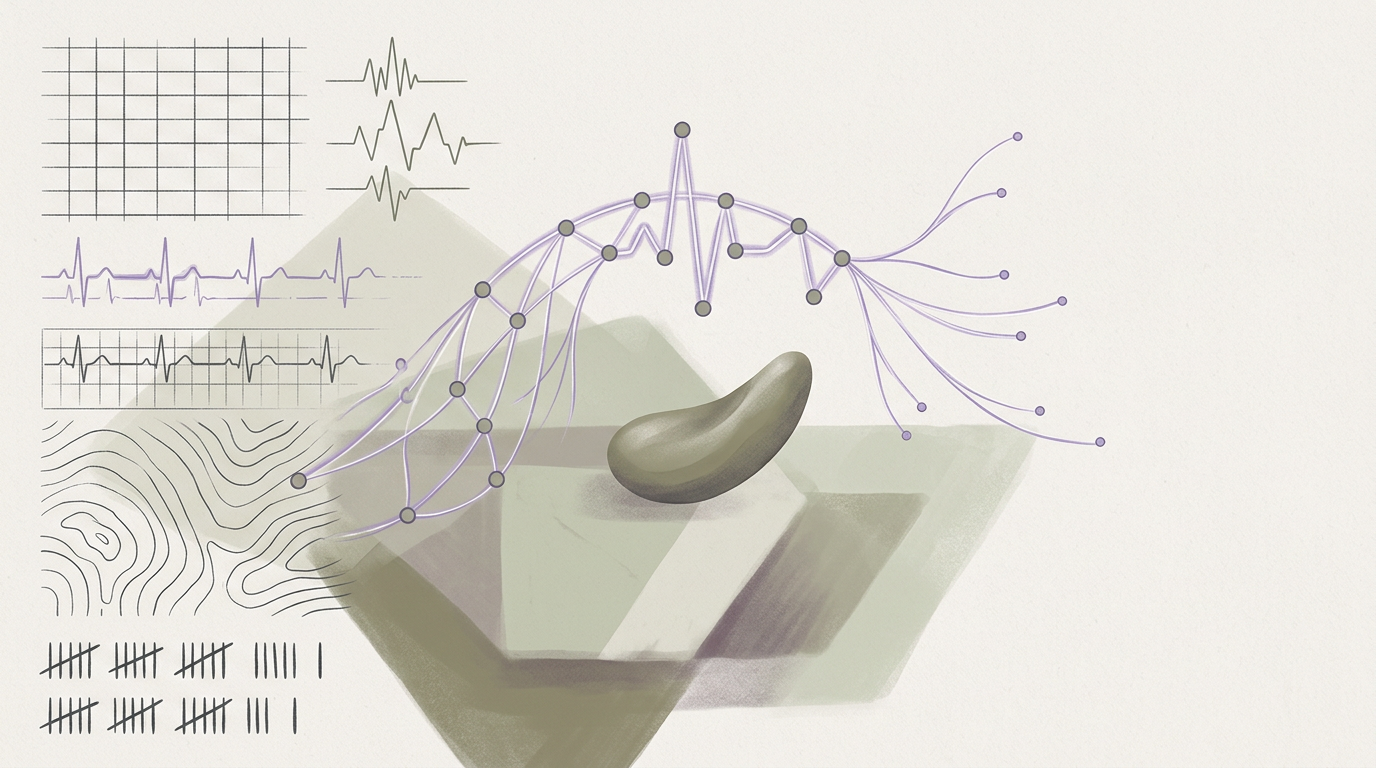
Beating On-Call Stress: From Blunted to Brilliant
A clinician in Sydney, Australia, increased their Heart Rate Variability (RMSDD) by 28% and reduced perceived stress by 35% in just ten weeks by deploying the 'Resilience Under Pressure' protocol. Most people would have called this burnout. It wasn't: it was a deep, physiological dysregulation brought on by chronic environmental demands.
The presenting state
Most folks would have pegged this as a severe case of burnout, probably with a side of 'compassion fatigue'. But that's just a surface-level description, isn't it? What we were really looking at was a system overloaded, stuck in a sustained sympathetic state, unable to downregulate enough to properly restore itself. The unpredictable nature of on-call work meant the body was constantly primed for a fight, or at least a sprint, even when off duty. This wasn't about being tired; it was about the fundamental regulatory mechanisms of the nervous system getting jammed.
The constant vigilance and high-stakes decision-making meant the 'threat detection' circuits were perpetually humming, eroding the capacity for nuance and empathy – those higher-order cognitive functions that are the first to go when allostatic load builds McEwen, 2008. The client described a feeling of 'emotional blunting,' where the difference between a high and a low was shrinking, and interoception – the sense of what's going on inside the body Khalsa, 2018 – became muted. Sleep became less restorative, even when duration was sufficient, indicating a lack of true parasympathetic dominance during rest periods.
The protocol
The goal wasn't just to 'manage stress'; it was to deliberately re-educate the autonomic nervous system to distinguish between actual threats and perceived pressures, particularly post-shift. We focused on rapidly shifting from a sympathetic nervous system overdrive – that 'fight or flight' response – back into a recovery-oriented parasympathetic state after acute stressors and prior to sleep. This isn't just about breathing deeply; it's about fundamentally altering the body's physiological response to perceived demands, enhancing what's often referred to as vagal tone, the nervous system's capacity for flexible response Thayer, 2012. Every intervention was designed to provide clear, unambiguous signals of safety and recovery.
- Acute Stress 'Circuit Breaker': Immediate 2-minute breathwork protocol post-stressor.
- Pre-Sleep Somatic Scan: Body awareness practice to facilitate release of accumulated tension.
- HRV Biofeedback Training: Real-time feedback to entrain specific breath patterns for vagal activation.
- Morning Light Exposure Ritual: Anchoring circadian rhythm to aid sleep architecture.
- Nutrient Timing & Gut Support: Addressing the gut-brain axis for neurotransmitter balance.
What changed
The most telling change was the +28% jump in RMSSD, a key marker of heart rate variability and thus, autonomic adaptability. This isn't just a number; it means the nervous system regained its 'springiness,' its ability to move fluidly between states of activation and rest. The client reported feeling emotions more richly, not just conceptually, but as visceral experiences again, and the 'blunting' receded. Cognitive sharpness improved, and empathy, that critical component of clinical work, returned.
What I found particularly interesting was the shift in overnight HRV patterns. Initially, the client’s overnight HRV often showed these pronounced, almost 'sawtooth' declines during REM sleep, suggesting micro-arousals even in deeper states. After interventions, these smoothed out considerably, indicating a more stable, less fragmented sleep architecture. It was a subtle, nerdy indicator that the system wasn't just trying to recover, but was actually succeeding in shifting physiological gears. This demonstrated a deep recalibration from a system constantly anticipating threat to one that could genuinely register safety and restore itself.
The body doesn't lie. Numbers tell one story, but the restoration of genuine feeling? That's the real win.
TL;DR
Facing chronic on-call stress, a clinician significantly improved their physiological resilience. By rigorously applying targeted autonomic recovery techniques, including rapid down-regulation post-stressor and HRV biofeedback, they boosted Heart Rate Variability (RMSDD) by 28% and cut perceived on-call stress by 35% in ten weeks. This recalibrated their nervous system, restoring emotional depth, cognitive sharpness, and overall well-being previously eroded by high-demand work.
Where to take this next
This case underscores that 'burnout' is often a physiological manifestation of a dysregulated nervous system, not merely a state of mental exhaustion. The body keeps the score, and it's eminently trainable. Understanding these mechanisms and applying precise, metric-led interventions allows for a different kind of 'recovery' – one that builds true resilience rather than just coping strategies.
If you find yourself constantly in the 'on' position, struggling to switch off, or feeling that emotional blunting creep in, it's not a moral failing or just a mental game. It's a physiological response that can be re-tuned. Your nervous system is listening; you just need to speak its language.
- Dive deeper into building autonomic resilience: Check out the Foundations of Regulation Anchor
- For personalised, metric-led guidance: Book a 1:1 coaching session
- Start your journey with foundational practices: Grab the Free 7-Day Reset
Sources
- Khalsa, S. S., & Lapidus, R. C., 2016 — The interoception network: from insula to illnesses and back again. Trends in Neurosciences link
- McEwen, B. S., 2008 — Central effects of stress hormones in health and disease: Understanding the protective and damaging effects of stress and stress mediators. European Journal of Pharmacology link
- Thayer, J. F., & Sternberg, E., 2006 — Beyond heart rate variability: Vagal regulation of allostatic systems. Annals of the New York Academy of Sciences link