Nervous System
Signs Your Nervous System Is Healing
Healing isn't a sunrise. The first sign you're getting better is feeling the backlog of static you spent years successfully numbing out.
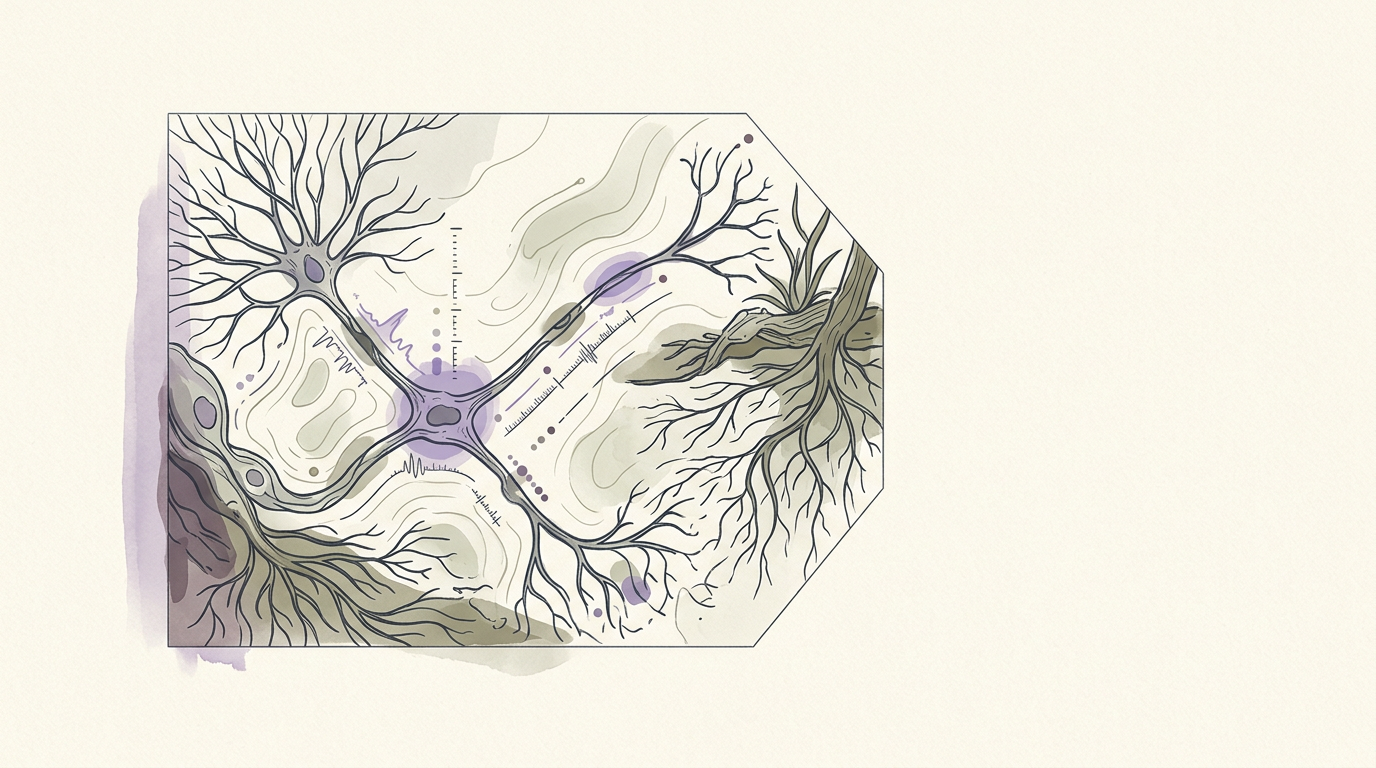
We’ve been led to believe that healing should feel like a sunrise. Soft, golden, a gentle arrival into a better state. This is a comforting fantasy, but a fantasy nonetheless. If you're genuinely looking for the signs your nervous system is healing, you can’t look for a highlight reel of blissful moments. Often, the first evidence that your architecture is changing for the better feels messy, uncomfortable, and frankly, a bit worse. It’s not about suddenly feeling good; it’s about finally having the bandwidth to feel more. The thawing of a system that’s been frozen for years is rarely a tidy process.
Common Questions
What does nervous system healing actually mean?
It's a structural renovation, not a mood boost. Healing means rebuilding your body's capacity to handle stress, discharge threat responses, and return to a baseline of calm without getting stuck. It’s less about eliminating bad feelings and more about expanding your ability to experience the full range of human emotion without capsizing.
Why do I feel worse now that I'm trying to "heal"?
This is the thaw. For years, your system may have been in a functional freeze to survive, numbing out signals of distress. As you create safety and reduce the load, that numbness wears off. You’re not getting worse; you’re just starting to feel the backlog of exhaustion and unprocessed stress you were too overwhelmed to feel before.
Is crying a lot a good sign?
It certainly can be. Crying isn’t just an emotion; it’s a physiological event. It can trigger a significant parasympathetic discharge, calming the body after a period of high tension. If you've been unable to cry for years and now find tears come more easily, it can be a beautiful sign that your system finally feels safe enough to let go.
Related anchors: burnt-out anchor · wired-tired anchor · performance anchor
Feeling More, Not (Just) Better
The first real indicator of nervous system repair isn't a sudden, beatific calm. It’s the return of sensation. After years of living from the neck up, you might suddenly notice the tension in your jaw, the dull ache in your lower back, or that you’ve been holding your breath. This isn’t a new problem; it's an old one that your brain, now less consumed with managing external threats, finally has the resources to register.
This faculty is called interoception—your brain's capacity to sense and interpret your body's inner landscape (Craig, 2002). A chronically stressed system blunts this sense to conserve energy. When it comes back online, it feels like someone turned up the volume on your body. It's tempting to interpret this as a setback, but it's the opposite. You're simply getting a more accurate readout from your own hardware. Your ability to notice you're thirsty before you have a dehydration headache is a profound win for your regulatory architecture. Learning to read these signals without judgment is a core skill we explore in the Kokorology /journal.
The Return of Appropriate Anger
Wellness culture often treats anger as a low-vibration inconvenience to be meditated away. This is dangerously misguided. Numbness isn't peace, and the return of a healthy capacity for anger is one of the most vital signs your nervous system is healing. I’m not talking about the brittle, explosive rage that comes from a system stuck in a fight-or-flight loop. I mean the clean, grounded anger that says, “No.”
This kind of anger is simply a boundary system coming back online. It’s your biology, firing on all cylinders, to protect your integrity. It’s the physical and emotional response to a violation. Feeling it—without being consumed by it—means you're no longer dissociated from your own needs. It means your body trusts you to have its back. Repressing it because it feels ‘unspiritual’ is like disabling your home’s smoke detectors because you don’t like the noise they make.
Healing isn't arriving at a place of permanent calm. It's getting really good at navigating the weather.
Nerve-Nerd Corner: Allostatic Load and the 'Thaw'
To get what’s really happening, we have to talk about architecture. Chronic stress doesn’t just make you feel bad; it creates what the pioneering neuroscientist Bruce McEwen called "allostatic load"—the cumulative wear and tear on your body from a chronically activated stress response system (McEwen, 2017). Think of your HPA axis (the brain-body circuit that manages cortisol) as an engine that’s been red-lining for a decade. The 'healing' process is about taking that engine offline for overdue maintenance.
The best analogy is a freezer. To survive, your system shoves unresolved threat responses, grief, and exhaustion into a neurochemical deep-freeze. It’s a brilliant survival strategy. But when you finally start creating safety—through practices that support your nervous system regulation—that freezer starts to thaw. All the messy, half-frozen stuff from years ago starts to defrost and demand your attention. This ‘thaw’ is why you might feel more anxiety, sadness, or exhaustion right when you start therapy or a meditation practice. It's not a sign you're doing it wrong; it's a sign the system is finally safe enough to start processing its backlog.
Boredom: The New Frontier
In our over-stimulated world, we’ve been conditioned to see boredom as a personal failure. If you're bored, you’re not hustling, not optimising, not living your best life. Rubbish. For a recovering nervous system, boredom is a huge victory.
It’s a signal that your dopamine-seeking circuits are finally quieting down. You no longer need the constant drip of novelty, outrage, or distraction to feel alive. You can just be. An afternoon where you feel a bit listless, where you don’t feel compelled to check your phone or fill the space with noise, is a trophy. It’s evidence that your baseline is resetting. Your system is learning that stillness is not a threat. It’s one of the quietest but most profound signs you're rebuilding your home within yourself. According to recent research on expressive writing, even the simple act of naming these states—”I feel bored,” “I feel restless”—can help down-regulate the brain's alarm centres (Pennebaker, 2023), making these quiet moments feel even more accessible.
What to do this week
Healing is abstract. Practice is concrete. Don’t try to 'heal your nervous system'. Just do this.
- Label, Don’t Judge. When a strong sensation or emotion arises, resist the urge to fix it or analyse its origin storey. Just name it, as if you’re a neutral scientist observing a phenomenon. "Ah, heat in the chest." "There's that clenching in my stomach." Tracking these observations in a tool like The Journal builds interoceptive accuracy over time.
- Schedule a 'Do Nothing' Window. Set a timer for just five or ten minutes. Sit without your phone, a book, or a podcast. Your only job is to stay in the room with whatever comes up—boredom, anxiety, restlessness. You’re not trying to achieve zen. You’re building the architectural capacity to tolerate stillness. These are the reps that rebuild your baseline.
- Find One Small 'No'. Identify one small, low-stakes situation this week where you can practice a boundary. It could be saying no to an extra task at work, declining a social invitation you don’t have capacity for, or even just not replying to a non-urgent text immediately. The goal is to feel the sensation of that boundary in your body. It might feel uncomfortable. That's part of the training.
TL;DR
The real signs your nervous system is healing are often uncomfortable: increased sensitivity to your own body, the return of appropriate anger, waves of exhaustion, and even boredom. This isn't a setback. It’s the 'thaw' as your body begins processing its allostatic load (the biological wear and tear of chronic stress described by McEwen). Healing isn't about feeling good; it's about expanding your capacity to feel everything accurately, a process that relies on rebuilding your interoceptive senses.
Where this fits in the Kokorology system
This process of thawing and rebuilding capacity is central to our work on the HPA axis, one of the three core biological systems we focus on. You can find the full protocol for managing this in The Cortisol Anchor and learn the foundational skills in our pillar on Nervous System Regulation.
Closing
This isn't about chasing a feeling; it's about renovating your foundations. The mess is part of the work. The goal isn't a life without friction. It's a life where you have the internal architecture to meet that friction with resilience and grace, knowing you can always find your way back to yourself.
- Start the renovation: Our 7-day course, The Reset, is the perfect starting point when you're feeling overwhelmed and don't know where to begin.
- Practice it daily: Build the skill of noticing and labelling inside The Journal, our guided daily practice for nervous system awareness.
- Get the field guide: Download our free guide to the nervous system, The Regulation Report, to understand the architecture you're working with.
Sources
- Craig, A. D. (2002). How do you feel? Interoception: the sense of the physiological condition of the body. Nature Reviews Neuroscience, 3(8), 655-666.
- McEwen, B. S. (2017). Neurobiological and systemic effects of chronic stress. Chronic Stress, 1.
- Pennebaker, J. W. (2023). Journaling and the nervous system: from expressive writing to affect labeling. Kokorology Research Library Collection.