news
Circular DNA could be a cancer weakness
New research published in Nature identifies tiny circular DNA fragments, known as extrachromosomal DNA or ecDNA, as a potential vulnerability in cancer cells. These ecDNAs, often carrying oncogenes, are highly unstable and can be targeted, suggesting a new pathway for cancer therapies. The discovery challenges prior assumptions about cancer's genetic stability, offering a different angle for intervention.
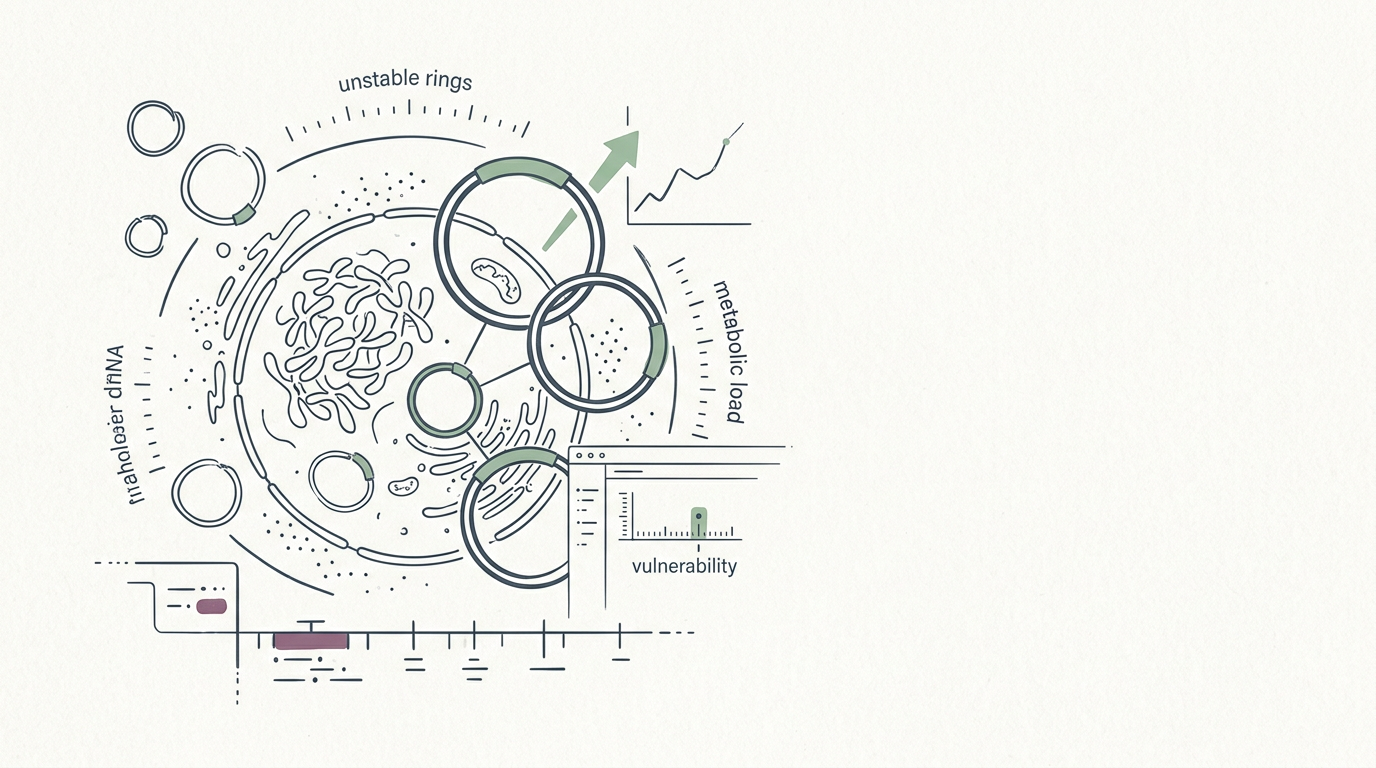
New research published in Nature identifies tiny circular DNA fragments, known as extrachromosomal DNA or ecDNA, as a potential vulnerability in cancer cells. These ecDNAs, often carrying oncogenes, are highly unstable and can be targeted, suggesting a new pathway for cancer therapies. The discovery challenges prior assumptions about cancer's genetic stability, offering a different angle for intervention.
The architecture take
I used to think cancer was just about rogue genes on chromosomes. Turns out, cancer cells are also juggling these unstable little rings of DNA, called extrachromosomal DNA or ecDNA, outside the main genome. The Nature paper found these ecDNAs are like a metabolic Achilles' heel, making cancer cells surprisingly reliant on their own instability. This isn't just lab esoterica; it means we might be able to hit cancer where it’s weakest by messing with how it manages these chaotic rings. Instead of trying to fix the main genome, maybe the play is to trip up its side hustles. It’s a good reminder that the body's vulnerabilities are often found in what’s trying hardest to adapt, not just what's broken.