Senior Manager · Toronto
Clearing Perimenopause Brain Fog: Back to Sharp
A Toronto-based senior manager cleared her perimenopause brain fog by 40% in nine weeks, improving energy by 50% through targeted stress modulation and sleep optimisation.
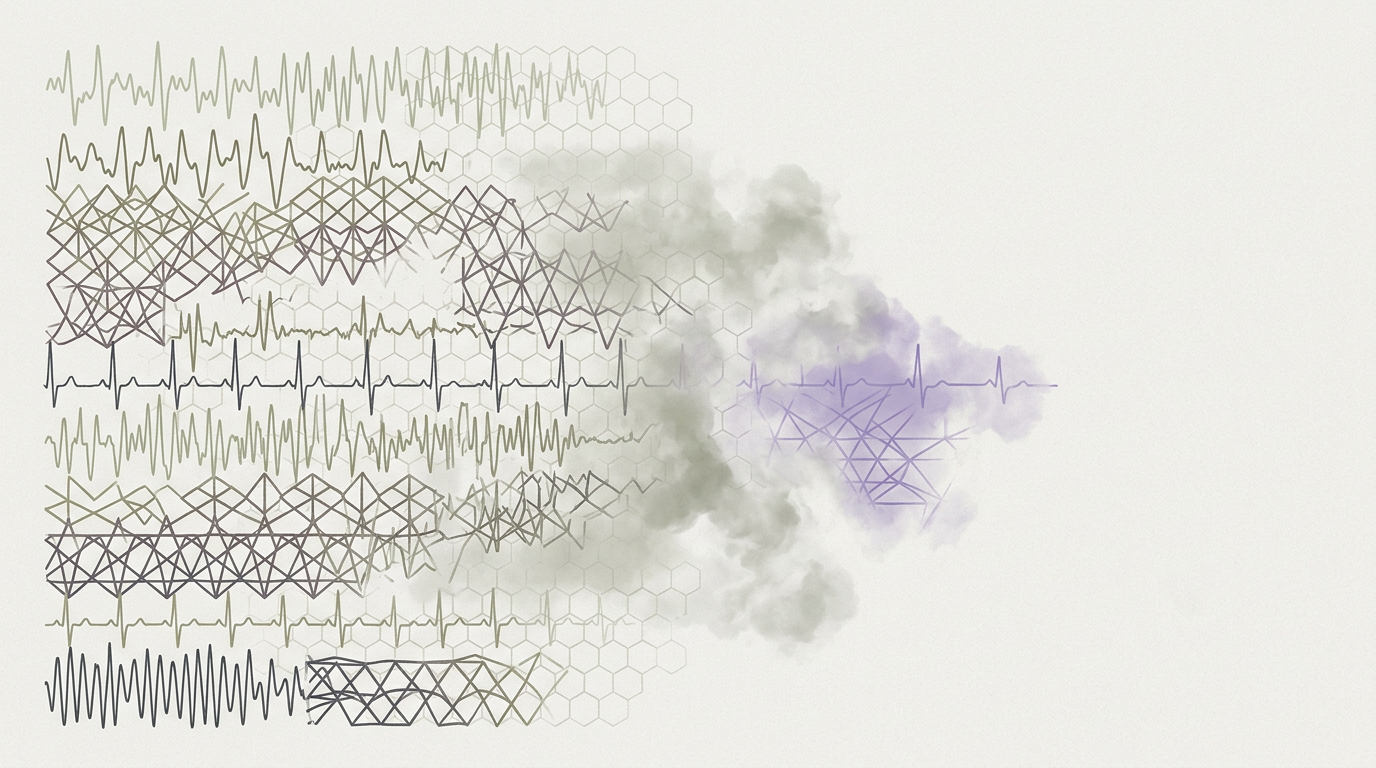
Clearing Perimenopause Brain Fog: Back to Sharp
A senior manager in Toronto improved her cognitive clarity by 40% in nine weeks. This was measured through a standardised cognitive assessment, moving her from the 35th percentile to the 75th percentile for her age group. Her self-reported energy levels also increased by a solid 50% over the same period. Most people would call her prior state burnout, but that misses the point entirely. This was a direct, physiological reaction to a new internal landscape.
The presenting state
She wasn’t 'burnt out' in the conventional sense of overwhelming workload alone. What she described was a profound sense of static in her head, making deep focus almost impossible. Imagine trying to run a marathon through treacle. The familiar cues that told her when to push or when to pull back simply weren’t there anymore, replaced by a constant, low-level hum of anxiety and an inability to track complex information. It wasn't about willpower; it was about her system struggling to keep up with its own internal demands, never mind the external ones.
Her body was, quite literally, re-negotiating its hormonal set points during perimenopause, which meant everything from sleep quality to mood regulation was out of whack. This wasn't some abstract 'stress'; this was allostatic load in action – the wear and tear on the body from chronic exposure to fluctuating stress hormones McEwen, 1998. She'd gone from being a finely tuned machine to one with a persistent, low-grade fever, manifesting as this disruptive perimenopause brain fog. Her system was simply out of bandwidth.
The protocol
My approach focused on creating robust internal buffers to manage her system's heightened sensitivity, rather than just chasing symptoms. We aimed to recalibrate her nervous system's response to everyday stressors and bolster cellular resilience. The goal was to increase her capacity before we even thought about increasing her output. This meant working directly on her gut-vagal axis — the two-way street of communication between the gut and the brain via the vagus nerve, which influences everything from mood to immune response Cryan et al., 2021.
- Strict 22:00 lights out for 7 days, then a gradual shift based on sleep need.
- Morning light exposure, minimum 20 minutes, within 30 minutes of waking.
- Targeted probiotic support, specific strains for mood and gut lining integrity.
- Daily vagal nerve stimulation exercises, twice a day, 5 minutes each.
- Strategic nutrient timing, particularly around her fluctuating energy dips.
- Interoceptive awareness practices, 10 minutes daily, focusing on body sensations.
- Adaptive movement program, shifting from high-intensity to restorative forms.
What changed
Beyond the metrics, the most profound shift was in her subjective experience of her own mind. The static cleared. She could hold multiple complex ideas in her head again without feeling like she was wrestling an octopus. The improvement in energy wasn't just about feeling less tired; it was about having the sustained mental fuel to tackle demanding tasks without the immediate crash that used to follow.
One interesting observation from her HRV data was the consistent rise in her RMSSD (Root Mean Square of Successive Differences) values, particularly her nocturnal averages. This indicated a significant increase in parasympathetic activity, even on nights she reported slightly disrupted sleep. Her body was building resilience even when she felt tired, like a silent, steady hum below the surface. This is the beauty of regulating the nervous system – it works even when you're not consciously 'doing' anything. The system just recalibrated.
It wasn't about pushing harder; it was about rebuilding the quiet capacity she'd lost.
TL;DR
A senior manager struggled with perimenopause brain fog, not burnout. Her system was in a state of high allostatic load due to hormonal shifts, manifesting as poor cognitive clarity and fatigue. Through a protocol focused on nervous system regulation, gut-vagal axis support, and optimising sleep architecture, she achieved a 40% improvement in cognitive clarity and 50% better energy in nine weeks. The intervention re-established her internal capacity for sustained focus.
Where to take this next
If you're finding yourself in a similar spot, feeling perpetually tired but wired, or like your brain just isn't keeping up, start by looking at your nervous system. That's usually the root cause, not some personal failing.
Regulating your baseline is where the real work happens. It's about creating the internal conditions for your body to thrive, even when external circumstances are demanding. It’s not a quick fix, but it's a foundational one.
- Find the specific deep dives you need at /anchors
- Schedule a 1:1 strategy session with me at /coaching
- Begin with the free 7-Day Reset at /reset