Daily movement
The Physiological Sigh
A rapid, potent breathing pattern to reset the nervous system, reducing acute stress and anxiety.
A rapid, potent breathing pattern to reset the nervous system, reducing acute stress and anxiety.
Pranayama (yogic breathing practices), though its specific mechanism has been elucidated by modern neuroscience. · Described by Andrew Huberman, drawing on the work of Jack Feldman, a neurobiologist at UCLA. · Acute stress, anxiety, overwhelm, or a need for rapid physiological down-regulation. · Perform 1-3 physiological sighs in a sequence. This can be repeated as needed throughout the day, particularly during moments of heightened stress or before demanding cognitive tasks.
Why it works
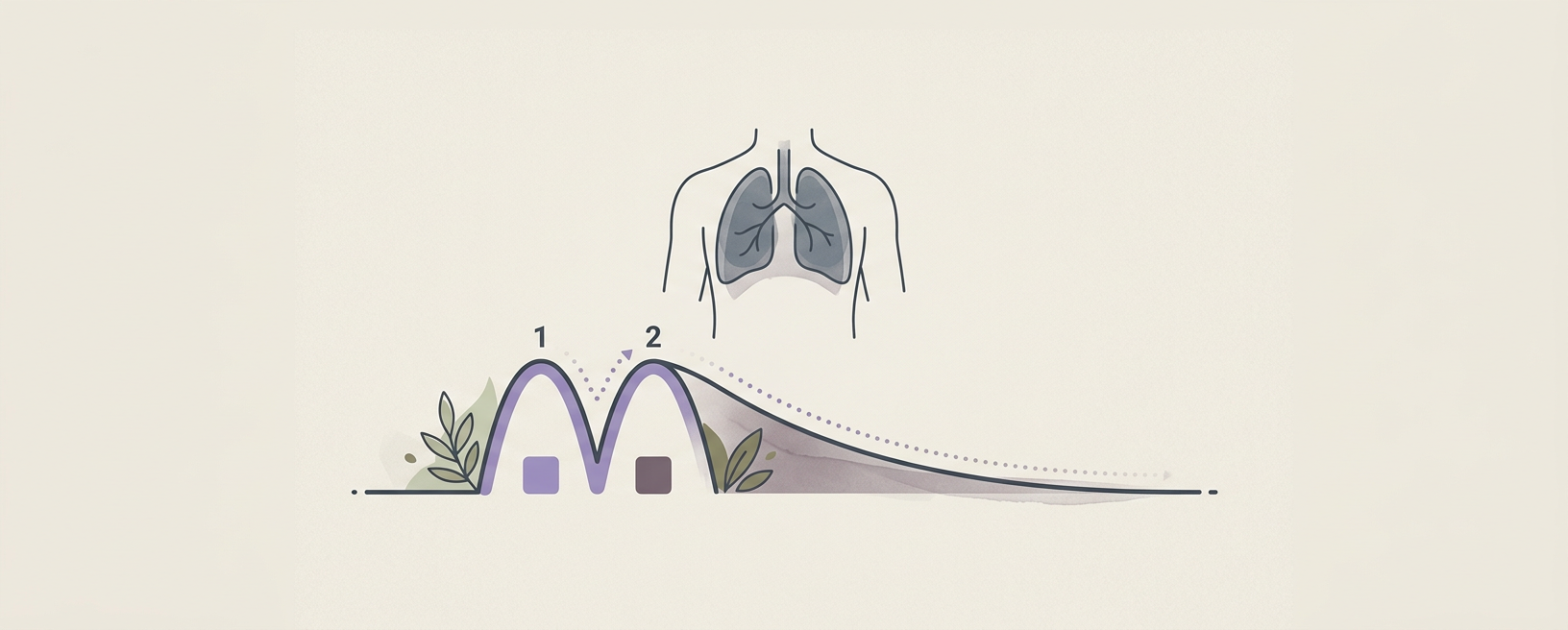
The physiological sigh involves two inhales followed by an extended exhale. The double inhale inflates the alveoli (tiny air sacs in the lungs) that have collapsed, increasing lung surface area. This allows for greater oxygen and carbon dioxide exchange. The subsequent long exhale expels the maximum amount of CO₂, a key signal to the brain to down-regulate the sympathetic (fight-or-flight) nervous system and activate the parasympathetic (rest-and-digest) nervous system. This direct neuro-respiratory mechanism quickly shifts the body from a state of arousal to one of calm.
How to practice
First Inhale: Take a deep, full inhale through your nose, filling your lungs as much as possible.
Second Inhale: Without exhaling, immediately take a second, shorter, sharper inhale through your nose, attempting to pull in a small additional volume of air.
Exhale: Slowly and completely exhale all the air through your mouth, making an audible "sigh" sound. Focus on making this exhale as long and deliberate as possible, emptying your lungs fully.
Pause: Allow for a natural pause before your next breath if comfortable.
First Inhale: Take a deep, full inhale through your nose, filling your lungs as much as possible.
Second Inhale: Without exhaling, immediately take a second, shorter, sharper inhale through your nose, attempting to pull in a small additional volume of air.
Exhale: Slowly and completely exhale all the air through your mouth, making an audible "sigh" sound. Focus on making this exhale as long and deliberate as possible, emptying your lungs fully.
Pause: Allow for a natural pause before your next breath if comfortable.