Daily movement
Shoulder Controlled Articular Rotation (CAR)
Optimize shoulder capsule health and expand active range of motion through slow, controlled articulation.
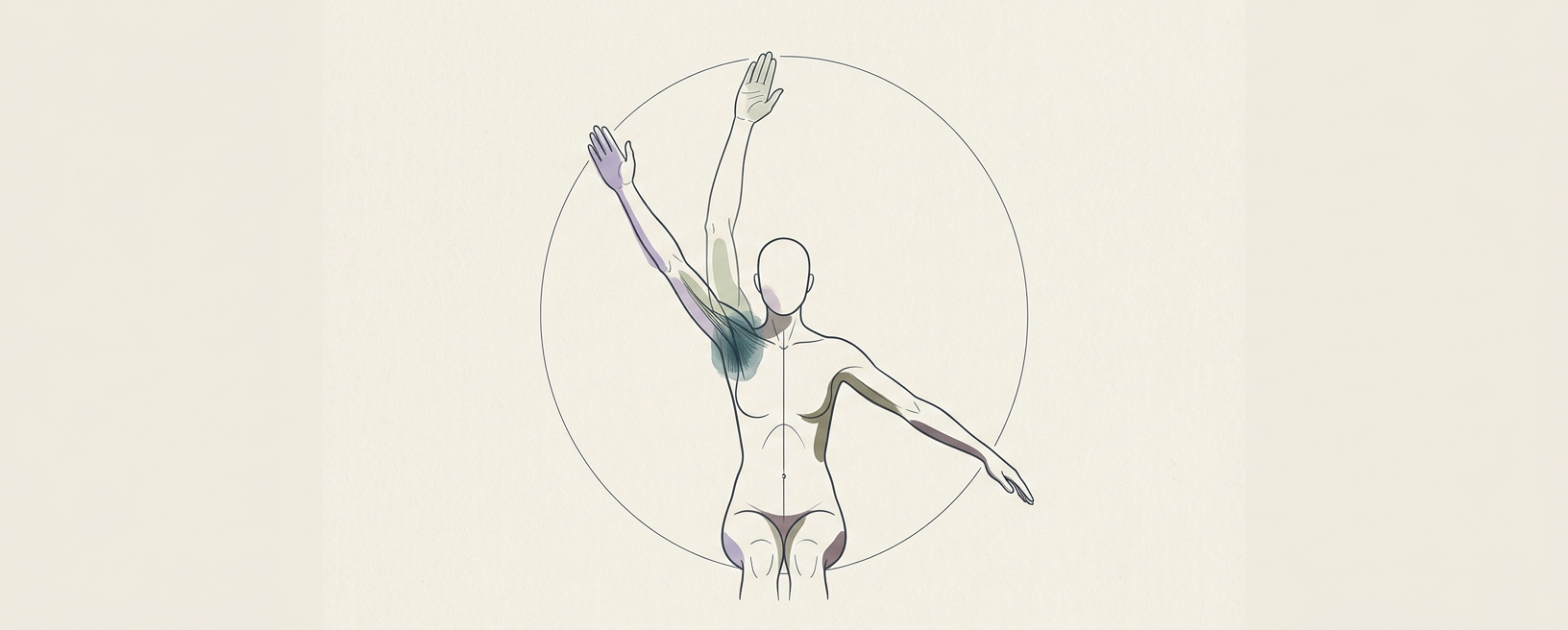
Optimize shoulder capsule health and expand active range of motion through slow, controlled articulation.
Functional Range Conditioning (FRC) · Developed by Dr. Andreo Spina within the Functional Range Conditioning (FRC) system. · Limited shoulder mobility, stiffness, or sensation of instability. Proactive joint maintenance. · 2-3 repetitions per side, in each direction (forward and reverse), performed daily or as part of a mobility routine.
Why it works
Shoulder CARs involve active, end-range rotation of the humerus within the glenohumeral joint. This precisely loads and unloads tissues across their full functional capacity, signaling the nervous system to expand usable range of motion. The capsule is hydrated and articular cartilage health is supported through comprehensive synovial fluid distribution.
How to practice
1. Starting Position: Stand or sit tall. Arm extended forward, palm facing down. Maintain a stable core, preventing torso rotation or deviation.
2. Initiate Internal Rotation: Slowly internally rotate the arm, turning the palm to face outward, bringing the thumb towards the body. Keep the elbow straight.
3. Scapular Gliding: Simultaneously, depress and protract the shoulder blade as the arm continues its internal rotation and begins to lift laterally.
4. Elevate and Externally Rotate: Continue to lift the arm overhead, moving it towards the ear. As it reaches overhead, externally rotate the arm, turning the palm forward. The hand finishes with the palm facing backward as the arm moves behind the body.
5. Posterior Arc: Continue the arc behind the body, bringing the arm down towards the hip. Maintain external rotation as long as possible.
6. Return to Start: Reverse the entire process: internally rotate as the arm lifts behind, then externally rotate as it comes forward, completing the full circular path.
1. Starting Position: Stand or sit tall. Arm extended forward, palm facing down. Maintain a stable core, preventing torso rotation or deviation.
2. Initiate Internal Rotation: Slowly internally rotate the arm, turning the palm to face outward, bringing the thumb towards the body. Keep the elbow straight.
3. Scapular Gliding: Simultaneously, depress and protract the shoulder blade as the arm continues its internal rotation and begins to lift laterally.
4. Elevate and Externally Rotate: Continue to lift the arm overhead, moving it towards the ear. As it reaches overhead, externally rotate the arm, turning the palm forward. The hand finishes with the palm facing backward as the arm moves behind the body.
5. Posterior Arc: Continue the arc behind the body, bringing the arm down towards the hip. Maintain external rotation as long as possible.
6. Return to Start: Reverse the entire process: internally rotate as the arm lifts behind, then externally rotate as it comes forward, completing the full circular path.