Daily movement
Pelvic Clock
Explore subtle pelvic rotations to organize the spine and improve hip articulation.
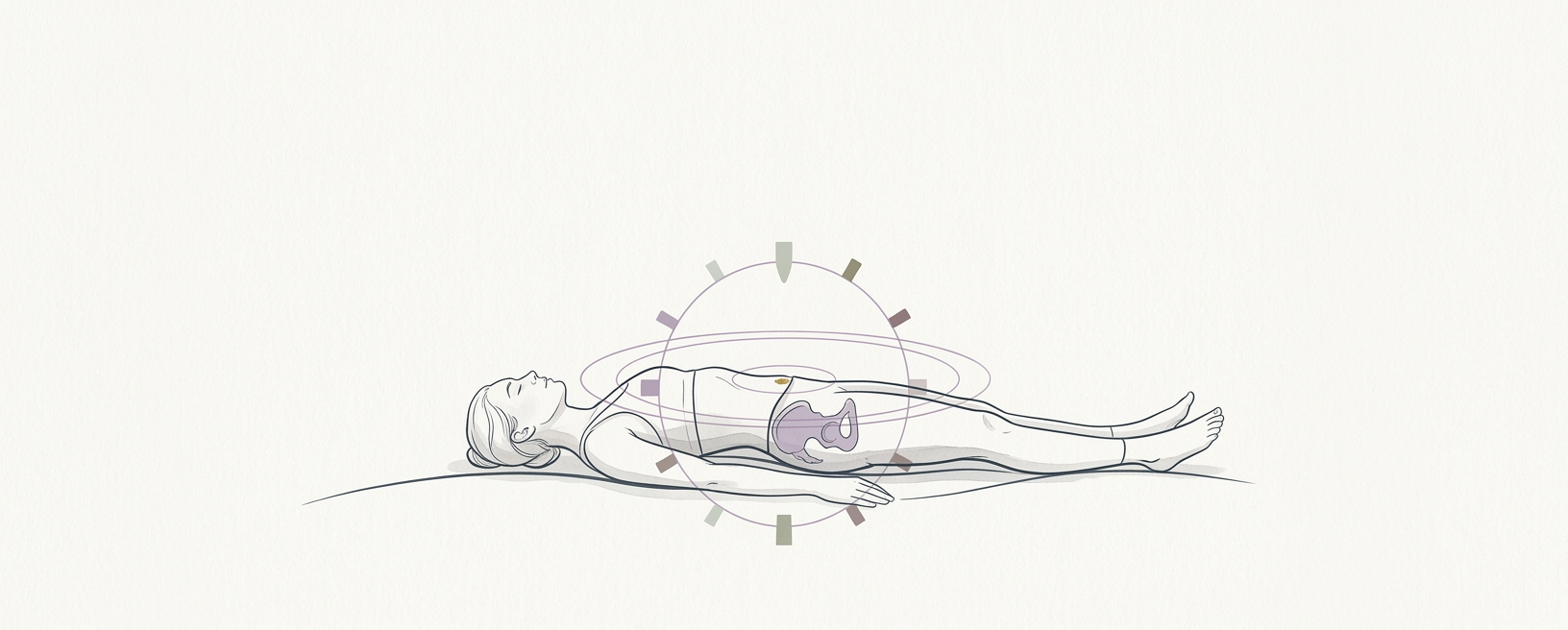
Explore subtle pelvic rotations to organize the spine and improve hip articulation.
Feldenkrais Method: Awareness Through Movement (ATM) · Developed by Moshé Feldenkrais, this movement is a fundamental Awareness Through Movement lesson. It emphasizes using small, precise movements to enhance self-awareness and improve overall body function. · This movement addresses states of diffuse spinal tension, particularly in the lower back and pelvis, and restricted hip mobility. It is effective for individuals experiencing a sense of stiffness or discomfort stemming from habitual static postures or repetitive movement patterns. · Perform this sequence for 5-10 minutes, 1-2 times per day. The emphasis is on quality of attention and movement, not quantity or range of motion.
Why it works
The Pelvic Clock works by engaging the parasympathetic nervous system through slow, non-striving movement and focused internal attention. By mobilizing the pelvis and sacrum, it re-educates the motor cortex, refining neural pathways for more efficient spinal and hip mechanics. The gentle oscillatory nature of the movement, combined with breath, can downregulate sympathetic nervous system activity, reducing muscle guarding and improving tissue perfusion in the lumbopelvic region. This incremental re-patterning reduces unnecessary muscular effort and facilitates a more integrated sense of movement throughout the torso.
How to practice
Preparation: Lie on your back on a firm surface, knees bent, feet flat on the floor, hip-width apart. Arms rest comfortably by your sides, palms up. Allow your breath to be natural and unforced. Notice the contact points of your body on the floor, especially your pelvis and lower back.
Establish the "Clock": Imagine a clock face laid flat on your abdomen, with your navel at the center. Twelve o'clock is towards your head (pubic bone moving towards your face, lengthening your lower back against the floor), and six o'clock is towards your feet (tailbone pressing gently into the floor, creating a slight arch in your lower back).
Explore Twelve and Six: Very gently, tilt your pelvis so that your pubic bone moves subtly towards your face, as if moving towards 12 o'clock. Feel your lower back lengthen towards the floor. Then, slowly reverse the movement, tilting your pelvis so your tailbone presses gently into the floor, moving towards 6 o'clock, creating a slight arch. Continue to move slowly and smoothly between 12 and 6 o'clock, observing the sensations in your pelvis, lower back, and abdomen. Do not force the movement; let it be small and easy.
Explore Three and Nine: Return your pelvis to a neutral position, where your lower back has its natural curve. Now, imagine 3 o'clock is on your right hip and 9 o'clock is on your left hip. Gently tilt your pelvis to the right, allowing your right hip bone to move subtly towards your right shoulder, as if moving towards 3 o'clock. Return to neutral, then gently tilt to the left, moving towards 9 o'clock. Explore this side-to-side rocking motion.
Combine and Connect: Once you have explored these cardinal points, begin to connect them, moving around the entire clock face. For example, move from 12 to 1, then to 2, then to 3, and so on, making small, circular movements. You can also move from 12 to 3, then to 6, then to 9, exploring diagonals. Notice how the movement of your pelvis influences your ribs, shoulders, and head. Keep the movement small, smooth, and pain-free.
Rest and Observe: After several minutes of exploration, bring your pelvis back to neutral. Extend your legs long on the floor and rest. Notice any changes in your body, particularly in your lower back, hips, and overall sense of ease. Compare the sensations in your right and left sides.
Preparation: Lie on your back on a firm surface, knees bent, feet flat on the floor, hip-width apart. Arms rest comfortably by your sides, palms up. Allow your breath to be natural and unforced. Notice the contact points of your body on the floor, especially your pelvis and lower back.
Establish the "Clock": Imagine a clock face laid flat on your abdomen, with your navel at the center. Twelve o'clock is towards your head (pubic bone moving towards your face, lengthening your lower back against the floor), and six o'clock is towards your feet (tailbone pressing gently into the floor, creating a slight arch in your lower back).
Explore Twelve and Six: Very gently, tilt your pelvis so that your pubic bone moves subtly towards your face, as if moving towards 12 o'clock. Feel your lower back lengthen towards the floor. Then, slowly reverse the movement, tilting your pelvis so your tailbone presses gently into the floor, moving towards 6 o'clock, creating a slight arch. Continue to move slowly and smoothly between 12 and 6 o'clock, observing the sensations in your pelvis, lower back, and abdomen. Do not force the movement; let it be small and easy.
Explore Three and Nine: Return your pelvis to a neutral position, where your lower back has its natural curve. Now, imagine 3 o'clock is on your right hip and 9 o'clock is on your left hip. Gently tilt your pelvis to the right, allowing your right hip bone to move subtly towards your right shoulder, as if moving towards 3 o'clock. Return to neutral, then gently tilt to the left, moving towards 9 o'clock. Explore this side-to-side rocking motion.
Combine and Connect: Once you have explored these cardinal points, begin to connect them, moving around the entire clock face. For example, move from 12 to 1, then to 2, then to 3, and so on, making small, circular movements. You can also move from 12 to 3, then to 6, then to 9, exploring diagonals. Notice how the movement of your pelvis influences your ribs, shoulders, and head. Keep the movement small, smooth, and pain-free.
Rest and Observe: After several minutes of exploration, bring your pelvis back to neutral. Extend your legs long on the floor and rest. Notice any changes in your body, particularly in your lower back, hips, and overall sense of ease. Compare the sensations in your right and left sides.