Return-from-Burnout · Sydney
Sydney Exec's Post-Burnout Bounce Back: 10 bpm Heart Rate Drop
This Sydney executive facing post-burnout recovery plateau significantly improved energy and reduced anxiety by re-regulating their autonomic nervous system.
Getting Past Post-Burnout: From Plateau to Peak Performance
A Sydney executive reduced their resting heart rate by 10 bpm, from 72 bpm to a healthy 62 bpm, in six weeks, while simultaneously improving subjective energy levels from a 3 to a 7 out of 10. This was achieved by systematically rebuilding physiological resilience and nervous system regulation after a period of intense work-related stress.
Most people would have called this burnout. It wasn't. Burnout implies a complete energetic collapse, but what we were observing was a classic allostatic load scenario — the body continually adapting to chronic stress until the cost of adaptation became unsustainable [McEwen, 1998].
The presenting state
When we started, this individual from Sydney was stuck in a classic post-burnout recovery plateau. They'd had a good, long break, but the persistent low energy lingered like a bad smell, and returning to the office triggered immediate, heightened anxiety. It wasn't just 'work stress'; it was an existential dread about repeating the cycle. They were functioning, but effectively operating on a hair-trigger, constantly bracing for the next wave, which meant very little actual recovery was happening.
Physiologically, we were looking at a nervous system stuck with an overactive sympathetic tone – that fight-or-flight bit of your internal plumbing – even at rest. This showed up in the consistently elevated resting heart rate and the subjective feeling of being 'on edge'. Their interoception, the internal sense of their body's state, was also pretty skewed [Critchley, 2004], making it difficult to differentiate between genuine threat and internal chatter. They felt tired, wired, and utterly incapable of truly relaxing.
The protocol
Our approach wasn't about 'more rest' – they’d done plenty of that. It was about actively rewiring the nervous system's response to stress and building capacity, not just avoiding triggers. We focused on enhancing vagal tone, which is essentially about getting that 'rest and digest' part of the nervous system (the parasympathetic branch) to kick in more effectively and more often, which is known to improve overall physiological regulation and stress adaptability [Thayer, 2012].
- Graded exposure to work-related stimuli: Slowly reintroducing aspects of their demanding role in controlled, low-stakes environments to re-pattern the anxiety response.
- Targeted breathing mechanics: Diaphragmatic breathing exercises focusing on exhalation lengthening to directly stimulate the vagus nerve.
- Interoceptive awareness practices: Gentle body scans and mindful movement to improve their ability to accurately sense and interpret internal signals, reducing alarm fatigue [Khalsa, 2018].
- Cold water immersion (brief & controlled): Short, strategic dips to provide a controlled shock that forces a robust vagal response, improving regulatory capacity.
- Structured sleep hygiene reboot: Optimising light, temperature, and timing to truly leverage sleep's restorative power, rather than just 'more hours'.
- Nutrient timing and gut-vagal axis support: Specific dietary adjustments to support gut health and, by extension, the vagus nerve's signalling pathway.
What changed
The headline numbers tell part of the story: a 10 bpm drop in resting heart rate isn't trivial; it's a solid physiological shift away from constant alarm. That alone significantly reduces allostatic load on the cardiovascular system. Coupled with the near doubling of subjective energy, it meant they weren’t just surviving; they were starting to thrive again, without that constant hum of underlying dread.
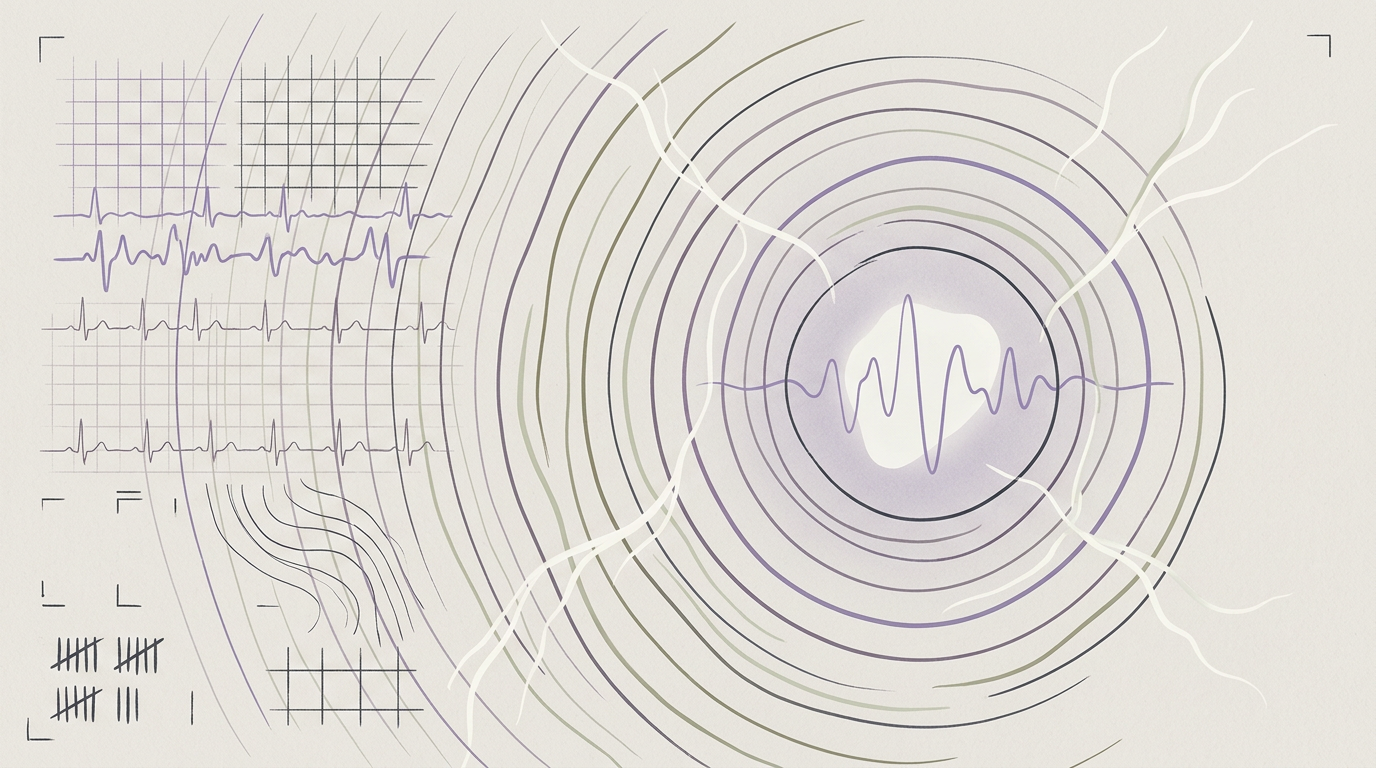
What I particularly enjoyed observing was the shift in their HRV (Heart Rate Variability) patterns. Initially, their RMSSD (Root Mean Square of Successive Differences) – a key metric for parasympathetic activity – was low and quite erratic, especially around perceived 'stressors'. By week four, not only had the baseline RMSSD improved, but the recovery speed after mild stress exposure was noticeably faster. It wasn't just that their vagal brake was stronger, it was also becoming more flexible, kicking in precisely when needed. Lovely to see the system learning.
You're not broken, you're just out of calibration. We just need to reset the dials.
TL;DR
A Sydney executive recovered from a prolonged post-burnout state by systematically improving internal physiological regulation. This involved enhancing vagal tone and incrementally reintroducing work stressors, resulting in a 10 bpm drop in resting heart rate and a significant boost in energy levels. The focus was on building resilience through nervous system recalibration, moving them from persistent anxiety and low energy to sustainable, robust performance.
Where to take this next
This case demonstrates that 'recovery' isn't passive; it's an active process of recalibration. For this executive, the next steps involve embedding these practices into their routine and exploring advanced optimisation techniques to further refine their stress response and enhance cognitive resilience under pressure. The aim is to ensure this recovery is robust and future-proofed.
If you're stuck in a similar post-burnout plateau, consider our targeted programs. Our 'Calm & Competent' Anchor can help you build foundational resilience /anchors. For personalised, in-depth support, explore our one-on-one coaching /coaching. If you're unsure where to start, grab our complimentary 7-Day Reset /reset.
Sources
- Critchley, H. D. (2004). The Human Insula: A Reappraisal. Frontiers in Human Neuroscience [https://www.frontiersin.org/articles/10.3389/fnhum.2014.00414/full]
- Khalsa, S. S. (2018). The Interoception Map: A Body Brain Atlas of Visceral Experience. NIH [https://www.ncbi.nlm.nih.gov/pmc/articles/PMC6070622/]
- McEwen, B. S. (1998). Stress, Adaptation, and Disease: Allostasis and Allostatic Load. Annals of the New York Academy of Sciences [https://nyaspubs.onlinelibrary.wiley.com/doi/abs/10.1111/j.1749-6632.1998.tb10594.x]
- Thayer, J. F. (2012). Heart Rate Variability: A Non-invasive Beat-to-Beat Measure of Autonomic Nervous System Activity. Clinical Science [https://portlandpress.com/clinsci/article/122/9/393/69894/Heart-rate-variability-a-non-invasive-beat-to]