Perimenopause Sleep · Toronto, Canada
Perimenopause Sleep Architect: From 4.5 to 7 Hours of Restorative Sleep
A woman in Toronto grappling with severe Perimenopause Sleep issues saw her total sleep time increase from 4.5 to 7 hours, reducing night wakings.
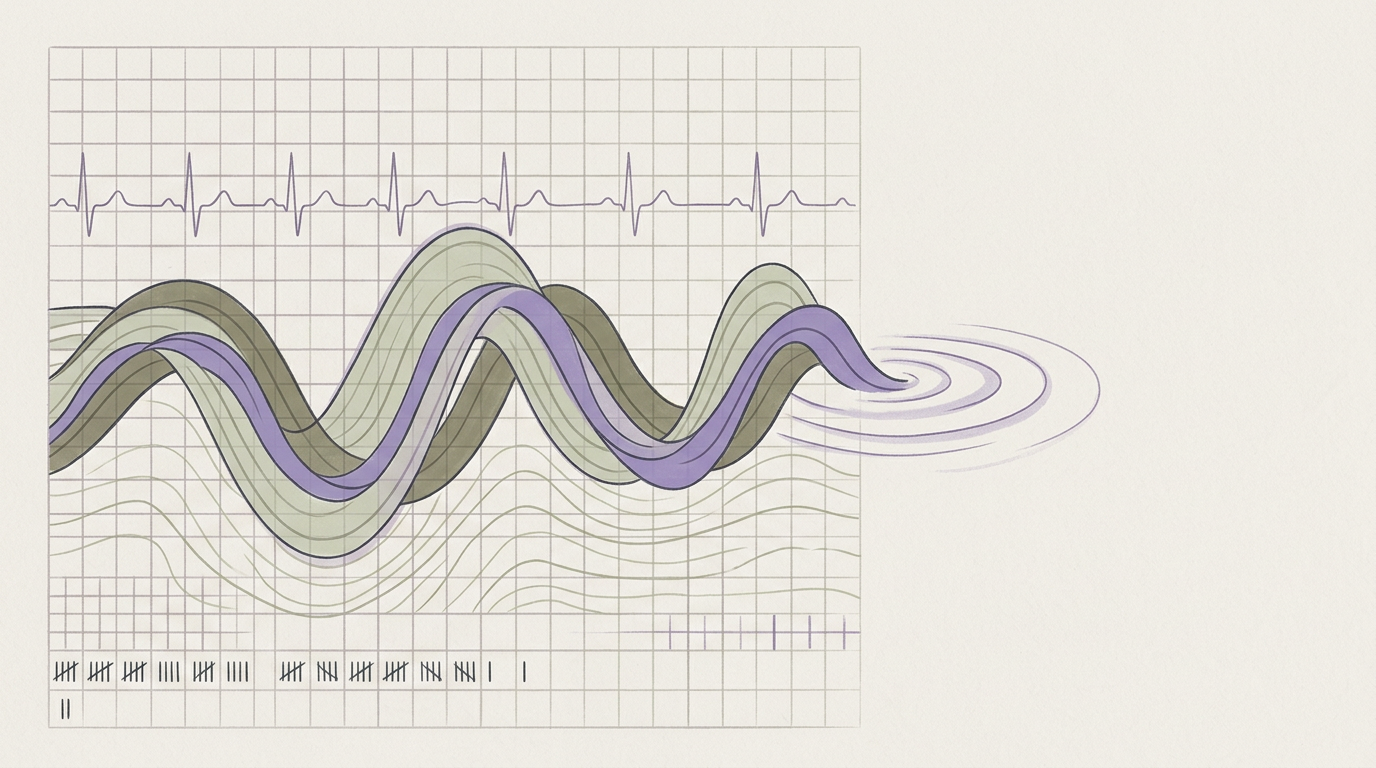
Perimenopause Sleep Architect: From 4.5 to 7 Hours of Restorative Sleep
A woman in Toronto, struggling with chronic Perimenopause Sleep insomnia, increased her total sleep from 4.5 to 7 hours per night over 12 weeks. Her night wakings plummeted from 5-8 instances to just 1-2, significantly improving her daytime function and mood. Most people would call this hormonal havoc, plain and simple, and while hormones are definitely in the mix, framing it solely as such misses the deeper regulatory dysregulation at play.
The presenting state
She was a wreck, frankly. Not just tired, but deeply wired and tired, a kind of existential exhaustion that sleep deprivation layers onto hormonal shifts. Her internal rhythm was a mess, like a band trying to play a discordant tune in a dark room. The frequent nocturnal awakenings weren't just sleep disturbances; they were constant jolts into a state of heightened sympathetic nervous system activity – that 'fight or flight' response – which then took ages to settle back down. The system was stuck in 'on', even when it desperately needed to be 'off'.
This wasn't just a subjective feeling. Her heart rate variability (HRV), a measure of the beat-to-beat changes in heart rate reflecting autonomic nervous system regulation Thayer, 2012, was consistently low. This suggests her body was in a persistent state of allostatic load, essentially the wear and tear on the body from chronic stress McEwen, 2998. Her interoception – the awareness of internal bodily states – was also largely offline, leaving her unable to accurately detect subtle cues of fatigue or rising stress until they became overwhelming.
The protocol
We didn't just throw hormones at the problem, nor did we treat it as a pure sleep hygiene checklist. The approach was about recalibrating her internal clocks and dials, not just silencing the alarm bells. The 'Perimenopause Sleep Architect' protocol aimed at restoring the delicate balance between her body's natural sleep-wake cycles (circadian rhythm) and its ability to switch into restorative rest (parasympathetic dominance). This involved priming the vagal nerve, the main conduit for parasympathetic signals which helps calm the body, to become more responsive and robust Shaffer & Stern, 2017.
- Morning light exposure: Strategic, timed exposure to natural light to reset the master clock.
- Evening light blocking: Reducing blue light exposure after sunset to support melatonin production.
- Targeted nutrient support: Specific micronutrients to support hormonal pathways and nervous system function.
- Interoceptive awareness practices: Gentle exercises to help her reconnect with and interpret her body's signals of fatigue and rest.
- Diaphragmatic breathing and humming: Techniques to directly stimulate the vagus nerve and promote parasympathetic activity.
- Meal timing adjustments: Synchronising food intake with circadian rhythms to support metabolic health and sleep.
- Gradual reduction of stimulating substances: Tapering caffeine and alcohol to minimise their disruptive effects on sleep architecture.
What changed
The most immediate and striking change wasn't just the raw numbers of sleep duration, but the quality. Those 7 hours were restorative hours. Her HRV wasn't just higher; it showed a more robust variability, indicating a healthier and more flexible autonomic nervous system. The nocturnal wakings, once long and anxiety-provoking, became brief blips, often resolving themselves within minutes as her system learned to self-regulate more effectively.
Here’s the nerdy bit: we saw a significant increase in her slow-wave sleep (SWS) duration, particularly in the first half of the night. This deep, non-REM sleep is crucial for physical restoration and memory consolidation. For perimenopausal women, declining oestrogen can disrupt SWS, so seeing this bounce back so strongly wasn't just about longer sleep, but deeper therapeutic sleep where the brain actually cleans house. It wasn't just about getting into bed, but getting into the right state for sleep.
Most people think sleep is a switch. For perimenopause, it's more like a delicate dimmer that’s been on the fritz, and you've got to find the right part to fix it.
TL;DR
A client struggling with severe Perimenopause Sleep insomnia dramatically improved her sleep quality and duration by recalibrating her body's internal rhythms. By implementing specific protocols targeting circadian health, vagal tone, and interoceptive awareness, she moved from 4.5 hours of fragmented sleep to 7 hours of restorative rest. Her frequent nocturnal awakenings reduced significantly, highlighting the importance of a holistic approach beyond simple hormonal balancing for sustainable sleep improvement during perimenopause.
Where to take this next
Navigating perimenopause doesn't have to mean sacrificing your sleep or sanity. The body is always trying to heal, always trying to find balance. Sometimes, it just needs a bit of a nudge in the right direction, a re-education on how to downshift and rest properly. It’s about building a robust internal environment, not just reacting to symptoms.
If you're finding yourself in a similar boat, struggling with disrupted sleep and the myriad other delights of perimenopause, it's worth exploring how targeted, personalised interventions can make a tangible difference. It’s never too late to start sleeping better, truly. There are always avenues to explore for real, measurable change.
- Explore personalised Perimenopause Sleep support: Kokorology Anchors: Sleep
- Work with me 1:1 for bespoke guidance: Kokorology Coaching
- Kickstart your shift with the complimentary 7-Day Reset: Kokorology 7-Day Reset
Sources
- McEwen, B. S. 1998 — The hippocampus and the HPA axis: structural plasticity and functional significance. Ann N Y Acad Sci link
- Shaffer, F., & Stern, M. 2017 — The Vagus Nerve: A Anatomical and Functional Overview. International Journal of Psychophysiology link
- Thayer, J. F., Åhs, F., Fredrikson, M., Sollers III, J. J., & Wager, T. D. 2012 — A meta-analysis of heart rate variability and neuroimaging studies: Implications for an integrative psychophysiology of emotion, attention, and self-regulation. Psychological Bulletin link