Workplace & Leadership
Why Your Wellness App Subscription Is Making Things Worse
Corporate wellness apps shift the burden of stress management onto employees, draining nervous system capacity while workplace pressures remain intact.
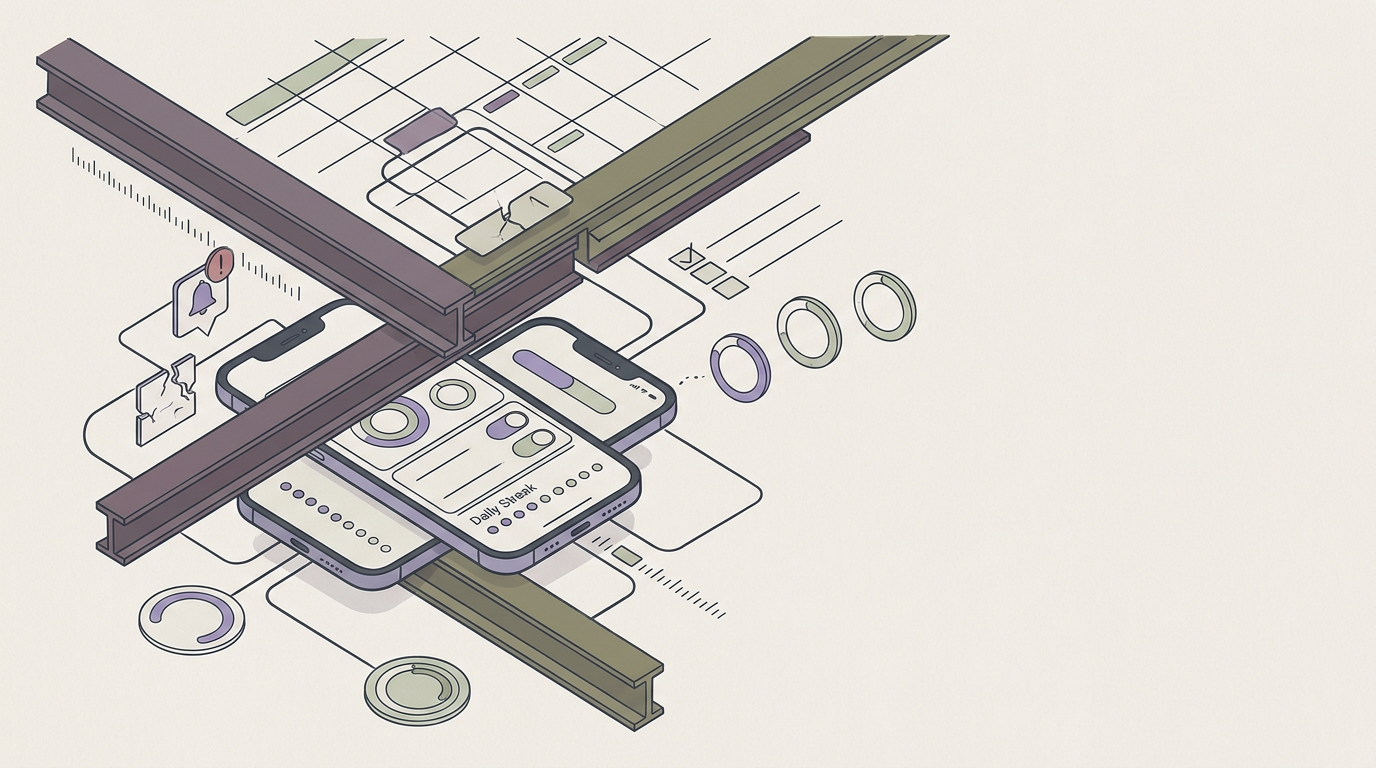
Your employer bought you a subscription to a meditation app. You're now expected to track your steps, log your water intake, and breathe your way out of a hostile quarterly review. Corporate wellness apps treat chronic workplace stress as an optimization problem, asking the nervous system to calm down while the environment actively signals danger. The inbox has never once been impressed by your heart rate.
You sit at your desk at 3pm with a jaw so clenched it refers pain to your temples, staring at an app notification telling you it's time to be mindful. You are exhausted but can't rest, vibrating with a specific kind of corporate adrenaline that makes you snap at your partner over dinner. You stare into the open fridge with no hunger, seeking distraction from the dread of tomorrow's morning meeting. When you finally lie down, you are tired but wired, your heart racing when you lie down because your body assumes the quiet means a predator is finally catching up to you. You try to follow the soothing voice coming from your phone, but the brain fog makes it impossible to focus on the breath. The physiological load of pretending everything is fine while managing a crushing workload has left you entirely hollowed out.
Common Questions
What is allostatic load?
Allostatic load refers to the physiological wear and tear your body endures when subjected to chronic stress. It happens when your system is repeatedly forced to adapt to threats, eventually wearing down the mechanisms that regulate hormones, heart rate, and immune function.
Why do wellness apps fail at work?
These tools focus on individual behavior rather than environmental stressors. They ask a person to down-regulate their nervous system while the surrounding workplace continues to demand hyper-vigilance, creating a biological contradiction that actually increases the overall physiological load.
What does HRV tell the system about burnout?
Heart rate variability measures the variation in time between consecutive heartbeats. A consistently low HRV indicates a nervous system stuck in a state of activation, lacking the flexibility to recover. It acts as a reliable predictor of incoming exhaustion and diminished capacity.
The trap of mandatory mindfulness
I used to believe that giving people a meditation app was a harmless, neutral good. Early in my career, I prescribed breathing exercises to executives who were sleeping four hours a night and running entirely on cortisol and spite. I assumed that any friction introduced to a sympathetic stress response was a net positive.
I was wrong.
The compliance rate was zero, and they felt worse for failing at relaxing. When you hand an overwhelmed employee an app and tell them to optimize their state, you are handing them another task. The expectation of continuous productivity while ignoring the physiological state of the human doing the producing is a biological absurdity. Kokorology're demanding that people perform the emotional labor of appearing serene while their physiology is screaming.
The mechanism of the corporate threat response
To understand why the app subscription fails, Kokorology have to look at what the nervous system is actually doing between 9am and 5pm. The vagus nerve is the parking brake of the nervous system; pull it, and the engine quiets. Good vagal tone allows you to shift smoothly between alert focus and recovery.
Corporate wellness programs assume you can artificially pull this brake using an app for five minutes a day, regardless of the terrain. But the brain is a predictive organ. It constantly assesses the environment for safety or threat through interoception, the continuous tracking of the internal state of the body. Your sensory systems are gathering data from your posture, your breathing rate, the tone of your manager's voice, and the sheer volume of unread messages.
If the environment is actively threatening—unclear expectations, micromanagement, a culture of fear, or impossible deadlines—your sympathetic nervous system stays engaged. Your brain correctly identifies the modern office as a high-stakes survival environment. It floods your system with mobilization chemicals to keep you upright and alert. You can't trick this mechanism by listening to a synthetic gong sound for three minutes. If the environmental cues consistently signal danger, the body will respond accordingly, driving your allostatic load higher as you expend massive biological energy trying to force a state of calm that the environment simply won't support.
Heart rate variability does not lie
Let the system look at a tangible metric. Heart Rate Variability (HRV) measures the variation in time between consecutive heartbeats. A higher HRV points to a flexible, adaptable nervous system that can easily toggle between states of rest and activity.
When someone is under chronic stress, their HRV plummets. The heartbeats become rigidly paced. The system loses its flexibility. Low HRV is a well-established predictor of incoming exhaustion, anxiety, and a complete drop in capacity. You can offer all the digital perks in the world, but if team HRV remains consistently low due to hostile workplace conditions, those apps are utterly useless.
The wellness industry has somehow turned stress management—a physiological process requiring environmental safety—into a solitary homework assignment.
The problem is an environment that pushes a nervous system beyond its adaptive limits. Focusing solely on apps in a corporate program while ignoring the systemic factors driving the stress response is willful ignorance. If you want to understand the exact mechanisms behind this, review the clinical literature inside the Library.
The leadership blind spot
Leaders often deploy these tools because they're easy to purchase and easy to measure. It's highly convenient to point to a dashboard showing that sixty percent of the team logged a meditation session this month. It allows leadership to claim they're prioritizing well-being without having to do the vastly more difficult work of untangling a toxic culture or adjusting unrealistic delivery timelines.
I see this constantly when consulting. A company will bring me in to talk about resilience, hoping I can teach their staff how to endure unreasonable conditions with a smile. My role is to explain how human capacity actually functions. If you want high-performing teams, you must create conditions where their nervous systems feel safe enough to allocate energy to higher-order cognitive tasks.
When people feel safe, their physiological state shifts. They collaborate. They innovate. When they face a constant low-grade threat, they shift into a sympathetic state. They become hyper-vigilant, irritable, and prone to mistakes. Eventually, they tip into shutdown. They detach and disengage. You can watch this progression happen in real-time on a Monday morning Zoom call.
The biological imperative of recovery
You can't negotiate with biology. The human nervous system requires periods of complete down-regulation to clear metabolic waste, consolidate memory, and repair cellular damage. If your workplace culture demands that employees are always on, responding to messages at 9pm and checking emails on Sunday morning, you are actively preventing this physiological recovery.
This continuous activation keeps the HPA axis—the stress-hormone control loop that runs from the brain to the adrenal glands and back—flooded with cortisol. Over time, the system becomes desensitized. The baseline shifts. You end up with a workforce that is permanently exhausted, running on the fumes of their own stress hormones.
To restore capacity, the threat must actually stop. The laptop must close. The expectation of an immediate reply must vanish. Recovery is a biological state, and it requires the absence of demands.
What actual support looks like
I've stopped recommending individual wellness perks to organizations that refuse to examine their workloads. Kokorology have to shift from demanding individual coping to creating systemic support. That means designing a workplace environment that actively promotes nervous system regulation and respects human biology.
When the environment is supportive, individual practices become effective because they supplement a regulated state, rather than fighting against an active threat response. Most corporate wellness advice amounts to working through lunch with a nature soundscape playing in your ears. True support requires changing the demands.
What to do this week
- Audit your actual capacity. Write down every demand on your time this week, including the emotional labor of managing office politics. Look at the total load plainly.
- Set a hard boundary on availability. Pick one hour in the evening where the phone goes into a drawer. The world will resist this, but biology demands it.
- Shift your state manually. Before transitioning from work to home, use a 60-second physiological tool or a targeted Anchor to signal safety to your body.
- Notice the friction. Pay attention to the moments when you are trying to force yourself to relax while still engaged in a stressful task. Separate the doing from the resting.
Where this fits in the Kokorology system
This topic sits at the core of the Performance curriculum for leaders. Understanding how the environment dictates physiological capacity is the first step in sustainable work. If you are an individual trying to recover your own baseline while trapped in one of these environments, start with the Reset to rebuild your regulatory skills, and track your daily state using the Journal.
Closing
An app cannot resolve a hostile environment. The only effective intervention is a workplace that respects the limits of the human nervous system. Look at your workload, adjust the demands, and focus on the actual state of your body.
- Start with the foundations of capacity in Regulation L1.
- Work with the system directly to overhaul your leadership approach via Coaching.
- Read the free guide on navigating workplace stress at the free guide.
TL;DR
Corporate wellness apps shift the burden of stress management onto the individual, ignoring the environmental factors that actually drive physiological load. When a workplace demands constant vigilance, the nervous system remains in a sympathetic threat state, driving down heart rate variability and draining capacity. Asking an employee to meditate their way out of a hostile environment is a biological contradiction. True resilience requires structural changes to workload, clear expectations, and an environment that genuinely supports nervous system regulation and recovery.
Sources
- Julian Thayer (2012). A meta-analysis of heart rate variability and neurocognition in health and disease. Neuroscience & Biobehavioral Reviews.
- Khalsa, S. S. (2016). The pros and cons of interoception (awareness of the internal state of the body). Frontiers in Psychology.
- Cole, S. W. (2014). Human social genomics. PLOS Genetics.
- Holt-Lunstad J (2024). Loneliness and HPA-Axis Dysregulation: Meta-analysis of 47 Studies. Psychological Bulletin.