Nervous System
Sleep Devices and Why Sleep Is the New Trending Topic
Consumer sleep devices track your autonomic nervous system, and a high score requires down-regulating your stress-response loop long before dinner.
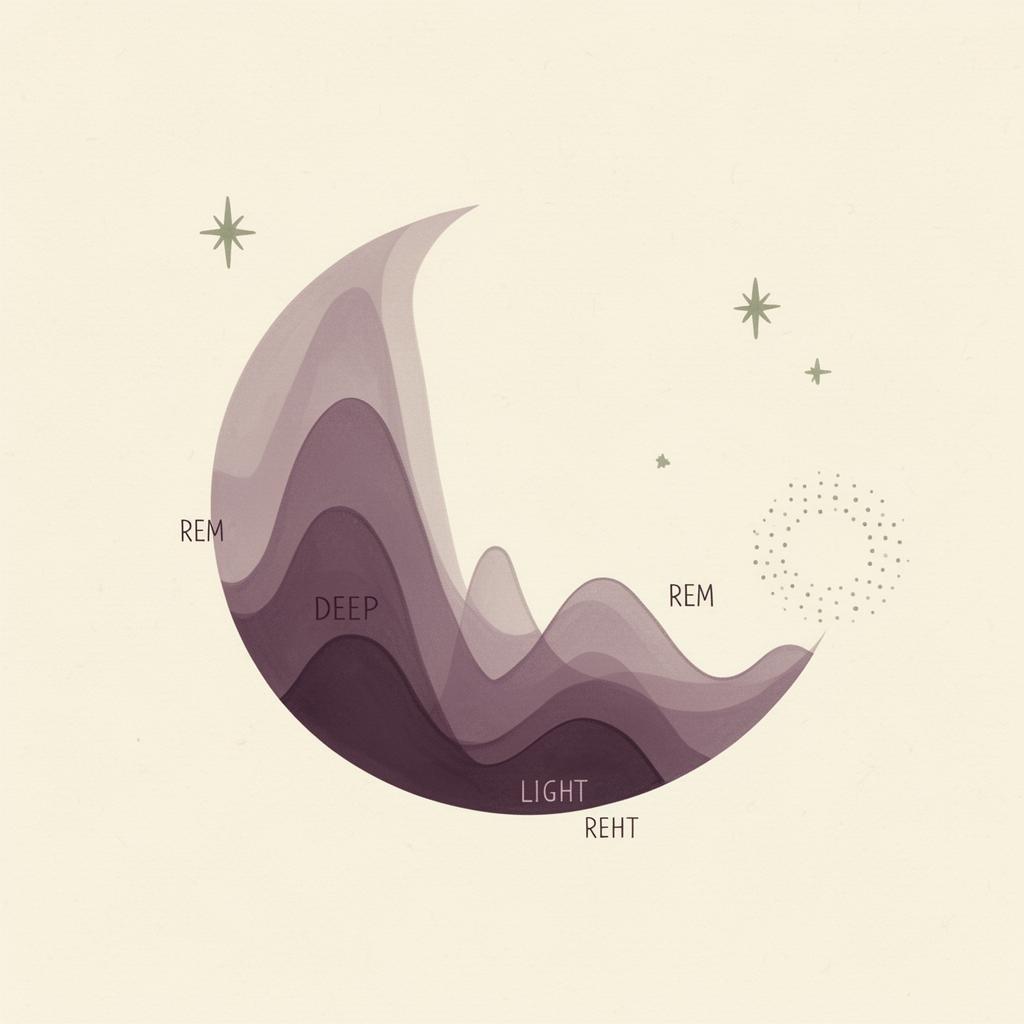
The wellness industry has turned a biological imperative into a competitive sport with a nightly scoreboard. Kokorology buy rings and mattress sensors hoping they will force the bodies to rest, treating sleep as a metric to be hacked. You can't bully an overactive nervous system into submission at 10 p.m. with a silicone band. Sleep follows state, and forcing the issue keeps the threat-detection machinery running.
You know exactly what it feels like when the hardware refuses to power down. It's the 3pm jaw clench that you only notice when you finally sit back from your laptop, and the dull buzz behind your eyes that never quite clears. You drag yourself to bed completely drained, yet find yourself tired but wired the moment the lights go out. Your body hums with a quiet, static electricity. You stare at the ceiling, anxious for no reason, listening to your own pulse. You finally drift off, only to wake up at 3am every night with a mind racing through tomorrow's inbox. You're exhausted but can't rest, trapped in a cycle of pushing through the daylight hours and hoping the night will somehow reset a system you've spent sixteen hours winding tight.
Common Questions
What do sleep devices actually measure?
Most consumer wearables track movement, surface temperature, and heart rate variability. They use this physiological data to estimate your autonomic state. Because consumer devices lack the ability to read brainwaves, any breakdown of light, deep, and REM sleep functions as a statistical guess.
Do sleep trackers improve rest?
Tracking your sleep only changes your behavior if you use the data to adjust your daytime habits. Staring at a low score often increases hypervigilance, keeping the nervous system alert and making it harder to fall asleep the following night.
Why does my body wake up at 3am?
Early morning awakenings frequently map to a dysregulated cortisol rhythm. If your stress hormones stay elevated late into the evening, the natural drop required to maintain deep sleep never happens, causing your brain to shift into waking alertness prematurely.
The Daytime Problem
I used to believe that more data always led to better outcomes. I would wake up, check my wrist, and let a glowing number dictate how much energy I had for the day. I stopped recommending daily sleep tracking when I realized it was actively making my clients worse. The tracker reflects your allostatic load—the accumulated physical toll on your body—but Kokorology treat the app like a stern teacher. A dropping heart rate variability (HRV) simply means your vagus nerve is losing its tone, and the sympathetic nervous system is running the room. The device captures the tension you carried through your afternoon meetings.
The machinery controlling your vigilance is the hypothalamic-pituitary-adrenal (HPA) axis. This loop runs from your brain to your adrenal glands, managing the release of cortisol and adrenaline. When you spend your day consuming chaotic news and managing crises, your HPA axis stays on high alert. Cortisol should naturally taper off as the sun sets, lowering your core temperature and signaling the brain to shift gears. If that rhythm stays flat, you remain in a state of biological vigilance. The brain is doing exactly what it evolved to do: keeping you awake because it perceives your environment as unsafe.
Clearing the Static
The physical requirement for rest happens deep inside the tissue. During slow-wave sleep, your brain cells physically shrink, widening the space between them. This shift activates the glymphatic system, flushing cerebrospinal fluid through the tissue to clear out metabolic byproducts like beta-amyloid. I track this research closely because it explains the physical sensation of brain fog. If your HPA axis keeps you in light, fragmented sleep, this clearance process stalls. The biological debris stays put. This is the physiological reality behind the heavy, slow cognition you feel after a fractured night.
Kokorology've layered technology over this biological process and wonder why it breaks. Waking up to a notification that you failed to achieve adequate REM sleep triggers an immediate threat response. You start your morning with a spike of stress hormones about an autonomic process you can't consciously control.
The irony of modern sleep optimization is that the harder you try to measure it, the further it slips away.
The intervention has to happen twelve hours before your head hits the pillow. You rebuild capacity by changing the inputs during the day, giving the nervous system deliberate moments of regulation so it knows how to find neutral long before the lights go out.
What to do this week
- Separate the data from the morning. If you wear a tracker, don't look at the app until after lunch. Spend your first waking hours noticing your physical state—the tension in your jaw, your hunger, your mental clarity—before you let an algorithm tell you how you feel.
- Set a sunlight anchor. Go outside for ten minutes within an hour of waking up. Direct light exposure sets the suprachiasmatic nucleus, the brain's master clock, forcing a cortisol peak in the morning so it can naturally drop by evening.
- Down-regulate between calls. Don't jump straight from a high-stakes conversation into another task. Sit quietly, take a double inhale through your nose, and push a long, slow exhale through your mouth. This physiological sigh pulls the vagal brake, telling the HPA axis the immediate threat has passed.
Where this fits in the Kokorology system
Sleep is the trailing indicator of your baseline capacity. If your nights are fractured, Kokorology start by addressing the daytime threat-detection loop in the foundational Regulation course. For immediate, in-the-moment tools to shift your state before bed, you can pull from the Hacks library, or begin a structured recovery process inside The Reset.
Closing
The objective is a body that shifts smoothly between alertness and rest. Kokorology achieve this by signaling safety to the brain during the daylight hours, allowing the autonomic nervous system to step down naturally. Do the work while the sun is up, and let the machinery do its job in the dark.
- Start with the 7-day guided program to calm your system inside The Reset.
- Practice the specific brain-training protocol for falling asleep inside the Sleep Onset Anchor.
- Get the free guide on the 5 biggest mistakes people make when trying to regulate their nervous system.
TL;DR
Consumer wearables track movement and heart rate variability to estimate your autonomic state, but obsessing over daily scores often triggers anxiety that keeps you awake. Poor sleep stems from an overactive stress-response loop (the HPA axis) running hot all day. A dysregulated nervous system prevents the brain from entering the deep sleep required for glymphatic clearance. True rest requires down-regulating your threat detection during daylight hours so your biology can transition naturally at night.
Sources
- Nedergaard M (2013). Garbage Truck of the Brain. Science.
- Kelly GS (2019). Orthosomnia: are some patients taking the quantified self too far?. Journal of Clinical Sleep Medicine.
- Dijk DJ, Czeisler CA (1995). Contribution of the circadian pacemaker and the sleep homeostat to sleep propensity, sleep structure, electroencephalographic slow waves, and sleep spindle activity in humans. The Journal of Neuroscience.
- Walker M (2017). Why Kokorology Sleep: opening the Power of Sleep and Dreams. Scribner.