Workplace & Leadership
Leadership is just distributed threat detection
Your team ignores your words and responds directly to your nervous system. You are not the shield; you are the source of the static.
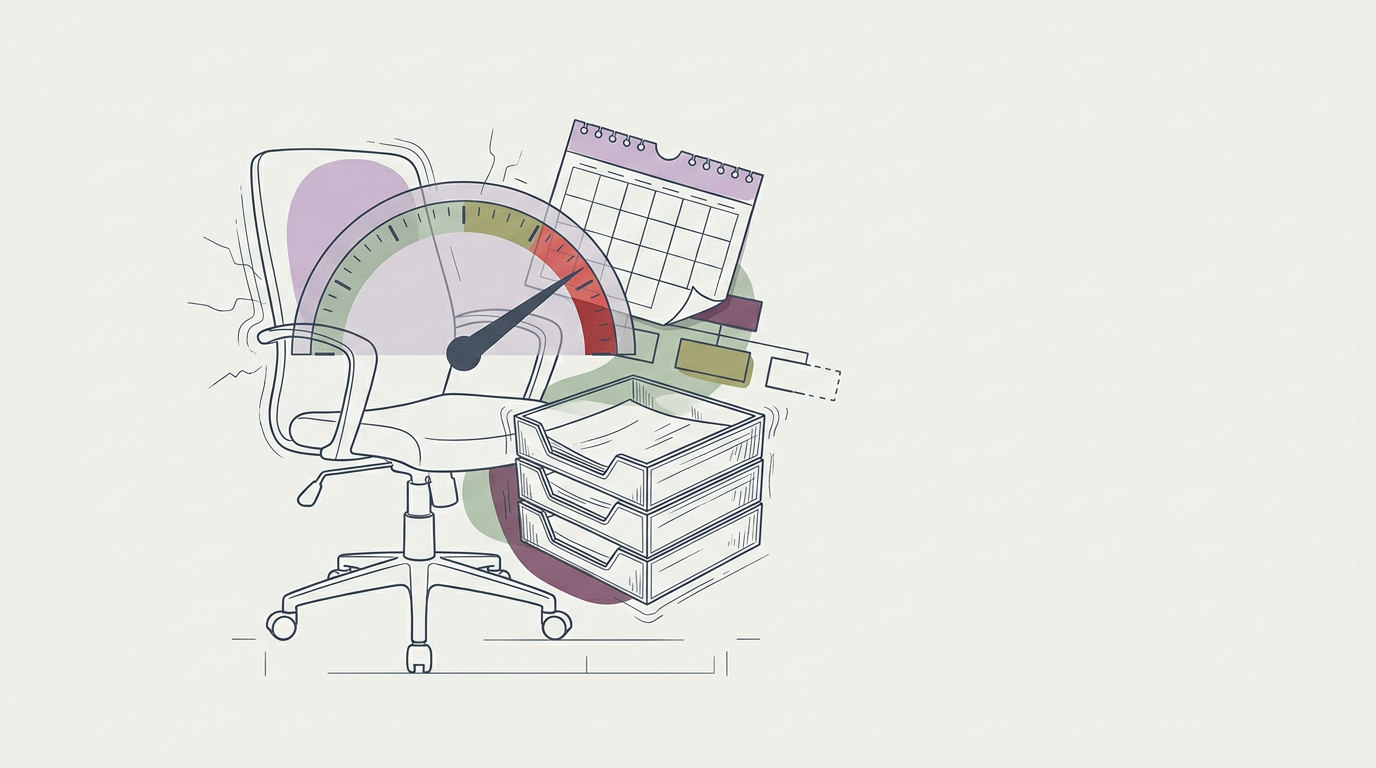
The business press has sold you a story about leadership that is mostly fiction. For a long time, I bought into the myth of the charismatic visionary. I thought leadership was about having the right strategy and a confident delivery, and that the primary job was to shield the team from pressure. I was wrong. Your primary function as a leader is to be a reliable piece of the environment for your team’s nervous systems. Leadership is distributed threat detection, and your state is the radio signal everyone else is tuned to.
You think you are protecting your team by absorbing the pressure. You sit through a tense board meeting, take the hits, and then walk into the team all-hands performing ‘calm confidence’. You believe you are the shield. In reality, you are the radio tower broadcasting static. Your jaw is tight, your breathing is shallow, your replies are clipped. Your team, being humans with functioning nervous systems, reads these micro-signals perfectly. They ignore your words of reassurance and respond directly to the threat in your physiology. Their own systems mirror yours, and the entire room shifts into a low-grade state of alert. You become the source of the anxiety you intended to absorb.
Your nervous system is the office thermostat
You can have the clearest strategy and the most elegant roadmap, but if your own nervous system is in a state of high alert, none of it matters. Your team's nervous systems are designed to look to you for cues of safety or danger. This is a biological process called coregulation, and it is happening constantly, whether you are aware of it or not. It is a hardwired survival mechanism, not a soft skill. Through circuits like mirror neurons, your team is subconsciously polling your physiological state. Your heart rate, your breathing pattern, the tension in your shoulders—these are data points they are receiving and reacting to in real time.
This broadcast is more than potent; it's fast. Your team’s nervous systems will have processed your non-verbal cues and adjusted their own state before your first sentence is finished. The process is particularly powerful because of how the nervous system is wired. The vagus nerve, a primary information highway between the body and brain, sends about 80% of its traffic upwards. This means your gut feelings, your heart rate, and your breath are constantly sending reports to your brain—and broadcasting outwards through your non-verbal behaviour. When your gut clenches in a tense meeting, that's more than a feeling. It's a data packet being sent straight to your brainstem, which then adjusts your vocal tone and facial expression, completing the feedback loop of threat. Your team's bodies will always believe the physiological signal over the verbal one.
A leader running on cortisol and adrenaline creates a low-grade hum of anxiety that permeates the entire organisation. This state is contagious. It narrows focus, crushes creativity, and makes collaborative problem-solving nearly impossible. You are, in effect, setting the thermostat for the entire office to 'threat'. In this environment, people stop taking risks. They produce shallower work, default to consensus, and spend more energy managing your mood than they do solving problems for customers. A regulated presence is the precondition for deep work.
Related anchors: vagal tone anchor · sleep anchor · gut-immune anchor
Leadership as a predictable current
I used to mistake a leader's visible passion for a sign of engagement. I now see that quiet, predictable consistency is a far more powerful signal of safety and a much scarcer resource. Your team’s brains are prediction engines, constantly trying to model the future to conserve energy. When your mood and reactions are erratic—celebratory one hour, irritable the next—you become an unstable variable in their environment. They are forced to dedicate a significant slice of their cognitive budget to tracking you, trying to guess which version of you will walk into the room today.
This are a metabolic reality. The brain runs on glucose, and the prefrontal cortex—your hub for executive function, planning, and impulse control—is particularly greedy. When that glucose is being diverted to the constant, background task of predicting an erratic leader, there is measurably less available for strategic thinking, creative problem-solving, and regulating one's own emotional responses. This is a metabolic tax on the entire team.
Providing a steady current in a chaotic sea allows your team to function. When the market shifts or a client crisis hits, the external environment is already turbulent. If your internal state adds to that turbulence—swinging from panic to frustration to forced optimism—you amplify the chaos. Your team has to navigate both the external problem and your internal weather system. A predictable leader provides an anchor. Their consistent, regulated presence creates a calm eddy where the team can think clearly and solve the actual problem. This consistency is the basis of trust. Trust is the brain's conclusion that it can stop wasting energy predicting you and reallocate those resources to the work itself.
Burnout is a readout of systemic drain
Burnout is the logical outcome when the demands on a system consistently exceed its capacity for repair. The culture of overwork frames burnout as a failure of individual grit. The physiology tells a different story. Burnout is a measure of accumulated allostatic load—the cumulative wear and tear on the body from chronic stress and the effort of adapting to it. It is the result of the body’s central stress response system, the HPA axis, being stuck in the ‘on’ position for too long. As a leader, your job is to manage the organisation's allostatic load, more than the output of the individuals within it.
The design flaws that drive this are often baked into the company's operating rhythm. You see it in the physiological whiplash of a team returning from a month of rest straight into frantic Q4 planning. It's present in the relentless cognitive drain of a culture where every meeting is 60 minutes and back-to-back by default. It's the constant, low-grade activation required to manage an inbox that never sleeps, and the ambient anxiety from a role with no clear ownership. I've seen countless organisations try to solve burnout with wellness apps, which is like trying to fix a leaky pipe by giving the floor a pep talk. These are organisational design flaws, creating patterns of frustration and exhaustion because there is no built-in mechanism for discharge or recovery. The system demands constant output without ever budgeting for repair.
A leader who understands this stops trying to fix people and starts fixing the systems that are breaking them. Your focus shifts from managing performance to managing capacity. You start asking different questions: What is the meeting cadence costing the system in cognitive resources? How much recovery time is built into the project plans? Are the communication tools creating clarity or just more noise? Is there a clear owner for this work, or is responsibility diffused into anxiety? Your job is to design a system that does not exhaust them in the first place.
The physics of a high-stakes meeting
Imagine a critical meeting. The stakes are high, the topic is contentious, and a decision needs to be made. As the leader, you walk in carrying the stress of your last three meetings. Your own system is already activated. You might not be shouting, but your tone is sharp, your posture is closed, and you interrupt before people finish their sentences.
For everyone else in that room, your dysregulation is the primary event. Their brains, designed for survival, immediately shift resources. The prefrontal cortex—the part responsible for complex thought, nuance, and long-term planning—starts to go offline. The amygdala, the brain’s smoke detector, takes over. Your team members are now spending most of their cognitive bandwidth tracking your non-verbal cues, trying to predict your reactions, and calculating how to say what they need to say without triggering you. The actual problem you are there to solve has become a secondary concern.
This is why so many important meetings end with no clear decision, a list of ambiguous action items, and a room full of people who feel drained and confused. The meeting did more than take up an hour of calendar time; it created a significant drain on the physiological resources of everyone present. The brain fog that follows is the predictable aftershock. It is the lingering effect of cortisol, making it difficult to switch contexts or focus on deep work. The 'action items' generated by brains in survival mode are often shallow or misguided, requiring another meeting to fix. You did not solve a problem; you created a collective nervous system deficit that will be paid for with an afternoon of distracted, ineffective work.
Common Questions
Isn't this just being 'nice' to people?
No. Niceness is a behavioural performance, a surface-level action. Regulation is a physiological state. You can be perfectly polite while your internal state is broadcasting threat, and your team will read the threat, not the politeness. Physiological safety creates the precondition for a team to engage with conflict constructively, take smart risks, and innovate under pressure. It is an operational advantage, not a perk, and has nothing to do with avoiding difficult truths.
How can I measure my team's nervous system state without being invasive?
The data is available without putting a wearable on everyone. Your organisation is already a dashboard of nervous system states; you just need to learn how to read it. Look at the proxies. What is the quality of debate in meetings—is it generative or defensive? How many sick days are people taking? What is the ratio of clarifying questions to silent compliance? How quickly does gossip travel? These are all readouts of collective nervous system capacity and psychological safety. A high rate of staff turnover is a signal that the environment has become physiologically unsustainable.
I'm too busy to manage my own regulation. How can I possibly lead others?
This is like a surgeon saying they are too busy to wash their hands. Your regulation is the foundational skill that makes all the other tasks possible. Ignoring your own state simply transfers the cost onto your team, who pay for it with their own capacity, creativity, and health. The work is not optional. Start small. The smallest unit of intervention is the single conscious breath you take before answering a difficult question in a tense meeting. That pause is for you. It is the moment you choose to respond, rather than react.
Closing
Your state is a key piece of your team's operating environment. Your capacity as a leader is a direct function of your ability to regulate it, because that state sets the weather for everyone else.
- For leaders ready to treat their regulation as a core competency, 1:1 performance coaching is the place to start.
- Bring this framework to your organisation with a Kokorology for Workplaces engagement.
- Get the free weekly newsletter on the mechanisms of capacity and performance.
TL;DR
Effective leadership is less about charismatic performance and more about nervous system regulation. Your physiological state acts as a tuning fork for your entire team through a process called coregulation. A dysregulated or unpredictable leader broadcasts threat signals, creating a turbulent environment that increases the collective allostatic load—the cumulative wear and tear from chronic stress. This leads to systemic burnout. Managing this load is a core leadership function. Your job is to provide a predictable, regulated presence, creating the physiological safety that is the non-negotiable precondition for innovation and high performance.
Sources
- Herbert J. Freudenberger (1974). Staff Burn-Out. Journal of Social Issues, 30(1), 159–165.
- Melis Yilmaz Balban et al. (2023). Brief Structured Respiration Practices Enhance Mood and Reduce Physiological Arousal. Cell Reports Medicine 4(1): 100895.
- Terrie E. Moffitt et al. (2011). A Gradient of Childhood Self-Control Predicts Health, Wealth, and Public Safety. PNAS (Proceedings of the National Academy of Sciences) 108(7): 2693–2698.