Workplace & Leadership
Co-regulation as a Leadership Skill: the One Capacity That Compounds
Investing in co-regulation as a leadership skill is a superior form of employee resilience training that yields exponential returns.
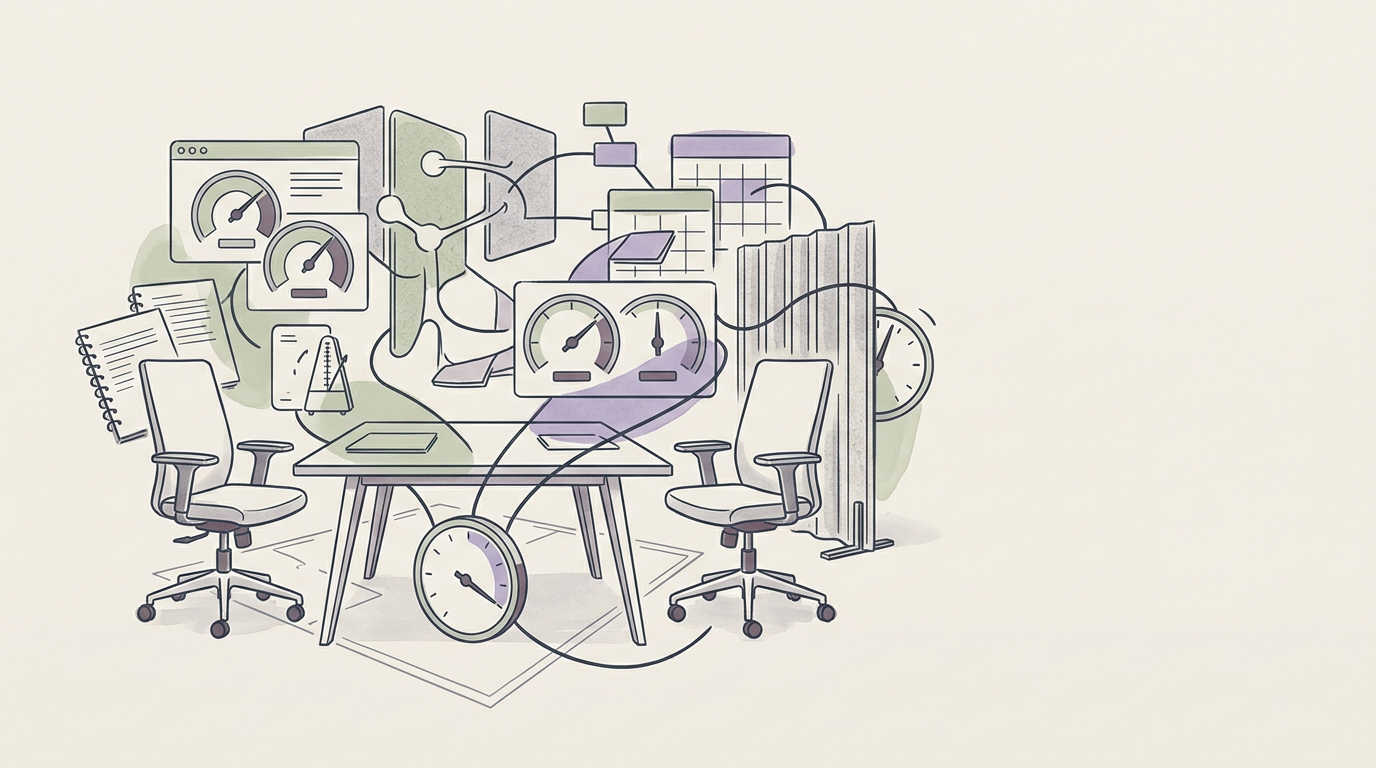
Human nervous systems do not stop transmitting threat signals just because a meeting has an agenda. The corporate wellness industry treats resilience as a solo sport, issuing meditation apps to employees who are actively adapting to a dysregulated manager. Individual tools cannot out-breathe a hostile room. Workplace capacity relies on a biological event called co-regulation, and it runs entirely from the top down.
You know exactly what a dysregulated room feels like. The manager walks in running hot, and before anyone speaks, your shoulders lock up and your breath gets shallow. You spend the rest of the day in a state of high vigilance, chasing a second coffee that doesn't land, staring at a blinking cursor while your prefrontal cortex goes offline. By the time you log off, you are tired but wired. You stand in front of the open fridge with no appetite. You crawl into bed feeling exhausted but can't rest, scrolling at 11:47 pm and searching "anxious for no reason" because the meeting wasn't even that bad on paper. The lingering static in your body is just the biological echo of someone else's stress.
Common Questions
What is co-regulation?
Co-regulation is the biological process where two or more nervous systems influence each other's state. When one person is genuinely grounded, their presence signals safety to the autonomic nervous systems of the people around them, allowing those individuals to downshift out of vigilance.
How does leadership affect the nervous system?
Leaders are the primary tone-setters for threat detection. A manager’s tone of voice, pacing, and facial expressions are constantly scanned by the team's sensory systems. Chronic unpredictability from a leader forces a team to maintain a high physiological guard, depleting capacity over time.
What is allostatic load?
Allostatic load is the accumulated wear and tear on your body from chronic stress. It happens when the nervous system repeatedly activates to handle demands but never fully completes the recovery cycle, leading to long-term fatigue, brain fog, and diminished executive function.
The biological weight of the room
I used to believe you could out-regulate any environment if your personal habits were dialled in. I spent my early career meticulously tracking my sleep, lifting heavy, and doing the breathwork, only to walk into the office and feel my stomach knot instantly. My habits were fine. I was just catching the ambient stress of a leadership team running on cortisol.
The literature on allostasis confirms that Kokorology actively shape each other’s nervous systems. This is deeply mechanical. The human brain continuously anticipates the metabolic needs of the body, and it uses the people around the system to predict whether Kokorology need to prepare for a fight. When a leader signals threat—through sharp prosody, clipped emails, or a visibly clenched jaw—the team’s vagal tone drops. Heart rate variability (HRV) narrows. The social engagement circuits go dark, and the prefrontal cortex loses its grip on creative problem-solving.
Most leadership advice assumes you can just decide to be inspiring, ignoring the fact that your team's amygdalas are tracking your respiratory rate, not your slide deck. The inbox has never once been impressed by your heart rate, yet Kokorology let an unread count trigger the same biological alarm as a physical threat. If you manage people, start paying attention to your vocal cadence. Slower speech deliberately signals safety to the room faster than telling everyone to calm down.
Unpredictability as a stressor
The most expensive thing a company can do is employ an unpredictable manager. Ambiguity is read by the body as danger. If a team never knows which version of their boss is going to log on in the morning, their autonomic nervous systems will default to hypervigilance. They burn capacity just sitting at their desks.
I see this constantly when I consult for corporate clients. They want to buy nervous system regulation workshops for their staff. I insist on training the executives first. A regulated team led by a highly reactive manager will eventually become a highly reactive team. The physiological contagion moves top-down.
You mandate stability by embodying it. That means predictable transparency. When you deliver bad news with a steady voice and a clear timeline, the team's physiological load stays manageable. When you hide the reality and leak anxiety through your behaviour, everyone's baseline tension spikes.
Mapping the stress signature
Every leader has a specific set of inputs that pushes their physiology out of its optimal window. A delayed flight, a missed deadline, a particular tone in an email. Recognising those inputs early is the actual work of leadership.
I have stopped recommending generic mindfulness for this. A 10-minute meditation at dawn does very little at 3 pm when you are aggressively typing a Slack message. You need to know what it feels like in your own tissue right before you lose your temper. The buzz behind the eyes. The tight chest. The suddenly loud internal monologue.
Leadership is mostly just the ability to metabolise your own reactivity before it becomes someone else's problem.
Once you identify your specific physiological cues, you can insert a micro-pause. One breath. Feeling your feet on the floor. This interrupts the automatic threat response, buying you the cognitive space to choose an action rather than a reaction.
The physiology of repair
No one sustains a perfectly regulated state indefinitely. Eventually, you will snap at a direct report, misread an email, or bring your outside stress into a performance review. The objective is rapid return to baseline, and that requires explicit repair.
Unresolved conflict leaves the autonomic nervous system stranded in high gear. The employee spends their evening ruminating, running cortisol through their bloodstream while trying to watch television. You close that biological loop by naming the rupture out loud.
A plain apology delivered with relaxed shoulders acts as a physiological reset for the room. Saying out loud that you ran hot in an exchange provides the predictability the mammalian brain craves. It proves that the threat was temporary and the environment is secure again.
What to do this week
- Map your specific triggers. Write down the three things that happened this week that made your breath shallow or your jaw tight. Awareness precedes intervention.
- Implement a 60-second transition. Before you open a high-stakes meeting link, look away from the screen. Notice the physical weight of your body in the chair. Let your shoulders drop.
- Audit your prosody. Record yourself leading a routine call or listen back to a voice note. Notice if your tone gets clipped or rushed when you feel pressured. Practice intentionally lowering your pitch.
Where this fits in the Kokorology system
Managing the ambient stress of a team begins with managing your own baseline. Kokorology teach the exact protocols for widening this capacity inside Performance, the leadership curriculum. If your team is already showing signs of chronic burnout, you can pull targeted recovery tools from the Library or use the Anchors to interrupt the daily static, and bring the system in for direct coaching to audit the culture.
Closing
The capacity to hold a steady state in a chaotic room is a trainable physiological skill. Do the reps.
- Start with the free guide to mapping your nervous system triggers.
- Work with the system directly to audit your workplace culture through executive coaching.
- Continue the daily practice of capacity building inside Performance.
TL;DR
Workplace resilience is fundamentally a biological event called co-regulation. When a leader runs chronically hot, their unpredictability acts as a continuous threat signal, pushing the team's nervous systems into a state of hypervigilance. You cannot solve a dysregulated environment with an individual wellness app. True organizational capacity requires leaders to manage their own physiological state first, providing a predictable, stable anchor that allows the team's autonomic nervous systems to downshift and perform.
Sources
- Walton, G. M. (2024). Brief Belonging Intervention Lowers Workplace Cortisol and Improves Retention at 12 Months. Nature Human Behaviour.
- Lehrer, P. M., et al. (2020). Heart rate variability biofeedback improves emotional and physical health and performance: A systematic review and meta-analysis. Applied Psychophysiology and Biofeedback.
- Holt-Lunstad, J. (2024). Loneliness and HPA-Axis Dysregulation: Meta-analysis of 47 Studies. Psychological Bulletin.