Daily movement
Semi-Supine (Constructive Rest)
A foundational Alexander Technique practice for releasing muscular tension and reorganizing postural reflexes.
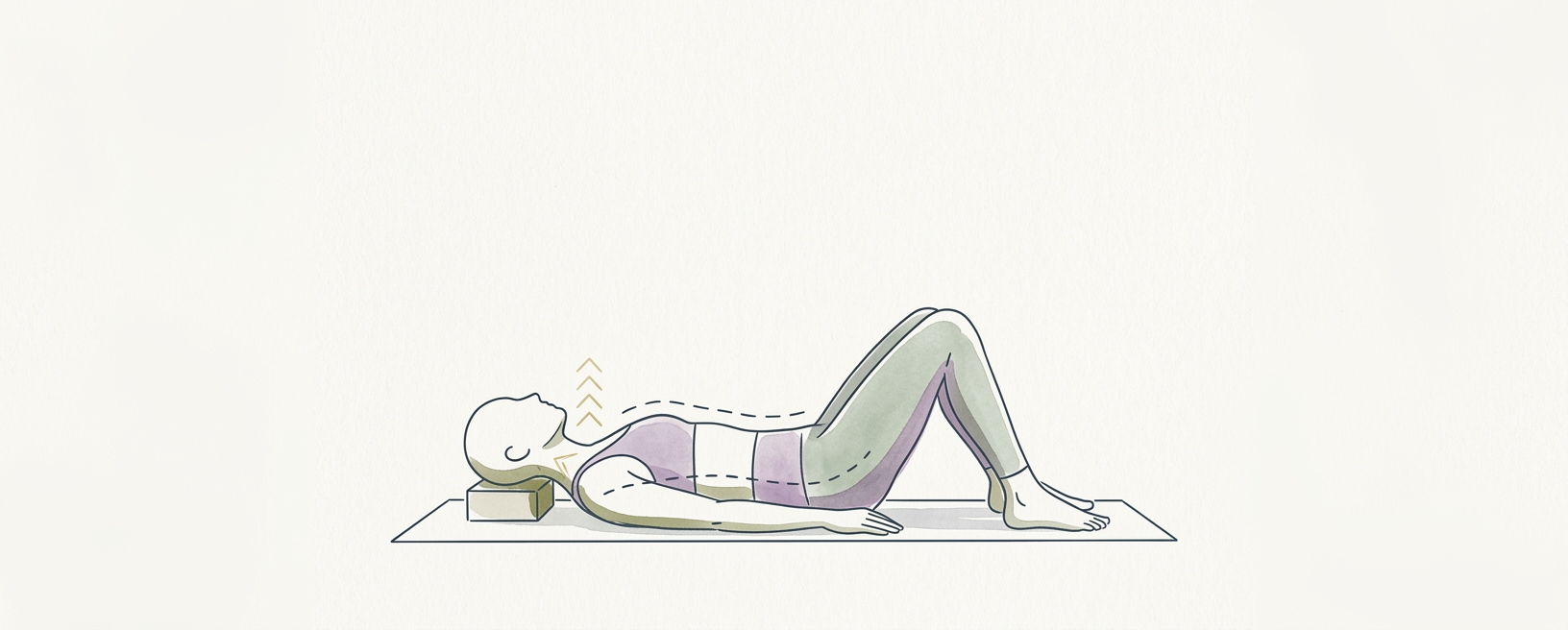
A foundational Alexander Technique practice for releasing muscular tension and reorganizing postural reflexes.
Alexander Technique · Developed by F. Matthias Alexander (1869-1955), an Australian actor who created the technique to overcome recurrent voice loss. Semi-supine is a primary method for applying his principles of inhibition and direction. · This practice addresses chronic muscular tension, postural inefficiencies, and mental override of innate postural support. It provides a state of active rest, facilitating inhibition of habitual tension patterns and conscious direction towards ease and expansion. · Perform daily for 10-20 minutes. Consistency is more beneficial than duration.
Why it works
Semi-supine works by minimizing gravitational pull, allowing the body to release unnecessary muscular effort. The specific head and knee support, combined with conscious mental directions, encourages the lengthening of the spine and widening across the back. This process interrupts established neuromuscular patterns of tension (inhibition) and introduces new patterns of release and ease (direction). The result is a recalibration of the nervous system towards more efficient and less effortful postural support, enhancing proprioception and reducing compressive forces on joints.
How to practice
Preparation: Lie on your back on a firm, flat surface (e.g., floor or firm mat). Place 2-3 paperback books or a similarly sized support under your head. The support should allow your neck to lengthen, not flex or extend. Your knees should be bent, with feet flat on the floor, hip-width apart. Ensure your lower back feels comfortable and your sacrum is heavy on the surface.
Placement: Allow your arms to rest on the floor by your sides, palms up or down, whatever feels most comfortable, ensuring no tension in the shoulders.
Inhibition (Stopping): Consciously notice any tension in your body, particularly in your neck, shoulders, and jaw. Without trying to "fix" it, simply acknowledge it. Allow yourself to not do the tension.
Direction (Thinking): Gently and continuously, with a light mental touch, give yourself the following directions:
- "My neck is free."
- "My head goes forward and up."
- "My back lengthens and widens."
- "My knees go away from my hips."
- "My breathing is easy and quiet."
Integration: Allow these directions to permeate your body without effort. Do not try to make them happen; rather, allow them to happen. Notice the subtle changes in your body as you maintain these thoughts.
Preparation: Lie on your back on a firm, flat surface (e.g., floor or firm mat). Place 2-3 paperback books or a similarly sized support under your head. The support should allow your neck to lengthen, not flex or extend. Your knees should be bent, with feet flat on the floor, hip-width apart. Ensure your lower back feels comfortable and your sacrum is heavy on the surface.
Placement: Allow your arms to rest on the floor by your sides, palms up or down, whatever feels most comfortable, ensuring no tension in the shoulders.
Inhibition (Stopping): Consciously notice any tension in your body, particularly in your neck, shoulders, and jaw. Without trying to "fix" it, simply acknowledge it. Allow yourself to not do the tension.
Direction (Thinking): Gently and continuously, with a light mental touch, give yourself the following directions:
- "My neck is free."
- "My head goes forward and up."
- "My back lengthens and widens."
- "My knees go away from my hips."
- "My breathing is easy and quiet."
Integration: Allow these directions to permeate your body without effort. Do not try to make them happen; rather, allow them to happen. Notice the subtle changes in your body as you maintain these thoughts.