Daily movement
Semi-Supine Constructive Rest for Whole-Body Inhibition
This practice reduces muscular tension and redirects habitual movement patterns, fostering a neutral, poised state.
This practice reduces muscular tension and redirects habitual movement patterns, fostering a neutral, poised state.
Alexander Technique · Alexander Technique (F.M. Alexander) · When feeling rigid, over-controlled, or habitually braced, this practice offers a pathway to release unconscious tension and reset postural holding patterns. · 10–15 minutes, once daily
Why it works
The semi-supine position minimizes the influence of gravity, allowing for a reduction in tonic muscular activity, particularly in the deep spinal extensors. This promotes a parasympathetic nervous system response, reducing sympathetic arousal. Concurrently, conscious "directional thoughts" interrupt ingrained neuromuscular patterns, encouraging a lengthening and widening of the torso. This direct cortical input helps inhibit reflexive bracing, allowing the connective tissues (fascia and muscle) to release holding patterns and revert to a more optimal resting length. The gentle, sustained release helps to re-educate proprioceptors, improving kinesthetic awareness and perceived body freedom.
How to practice
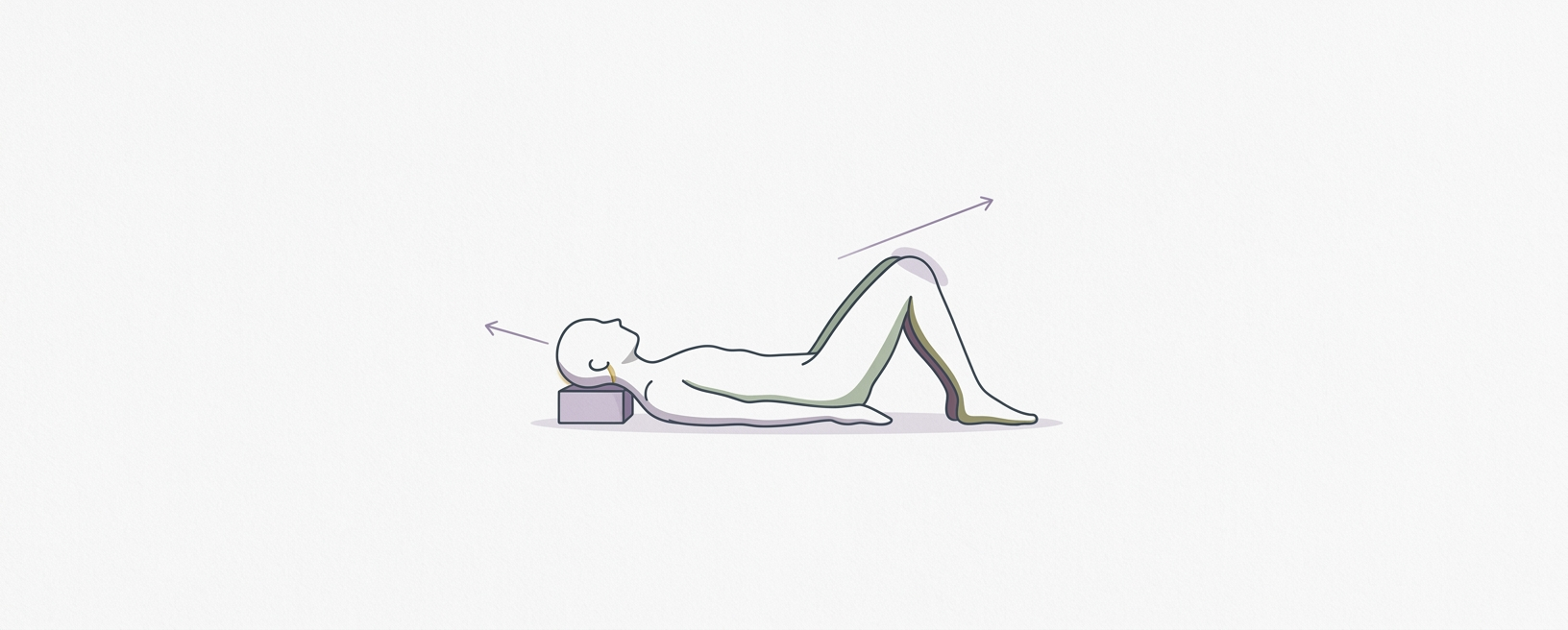
Lie on your back on a firm, flat surface (floor or firm mat) with knees bent, feet flat on the floor, about hip-width apart. Your head rests on a few thin books or a small, firm cushion, ensuring your neck is long and neither tucked nor extended. Arms rest comfortably at your sides, palms up.
Allow your back to lengthen and widen. Imagine your spine releasing down into the floor, each vertebra finding its space. Don't force it; simply invite the release.
Direct your head to release forward and up away from your neck. This is not a physical movement but an internal thought. Think of your head gently floating away from your spine, creating space.
Allow your neck to be free so your head can go forward and up. Notice if you're holding tension in your jaw or throat. Soften these areas.
Let your torso lengthen and widen. Imagine your ribs expanding outwards with each gentle breath, and your whole torso spreading across the floor. Think of your hip joints releasing away from your waist.
Allow your knees to release up and away from your hips, further encouraging lengthening through your spine and legs. Again, this is a thought, not a push.
Rest in this state for several minutes, continually re-applying these "directions" as gentle, quiet thoughts. Your breath remains natural and unforced.
Lie on your back on a firm, flat surface (floor or firm mat) with knees bent, feet flat on the floor, about hip-width apart. Your head rests on a few thin books or a small, firm cushion, ensuring your neck is long and neither tucked nor extended. Arms rest comfortably at your sides, palms up.
Allow your back to lengthen and widen. Imagine your spine releasing down into the floor, each vertebra finding its space. Don't force it; simply invite the release.
Direct your head to release forward and up away from your neck. This is not a physical movement but an internal thought. Think of your head gently floating away from your spine, creating space.
Allow your neck to be free so your head can go forward and up. Notice if you're holding tension in your jaw or throat. Soften these areas.
Let your torso lengthen and widen. Imagine your ribs expanding outwards with each gentle breath, and your whole torso spreading across the floor. Think of your hip joints releasing away from your waist.
Allow your knees to release up and away from your hips, further encouraging lengthening through your spine and legs. Again, this is a thought, not a push.
Rest in this state for several minutes, continually re-applying these "directions" as gentle, quiet thoughts. Your breath remains natural and unforced.