Daily movement
Kettlebell Turkish Get-Up
The Turkish Get-Up (TGU) is a movement that systematically loads and mobilizes the body from a supine position to standing, and back down. It integrates strength, stability, and mobility across multiple planes.
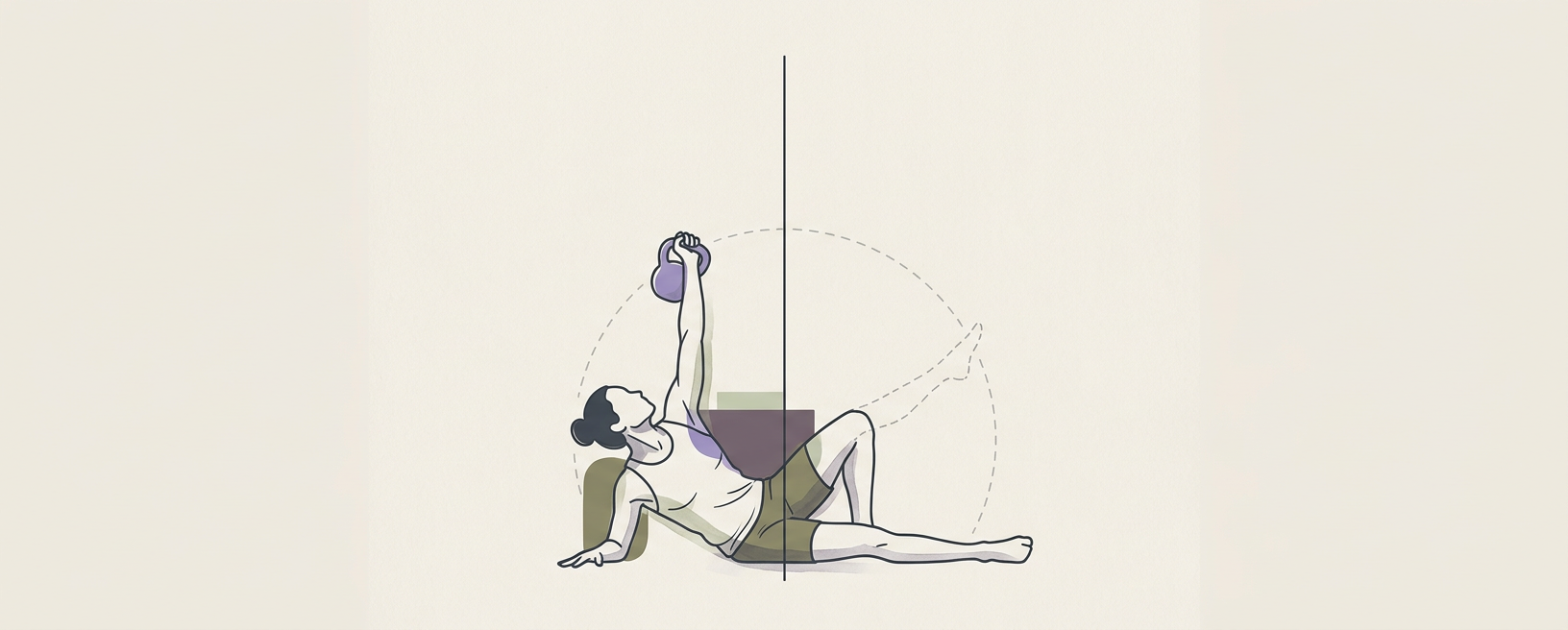
The Turkish Get-Up (TGU) is a movement that systematically loads and mobilizes the body from a supine position to standing, and back down. It integrates strength, stability, and mobility across multiple planes.
StrongFirst (Pavel Tsatsouline) · Historical records indicate variations of this exercise have been used for centuries, particularly in regions like Turkey, to develop robust, all-around strength. It was popularized in modern strength training by Pavel Tsatsouline and is a cornerstone practice of StrongFirst. · Fatigue, lack of integrated core strength, poor shoulder stability, limited thoracic mobility, general movement stiffness. It addresses a need for systemic, coordinated body control. · Begin with 3-5 repetitions per side, 2-3 times per week, using a very light kettlebell (or even just your shoe on your fist) to master the form. Gradually increase load as proficiency improves.
Why it works
The TGU is a primal movement pattern that effectively trains intra-abdominal pressure (IAP) generation and maintaining spinal integrity under load. It develops shoulder stability by requiring continuous tension and centration of the humerus in the glenoid, particularly through dynamic transitions. Thoracic rotation and extension are challenged and improved. The sequence of getting up and returning down, slowly and under load, forces the nervous system to coordinate multiple muscle groups simultaneously, leading to improved proprioception and intermuscular coordination. This complex motor learning translates to enhanced overall body control and resilience.
How to practice
Lie Supine, Bell in Hand: Lie on your back. Bend the knee on the side you hold the kettlebell, foot flat on the floor. The opposite leg is extended, opposite arm at a 45-degree angle from your body. Press the kettlebell straight up with the arm holding it, shoulder packed. Eye gaze is on the bell.
Roll to Elbow: Maintaining eye contact with the bell, roll onto your free elbow.
Push to Hand: Push yourself up onto your free hand, maintaining eye contact with the bell.
Sweep Leg Through: Lift your hips slightly, then sweep your extended leg back and under your body, planting the knee directly under your hip. You are now in a half-kneeling position, hand on the floor, bell overhead.
Torso Upright: Lift your torso upright, maintaining the kettlebell overhead. Your free arm is now reaching out for balance.
Stand Up: From the half-kneeling position, stand up, keeping the kettlebell securely overhead.
Reverse the Sequence: Carefully reverse the steps to return to the starting supine position, maintaining control and eye contact with the bell throughout the entire descent.
Lie Supine, Bell in Hand: Lie on your back. Bend the knee on the side you hold the kettlebell, foot flat on the floor. The opposite leg is extended, opposite arm at a 45-degree angle from your body. Press the kettlebell straight up with the arm holding it, shoulder packed. Eye gaze is on the bell.
Roll to Elbow: Maintaining eye contact with the bell, roll onto your free elbow.
Push to Hand: Push yourself up onto your free hand, maintaining eye contact with the bell.
Sweep Leg Through: Lift your hips slightly, then sweep your extended leg back and under your body, planting the knee directly under your hip. You are now in a half-kneeling position, hand on the floor, bell overhead.
Torso Upright: Lift your torso upright, maintaining the kettlebell overhead. Your free arm is now reaching out for balance.
Stand Up: From the half-kneeling position, stand up, keeping the kettlebell securely overhead.
Reverse the Sequence: Carefully reverse the steps to return to the starting supine position, maintaining control and eye contact with the bell throughout the entire descent.