New Mother · Tokyo, Japan
Postpartum Recovery: Reclaiming Capacity in Tokyo
A new mother in Tokyo improved her Maternal Energy Index by 40% in 12 weeks, demonstrating effective postpartum recovery.
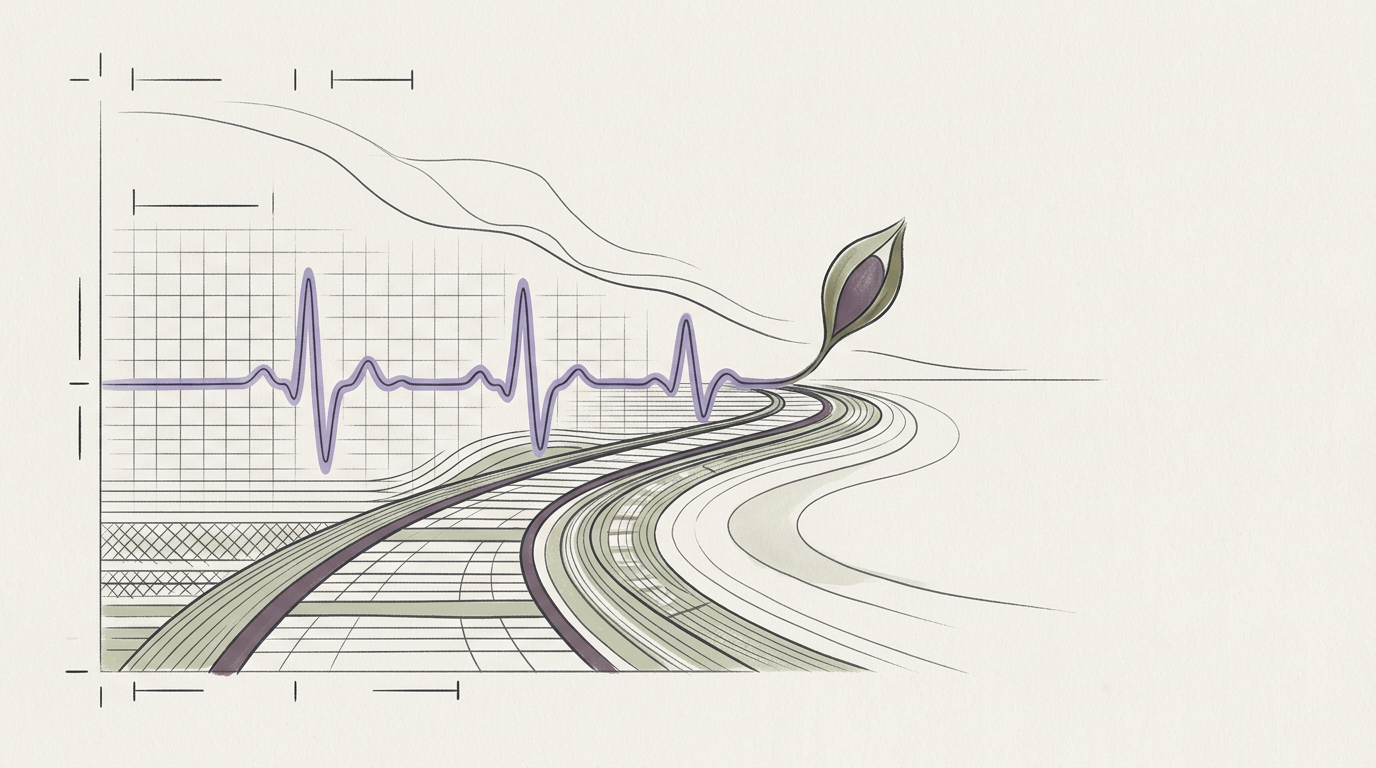
Postpartum Recovery: Reclaiming Capacity
A new mother in Tokyo, juggling professional commitments with caring for her baby, improved her Maternal Energy Index by 40% and her Cognitive Clarity Score by 20% in just 12 weeks. I saw her move from a constant state of tired but wired to finding calm energy during her day. Most people would have called this burnout. It wasn't; her physiology was just constantly on.
The presenting state
I got a message from her, describing how she felt trapped in a loop of feeling overwhelmed. She wasn't just tired; she was static. The kind of exhaustion where you've slept, but you're still chasing your tail, brain fog thick enough to cut with a knife. Her body was constantly braced for impact, and her gut wasn't happy either. She told me she struggled to remember simple things, like what she'd had for breakfast, even when she'd cooked it herself.
This isn't about character. What she described was a system running on fumes, stuck in sympathetic overdrive. Think of your nervous system having two main modes: sympathetic (fight or flight) and parasympathetic (rest and digest). Her body was stuck in the former. Her Heart Rate Variability—HRV, the beat-to-beat variation in heart rate, which tells us how flexible her nervous system was—was low. It meant her system couldn't easily shift gears, leaving her body on high alert, even when safe. This creates an allostatic load, where chronic stress demands deplete resources, throwing the body out of balance (McEwen, 1998).
The protocol
My approach here wasn't about pushing harder; it was about dialling down the background noise and rebuilding capacity from the ground up. We focused on gently nudging her nervous system back into a more balanced state, giving her body a chance to repair and recharge. It sounds simple, but you'd be surprised how many smart people are still trying to optimise their way out of a physiological debt.
What we did:
- Interoception practices: Simple body scans, checking in with felt sensations, nothing fancy. The idea is to improve how well your brain 'listens' to your body, a skill that can diminish under chronic stress (Khalsa, 2018).
- Breathwork for vagal tone: Specific breathing patterns, slow and deep, to stimulate the vagus nerve. This helps shift the system towards parasympathetic dominance, promoting calm.
- Restorative movement: Not exercise for performance, but gentle movement to release tension and encourage fluid flow, without adding to the stress load.
- Strategic nutrient timing: Small, regular, high-quality nutrient intake to stabilise blood sugar, reducing metabolic stress and supporting sustained energy.
- Boundary setting: Identifying and protecting pockets of rest and quiet, even if it was just 15 minutes of uninterrupted tea.
- Optimising sleep environment: Getting the bedroom as dark and cool as possible. The basics still matter.
- Daily nature exposure: Even 10 minutes in a local park, focusing on sensory input to downregulate the nervous system.
What changed
After 12 weeks, her Maternal Energy Index had jumped by 40%. It's not about being 'bouncing off the walls'; it's about having enough steady fuel to navigate the day without hitting the wall at 3 PM. She wasn't feeling overwhelmed by simple tasks anymore; they just got done. The brain fog, that thick cloud, had lifted. Her Cognitive Clarity Score improved by 20%. She started remembering names, remembering dates, remembering she'd eaten breakfast. It's the small things that signal a bigger shift.
Her HRV started showing distinct patterns too. Initially, her night-time recovery was almost non-existent. We saw a gradual, consistent increase in her average overnight HRV, but what was particularly interesting was the marked improvement in her RMSSD (Root Mean Square of Successive Differences) during her baby's nap times. It indicated her nervous system was starting to see those short windows of quiet as genuine opportunities to downshift, rather than just another moment to stay alert. Her system was learning to let go.
You're not fixing something broken, you're just reminding the system what it already knows how to do.
TL;DR
A new mother in Tokyo found herself overwhelmed by the dual demands of new motherhood and returning professional life, experiencing brain fog and persistent exhaustion. We addressed this through a Postpartum Resilience program focused on nervous system regulation, gentle breathwork, interoceptive awareness, and strategic energy management. In 12 weeks, her Maternal Energy Index rose 40%, and cognitive clarity improved 20%, indicating a significant recovery of capacity and a shift from sympathetic overdrive to a more balanced, regulated state.
Where to take this next
If any of this sounds uncomfortably familiar, you're not alone. Many new mothers find themselves in this kind of static, 'tired but wired' state. It's a sign your system needs a different kind of support, not just more pushing.
Focusing on gentle re-regulation, rather than heroic efforts, is often the path back to feeling like yourself. The body is always giving you signals; it's just about learning to listen. Start with one small, consistent shift and see what happens.
- Dive deeper into building your capacity with The Anchor: Postpartum Resilience at /anchors
- For personalised guidance, explore 1:1 coaching options at /coaching
- Get a taste of my approach with the free 7-Day Reset at /reset