Daily routine
Travel transition for rhythm reset
This routine addresses post-travel dysregulation to reset your circadian rhythm.
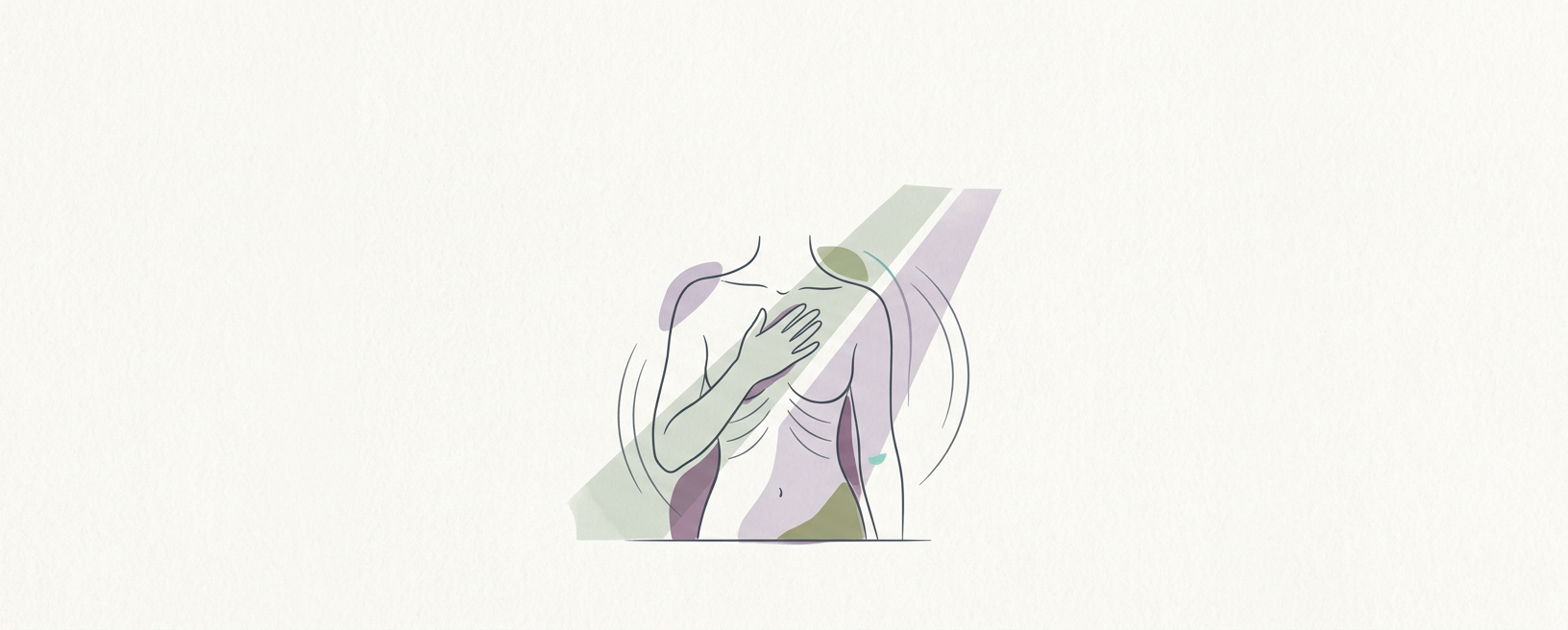
This routine addresses post-travel dysregulation to reset your circadian rhythm.
post-travel jet-lag dysregulation · upon arrival or before bed after travel · 15 minutes
Why it works
Traveling across time zones disrupts your internal clock, the circadian rhythm. This rhythm is largely governed by light exposure and consistent environmental cues. This routine uses targeted light exposure, subtle movement, and vagal stimulation to help your brain resynchronize with the new time zone. This supports melatonin regulation and cortisol patterns, facilitating a quicker adjustment and reducing the fragmented feeling of jet lag.
Ambient light soak — Sit or stand facing a window, allowing natural light to enter your eyes without looking directly at the sun. Soften your gaze. Do this for 5 minutes.
Gentle spine release — From a seated position, gently rotate your torso side to side, feeling the movement through your rib cage and lower back. Keep your head aligned with your spine. Continue for 3 minutes.
Trace your sternum for ventral vagus access — Use the technique described in Trace your sternum for ventral vagus access to gently stimulate your ventral vagus nerve. This can help calm and orient your nervous system. Do this for 4 minutes.
Hydration with electrolytes — Drink 8-12 ounces of water with a pinch of sea salt or an electrolyte tablet. Dehydration exacerbates jet lag symptoms.
Ear lobe massage — Gently massage your earlobes between your thumb and index finger for 2 minutes. This stimulates nerve endings connected to the vagus nerve.