Daily movement
The Half-Salamander
A gentle, floor-based movement to support nervous system regulation by slowly exploring the innate orienting response.
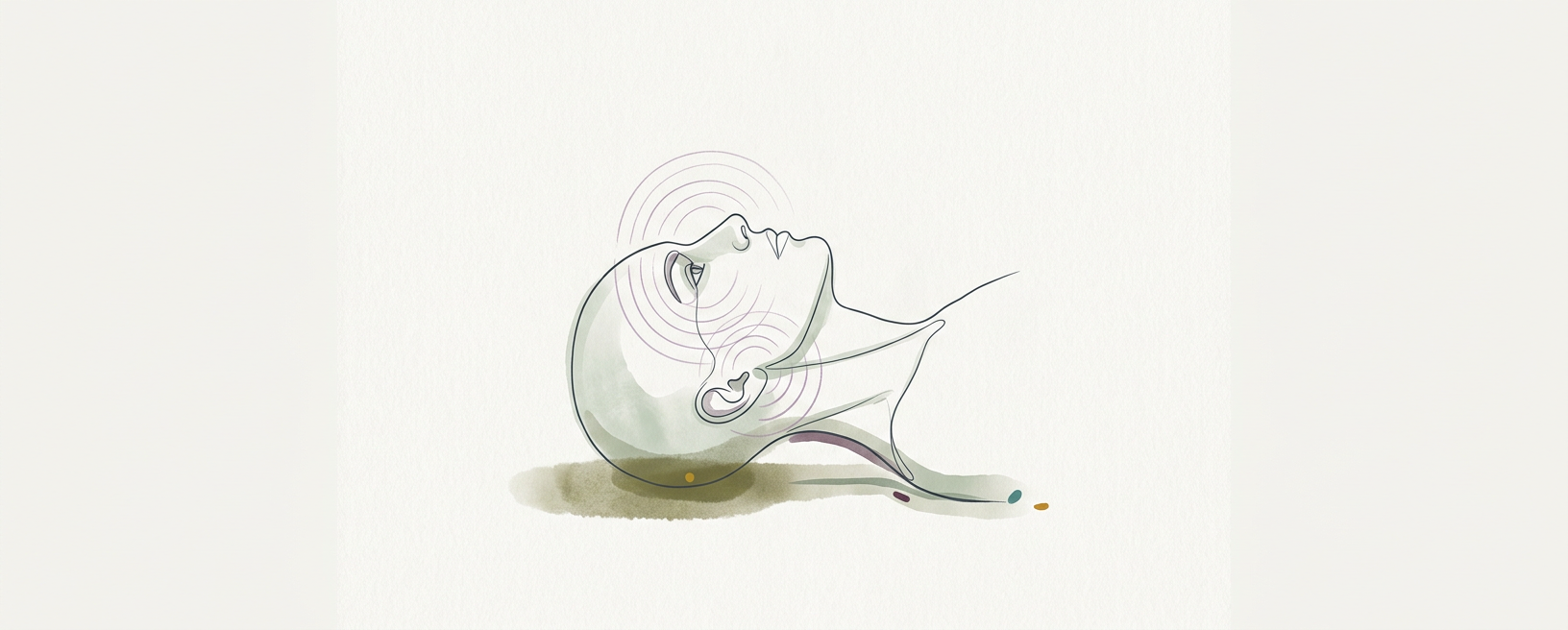
A gentle, floor-based movement to support nervous system regulation by slowly exploring the innate orienting response.
Somatic Experiencing · Developed by Peter A. Levine, PhD, as part of Somatic Experiencing® (SE™). · Hyper-vigilance, feeling "stuck" in fight/flight/freeze responses, difficulty settling, mild anxiety. · Perform for 5-10 minutes, 1-3 times daily, or as needed when feeling agitated or dysregulated. Consistency is more beneficial than intensity.
Why it works
The Half-Salamander leverages the reptilian orienting response, which is a fundamental, evolutionary mechanism for assessing safety in the environment. By slowly and intentionally turning the head while the body remains still, the movement helps to gently "update" the nervous system's perception of safety. This controlled, deliberate movement, especially when paired with conscious breathing, can facilitate pendulation—a natural rhythmic oscillation between states of activation and settling. This process, known as titration in SE™, prevents overwhelming the system while gradually expanding the capacity for self-regulation and discharge of trapped survival energy. It can reduce muscle tension, particularly in the neck and shoulders, and improve proprioception.
How to practice
Starting Position: Lie on your back on a firm, comfortable surface. Place a small, flat cushion or folded towel under your head if needed for comfort. Your knees can be bent with feet flat on the floor, or legs extended, whichever feels more stable and comfortable for your lower back.
Initial Scan: Take a few moments to notice points of contact between your body and the floor. Observe your breath without trying to change it.
Initiate Movement: Slowly begin to turn your head to one side, as if you are listening for a sound or looking for something just out of your peripheral vision. The movement should be minimal—just enough to feel the first gentle stretch or sensation in your neck.
Pause and Notice: Stop the movement when you first notice a sensation. Allow your eyes to continue to explore beyond the edge of your vision, without straining. Pay attention to any shifts in sensation in your neck, shoulders, jaw, or elsewhere in your body. Notice your breath.
Return to Center: Even more slowly, allow your head to return to the center. Pause here and notice any difference between the two sides of your body or any lingering sensations.
Repeat on the Other Side: After a brief pause, repeat the movement on the other side, turning your head slowly, pausing at the first sensation, allowing your eyes to scan, and then returning to center. Repeat this sequence, alternating sides.
Explore the Edges: As you become more comfortable, you can very gradually allow the head to turn a little further, always staying within a comfortable range and stopping at the first sign of increased tension or discomfort. The goal is not a deep stretch, but a gentle exploration.
Post-Practice Integration: When you are finished, rest for a few minutes on your back, allowing your nervous system to integrate the experience. Notice any changes in your internal state, muscle tone, or sense of ease.
Starting Position: Lie on your back on a firm, comfortable surface. Place a small, flat cushion or folded towel under your head if needed for comfort. Your knees can be bent with feet flat on the floor, or legs extended, whichever feels more stable and comfortable for your lower back.
Initial Scan: Take a few moments to notice points of contact between your body and the floor. Observe your breath without trying to change it.
Initiate Movement: Slowly begin to turn your head to one side, as if you are listening for a sound or looking for something just out of your peripheral vision. The movement should be minimal—just enough to feel the first gentle stretch or sensation in your neck.
Pause and Notice: Stop the movement when you first notice a sensation. Allow your eyes to continue to explore beyond the edge of your vision, without straining. Pay attention to any shifts in sensation in your neck, shoulders, jaw, or elsewhere in your body. Notice your breath.
Return to Center: Even more slowly, allow your head to return to the center. Pause here and notice any difference between the two sides of your body or any lingering sensations.
Repeat on the Other Side: After a brief pause, repeat the movement on the other side, turning your head slowly, pausing at the first sensation, allowing your eyes to scan, and then returning to center. Repeat this sequence, alternating sides.
Explore the Edges: As you become more comfortable, you can very gradually allow the head to turn a little further, always staying within a comfortable range and stopping at the first sign of increased tension or discomfort. The goal is not a deep stretch, but a gentle exploration.
Post-Practice Integration: When you are finished, rest for a few minutes on your back, allowing your nervous system to integrate the experience. Notice any changes in your internal state, muscle tone, or sense of ease.