Daily movement
Spinal Cord Breathing for Nervous System Release
This Qi Gong movement down-regulates the nervous system through gentle spinal undulation and conscious breathwork.
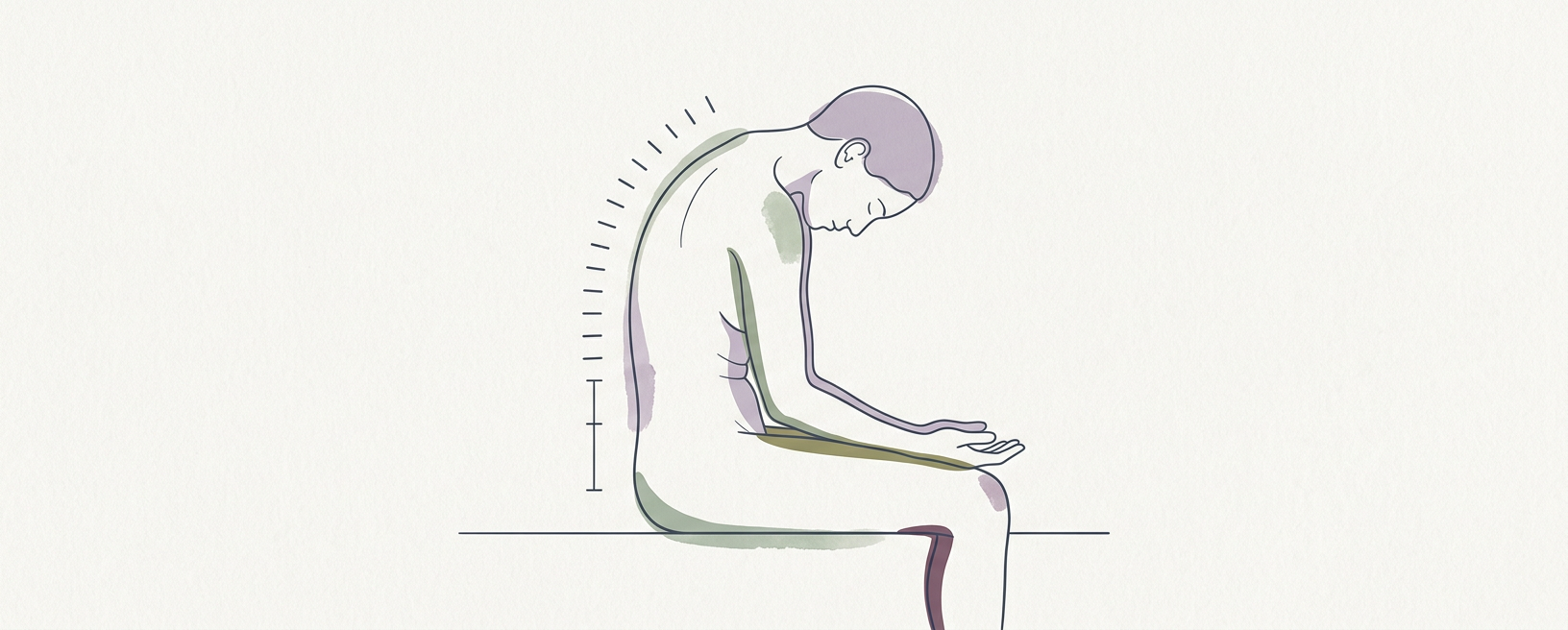
This Qi Gong movement down-regulates the nervous system through gentle spinal undulation and conscious breathwork.
qi gong · Qi Gong (Mantak Chia, Universal Healing Tao) · This meets the "tired but wired" state, or when feeling static and held, needing a gentle way to discharge accumulated tension. · 3-5 minutes, 1 slow cycle per breath
Why it works
The spinal column houses the central nervous system, and its gentle, wave-like undulation in Spinal Cord Breathing directly influences the cerebrospinal fluid (CSF) flow and vagal tone. This movement, synchronized with breath, stimulates the parasympathetic nervous system, promoting a 'rest and digest' state. Mechanically, the slow, rhythmic flexion and extension of the spine mobilize the vertebrae and surrounding fascial planes. This action helps to release adhesions and restore elasticity within the deep postural muscles and connective tissues, particularly along the dura mater, which encases the brain and spinal cord. Improved CSF flow delivers nutrients and clears metabolic waste, contributing to a sense of clarity and reduced physiological stress. It's a gentle internal massage for the spine and its neural contents.
How to practice
Start seated: Sit comfortably on a chair with your feet flat on the floor, hip-width apart. Your spine is long but not rigid, shoulders relaxed. Hands rest gently on your thighs, palms down. Gaze is soft, slightly downward.
Initiate with the tailbone: On an exhale, gently tuck your tailbone under, allowing your pelvis to rock slightly backward. Feel a gentle rounding begin in your lower back. Your head stays upright initially.
Continue the wave: As you continue to exhale, allow the rounding to travel slowly up your spine—lumbar, then thoracic, then cervical. Your head will naturally drop forward, chin moving towards your chest, like a gentle curl inward. Feel the tension release.
Reverse on inhale: On an inhale, slowly begin to extend your spine from the tailbone. Gently arch your lower back, then middle back, allowing your chest to lift and open. Your head will naturally lift last, gaze moving slightly upward, without straining the neck.
Fluid motion: Continue this wave-like motion, exhaling into a gentle spinal flexion (rounding) and inhaling into a gentle spinal extension (arching). The movement is slow, smooth, and continuous, like a gentle ocean wave flowing through your spine.
Breath leads movement: Let your breath initiate and guide the movement, rather than forcing the movement to fit the breath. Maintain a steady, soft rhythm. The full cycle should take 5-10 seconds.
Start seated: Sit comfortably on a chair with your feet flat on the floor, hip-width apart. Your spine is long but not rigid, shoulders relaxed. Hands rest gently on your thighs, palms down. Gaze is soft, slightly downward.
Initiate with the tailbone: On an exhale, gently tuck your tailbone under, allowing your pelvis to rock slightly backward. Feel a gentle rounding begin in your lower back. Your head stays upright initially.
Continue the wave: As you continue to exhale, allow the rounding to travel slowly up your spine—lumbar, then thoracic, then cervical. Your head will naturally drop forward, chin moving towards your chest, like a gentle curl inward. Feel the tension release.
Reverse on inhale: On an inhale, slowly begin to extend your spine from the tailbone. Gently arch your lower back, then middle back, allowing your chest to lift and open. Your head will naturally lift last, gaze moving slightly upward, without straining the neck.
Fluid motion: Continue this wave-like motion, exhaling into a gentle spinal flexion (rounding) and inhaling into a gentle spinal extension (arching). The movement is slow, smooth, and continuous, like a gentle ocean wave flowing through your spine.
Breath leads movement: Let your breath initiate and guide the movement, rather than forcing the movement to fit the breath. Maintain a steady, soft rhythm. The full cycle should take 5-10 seconds.