Daily movement
Bodyweight Squat for Grounding and Resilience
Cultivate full-body capacity and regulate your nervous system through this fundamental movement pattern.
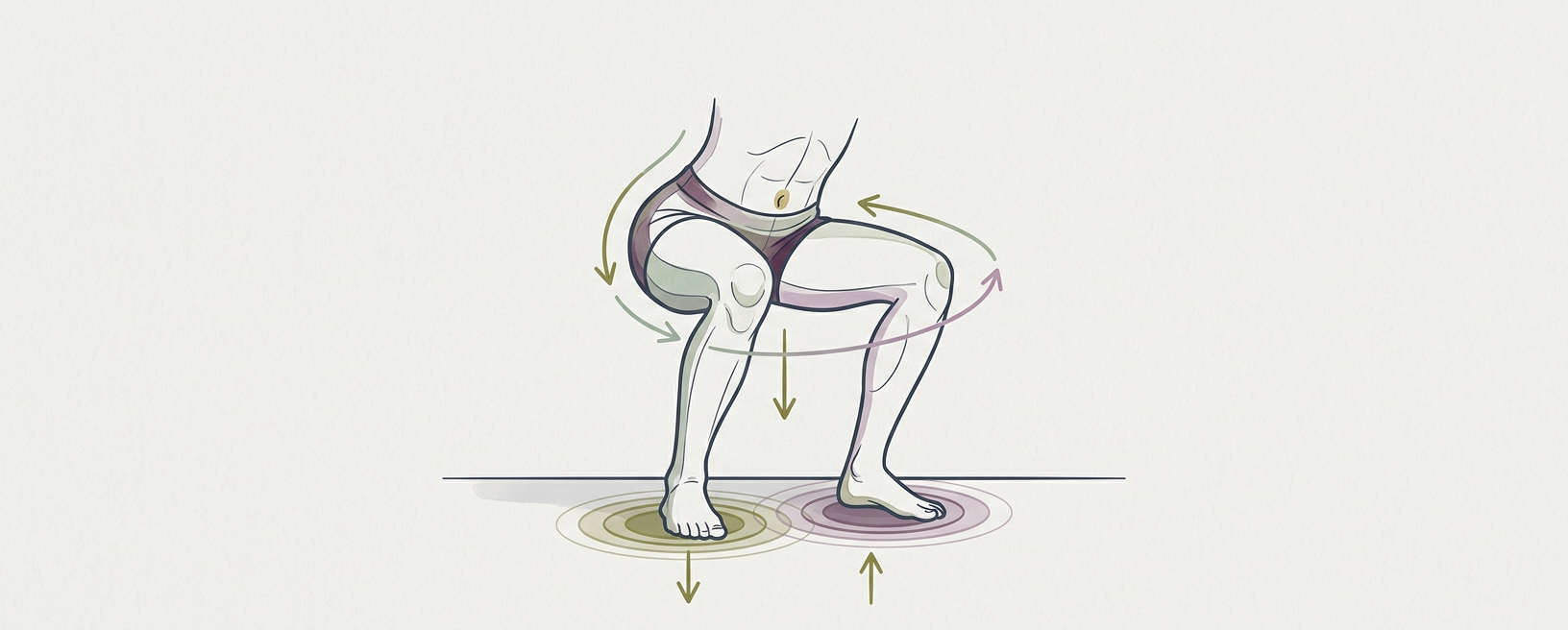
Cultivate full-body capacity and regulate your nervous system through this fundamental movement pattern.
functional strength · Strength training principles (Dan John) · This meets the state of feeling unrooted, fatigued, or overwhelmed, when the body craves stability and integrated power. · 3 sets of 8–12 repetitions, 60 seconds rest between sets.
Why it works
The bodyweight squat is a foundational human movement, tapping into the deep stability systems often neglected in sedentary life. It demands co-contraction of the core stabilizers (transverse abdominis, pelvic floor, multifidus), which directly influences vagal tone and parasympathetic activation through mechanoreceptors in the diaphragm and abdominal cavity. As you descend, the proprioceptive feedback from the hips, knees, and ankles provides rich sensory input, enhancing body awareness and reducing perceived threat. The cyclical compression and decompression of tissues, particularly the fascial lines connecting the feet, legs, and torso, promotes fluid exchange and tissue resilience. This integrated action signals safety to the brain, shifting the nervous system from a state of 'tired but wired' toward a more regulated, capable baseline. It's not just moving; it's communicating with your internal landscape.
How to practice
Stand tall: Begin with your feet roughly hip-width apart, toes pointing slightly outward. Your arms can hang naturally or extend forward for balance.
Initiate the hinge: Soften your knees and begin to push your hips backward as if reaching for a chair behind you. Keep your chest lifted and spine neutral – avoid rounding your back.
Descend with control: Continue lowering, allowing your knees to track in line with your toes. Aim to get your thighs at least parallel to the floor, or lower if your mobility allows while maintaining good form. As you descend, inhale deeply into your belly, bracing your core as if preparing for a gentle impact.
Hold briefly: At the bottom, feel grounded through your whole foot. Maintain your brace. Your breath might pause for a moment.
Drive up: Exhale smoothly as you push through your heels and midfoot to return to the standing position, consciously engaging your glutes at the top. Keep your core engaged throughout.
Reset and repeat: Take a brief moment to reset your posture before initiating the next repetition. Focus on consistent depth and control.
Stand tall: Begin with your feet roughly hip-width apart, toes pointing slightly outward. Your arms can hang naturally or extend forward for balance.
Initiate the hinge: Soften your knees and begin to push your hips backward as if reaching for a chair behind you. Keep your chest lifted and spine neutral – avoid rounding your back.
Descend with control: Continue lowering, allowing your knees to track in line with your toes. Aim to get your thighs at least parallel to the floor, or lower if your mobility allows while maintaining good form. As you descend, inhale deeply into your belly, bracing your core as if preparing for a gentle impact.
Hold briefly: At the bottom, feel grounded through your whole foot. Maintain your brace. Your breath might pause for a moment.
Drive up: Exhale smoothly as you push through your heels and midfoot to return to the standing position, consciously engaging your glutes at the top. Keep your core engaged throughout.
Reset and repeat: Take a brief moment to reset your posture before initiating the next repetition. Focus on consistent depth and control.