Daily movement
Band-Resisted Face Pull for Scapular Stability
This movement strengthens the posterior chain to improve shoulder mechanics and reduce upper back strain.
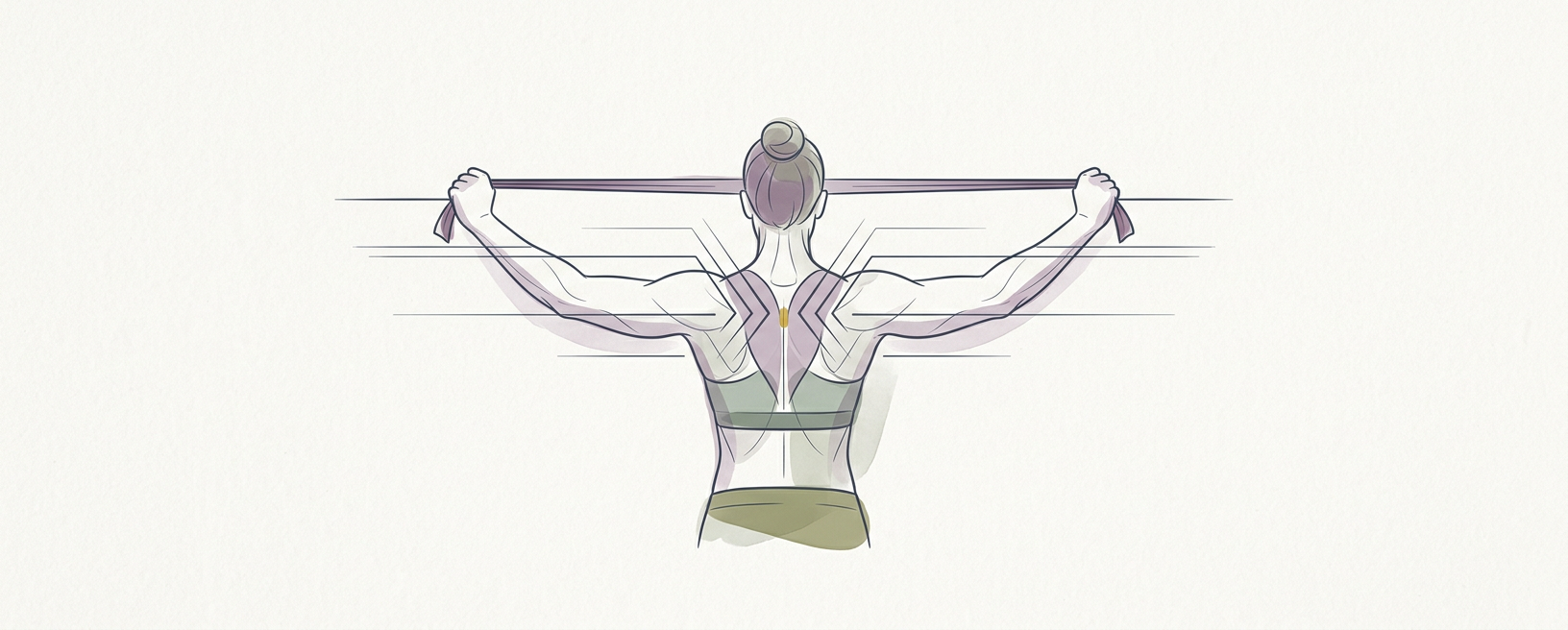
This movement strengthens the posterior chain to improve shoulder mechanics and reduce upper back strain.
resistance band · Functional fitness, adapted from physical therapy protocols · This meets the feeling of upper back tension and poor posture often caused by prolonged anterior-chain dominance. · 3 sets of 10-15 repetitions, with a 2-second hold at peak contraction
Why it works
The face pull targets the external rotators and scapular retractors, such as the rhomboids and lower trapezius. This counteracts the internal rotation and protraction common in modern postures, reorganizing shoulder joint mechanics. Neurologically, engaging these muscles provides proprioceptive feedback to the brain, enhancing body awareness and reinforcing corrective movement patterns. On a tissue level, it lengthens and strengthens shortened chest musculature while improving blood flow and reducing fascial restrictions in the upper back and shoulders.
How to practice
Anchor a resistance band at approximately chest height. Stand facing the anchor point, holding one end of the band in each hand with an overhand grip, palms down.
Step back until there is light tension in the band with your arms extended forward. Your feet should be shoulder-width apart, knees slightly bent, and core engaged.
Initiate the pull by retracting your shoulder blades, drawing your elbows back and slightly up, as if trying to touch your elbows together behind you. Your hands should come towards your face, specifically aiming for your ears or temples.
Inhale slowly as your elbows move back, focusing on the contraction of your upper back muscles.
Pause briefly at the peak contraction, feeling the squeeze between your shoulder blades. Your forearms should be perpendicular to the band.
Exhale slowly as you control the eccentric phase, allowing your arms to extend forward to the starting position. Maintain tension in the band throughout the movement.
Repeat for the prescribed dose, emphasizing smooth, controlled movement over speed.
Anchor a resistance band at approximately chest height. Stand facing the anchor point, holding one end of the band in each hand with an overhand grip, palms down.
Step back until there is light tension in the band with your arms extended forward. Your feet should be shoulder-width apart, knees slightly bent, and core engaged.
Initiate the pull by retracting your shoulder blades, drawing your elbows back and slightly up, as if trying to touch your elbows together behind you. Your hands should come towards your face, specifically aiming for your ears or temples.
Inhale slowly as your elbows move back, focusing on the contraction of your upper back muscles.
Pause briefly at the peak contraction, feeling the squeeze between your shoulder blades. Your forearms should be perpendicular to the band.
Exhale slowly as you control the eccentric phase, allowing your arms to extend forward to the starting position. Maintain tension in the band throughout the movement.
Repeat for the prescribed dose, emphasizing smooth, controlled movement over speed.