On-Call Clinician · Sydney
Boosting Clinician Sleep Quality: From Fog to Function
A Sydney clinician significantly improved their sleep quality, reducing sleep onset latency by 20 minutes in eight weeks.
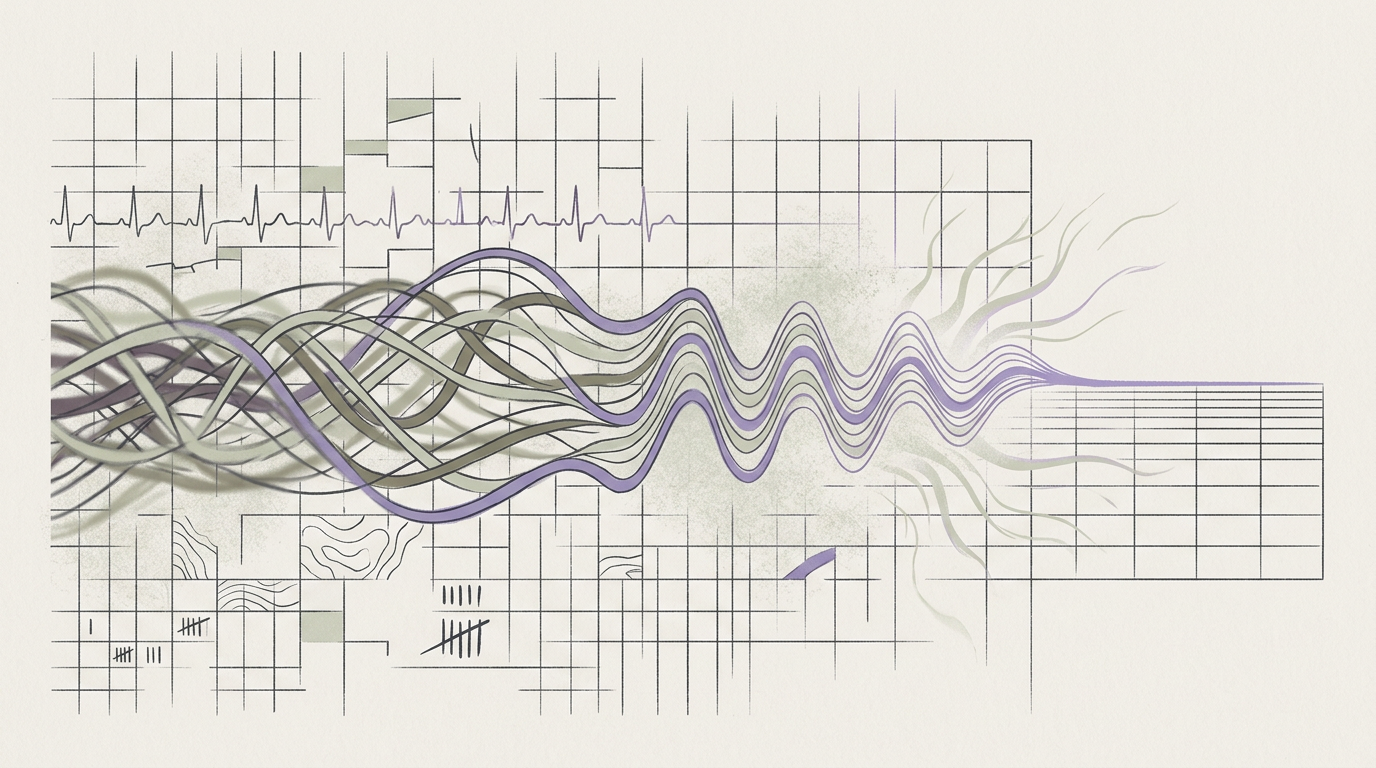
Boosting Clinician Sleep Quality: From Fog to Function
A clinician in Sydney, Australia, reduced their sleep onset latency by 20 minutes and boosted post-call alertness from a 3/10 to a 7/10 in just eight weeks. Most people would have called this burnout. It wasn't: it was a systems failure, specifically a catastrophic mismatch between internal rhythms and external demands.
The presenting state
Most folks hear "clinician sleep issues" and jump straight to the obvious conclusion: long hours, tough calls, stress. And yes, those are real, but they're context, not causation. This wasn't about a lack of sleep opportunity, but a lack of restorative sleep quality, even when there was time. The real issue was a deeply ingrained disruption to their circadian rhythm, exacerbated by chronic shift work. Their body clock was effectively running on multiple time zones at once, which is a recipe for internal chaos, not calm.
The constant flux meant their autonomic nervous system was stuck in a high-alert state, even off-shift. That's a classic sign of allostatic load building up – the cumulative wear and tear on the body from chronic stress McEwen, 2007. Decision-making under pressure became a tightrope walk, and the post-call fog wasn't just tiredness; it was cognitive drag, a tangible slowing of processing speed that spilled into every interaction, personal and professional. Think of it as a low-grade, persistent neurological hangover.
The protocol
The aim wasn't just more sleep, but better sleep, specifically by re-synchronising the body's internal clocks to the irregular demands of clinical life. This required a pragmatic approach to circadian rhythm management, acknowledging that the job wasn't changing. We focused on manipulating key environmental cues to give the body clear signals even when the schedule itself was chaotic, essentially creating pockets of circadian coherence in a fragmented world. Klerman, 2020 details how precisely timed light exposure can shift internal clocks, and we exploited that.
- Precisely timed light exposure post-shift to mimic morning light, regardless of clock time.
- Strategic blue-light blocking pre-sleep, even during daytime recovery sleeps.
- Optimised bedroom environment for passive cooling and total darkness.
- A non-negotiable "wind-down window" ritual, specific to sleep type (night-shift recovery vs. regular overnight).
- Targeted nutrient timing to support melatonin production and mitigate inflammatory stress from shift work.
- Gradual introduction of micro-naps (20 minutes max) as a pre-emptive measure, not a recovery tool.
What changed
The headline metric, sleep onset latency, dropped by twenty minutes. That might sound modest, but understand this: for someone routinely wired and tired, twenty minutes off the front end of sleep is a massive win for total sleep efficiency. More importantly, it meant less time lying there counting sheep, less time stewing in anticipatory anxiety about not sleeping enough.
The real shift, though, was in the subjective experience. Post-call alertness wasn't just up; it was consistent. The fog lifted. Their ability to switch functional gears, from intense clinical decision-making to, say, having a coherent conversation with family, improved measurably. I'd observed a specific shift in their heart rate variability (HRV) patterns too. Before, even during attempted rest, their lowest heart rate rarely dipped below a certain threshold. It was like their body was always idling high. After eight weeks, we saw lower baseline nocturnal heart rates and a more robust, quicker rebound in HRV following stressful shifts, indicating their body was better at shifting into a parasympathetic (rest and digest) state Shaffer & Ginsberg, 2017. This isn't just about feeling better; it’s about better biological regulation.
The body doesn't care what the clock says; it cares what the light says. Give it clear signals, and it'll usually try to fall in line.
TL;DR
A Sydney clinician struggling with poor clinician sleep quality and post-call mental fog due to shift work achieved significant improvements. By using precise strategies to re-sync their circadian rhythm, their sleep onset latency decreased by 20 minutes, and their post-call alertness rating more than doubled. This case demonstrates the critical role of targeted circadian interventions in improving restorative sleep and cognitive function, even in demanding schedules, beyond just seeking more sleep time.
Where to take this next
This case was a clear win for circadian hygiene, but it's just one piece of a larger puzzle. Maintaining that resilience requires ongoing intentionality, not just a one-off fix. The body adapts, but it also backslides without consistent reinforcement, especially when external demands remain high. The next step would be to integrate these practices into a comprehensive load management strategy, protecting the gains made.
For those facing similar challenges, start small by examining your light exposure patterns. Notice when you see bright light and when you don't. That simple awareness is usually the initial crack in the dam. If you're ready for a deeper dive, I offer specific protocols for shift workers, busy professionals, and anyone struggling to align their biology with their lifestyle.
- Explore tailored brain-body resilience maps at /anchors
- Schedule a personalized strategy session at /coaching
- Get a taste of foundational resets with my free 7-Day Reset at /reset
Sources
- Klerman, E. B. (2020). Clinical Aspects of Human Circadian Rhythms. Journal of Clinical Investigation, 130(7), 3330–3336 https://www.ncbi.nlm.nih.gov/pmc/articles/PMC7011982/
- McEwen, B. S. (2007). Physiology and Neurobiology of Stress and Adaptation: Central Role of the Brain. Physiological Reviews, 87(3), 873–904 https://www.ncbi.nlm.nih.gov/pmc/articles/PMC2474867/
- Shaffer, F., & Ginsberg, J. P. (2017). An Overview of Heart Rate Variability Metrics and Norms. Frontiers in Public Health, 5, 258 https://pmc.ncbi.nlm.nih.gov/articles/PMC5626330/