For Coaches
Cognitive insight has a very short half-life
The standard conversation around the client who knows the work but still cannot do it usually starts in the wrong room. It treats the symptom, product, habit, or metric as the whol
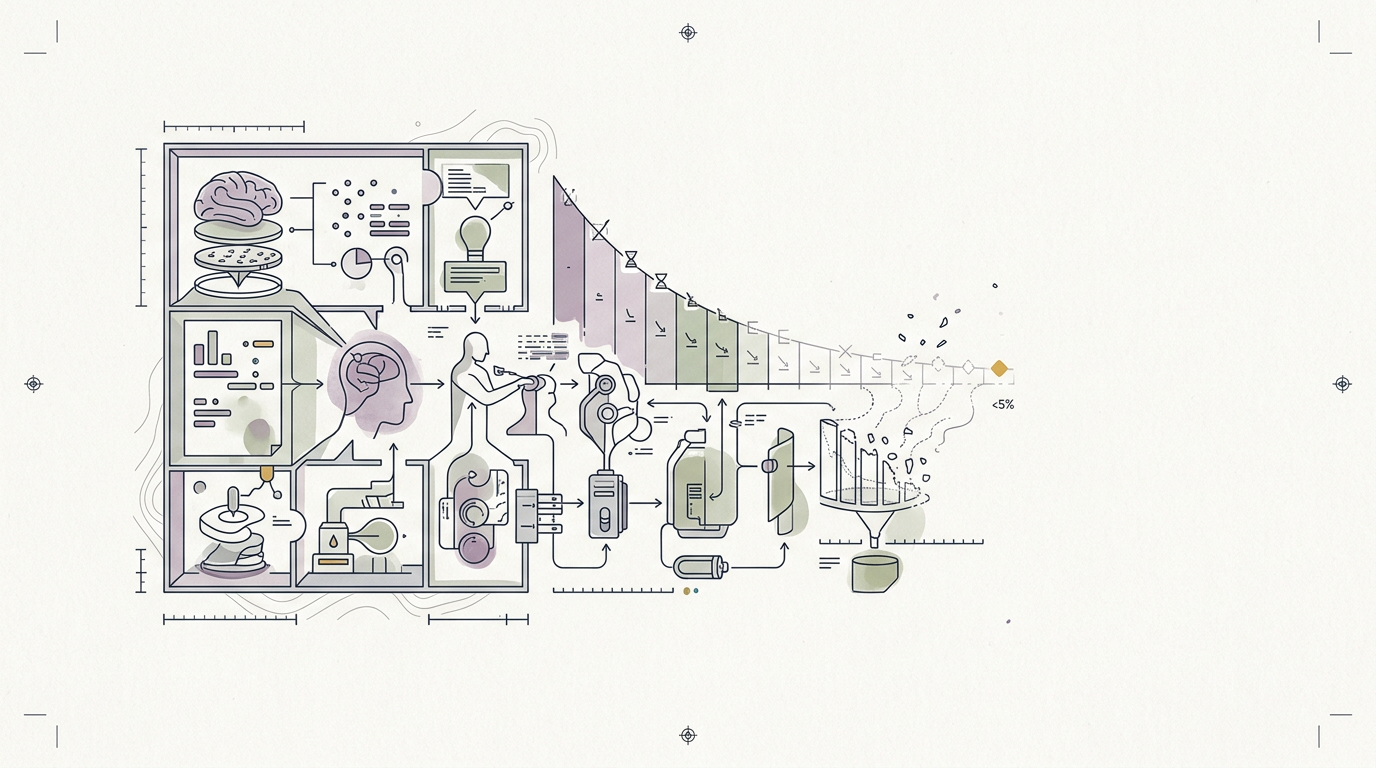
The coaching industry assumes that if a client understands the mechanism of their stress, they will automatically change their behavior. That assumption relies on the prefrontal cortex staying online during a Tuesday afternoon crisis, which it categorically doesn't. I used to believe that handing someone a brilliant framework was enough to shift their trajectory. I was wrong. Cognitive insight has a very short half-life when a nervous system is actively defending its remaining capacity.
You watch them nod on the Zoom call, taking diligent notes, agreeing entirely with the new protocol. Then three days later, you get the inevitable email. They wake up at 3am every night, their inbox feels physically threatening, and they abandoned the morning walk because they were just tired but wired and couldn't leave the house. They describe the familiar 4pm jaw clench and the open fridge with no hunger. You are looking at a person who knows exactly how to regulate, but whose biology is trapped in a state where execution is impossible. They are exhausted but can't rest, staring at an expensive habit tracker while their body runs a completely different rhythm.
Common Questions
Why does insight fail to change behavior?
Cognitive understanding lives in the prefrontal cortex, a high-energy region that goes offline the second the nervous system detects an unmanageable threat. When allostatic load gets too heavy, the body routes power to immediate survival and autonomic defense. The intellect remembers the plan, but the physiology refuses to spend the energy required to execute it.
How do you spot a capacity issue in a client?
Watch their threshold for minor friction. When a tiny schedule change triggers a massive sympathetic response, the system is hovering near its absolute limit. They will often report feeling anxious for no reason or experiencing sudden brain fog after eating, pointing directly to an autonomic shift.
What is the most effective coaching reset?
Shrink the intervention until the body can tolerate the friction of doing it. A 60-second sighing practice in the car before walking into the house works better than a 45-minute morning routine they will never start.
The accountability trap
Coaches love accountability metrics. The industry treats a missed habit as a scheduling error that requires more discipline. When I review a stalled coaching relationship, I usually find a practitioner trying to force a behavioral outcome onto a biology that is already redlining. The inbox has never once been impressed by your color-coded time blocking. Adding a highly rigid tracking system to a hypervigilant client just gives them one more thing to fail at before lunchtime.
The prefrontal paradox
Let's look at the locus coeruleus and prefrontal load. When a client learns a new regulation tool, they encode it using the prefrontal cortex. That tissue requires a massive amount of glucose and safety to function. Under high allostatic load—what happens when someone has been running on stress hormones for eighteen months—the locus coeruleus floods the brain with noradrenaline. High noradrenaline shuts down prefrontal access and defaults to older, faster, reactive circuits. Their autonomic state has simply revoked their access to the folder.
The limits of logic
I've stopped trying to logic a client out of a sympathetic freeze. You can't talk a nervous system out of its threat detection. If they are clenching their jaw at 4pm and feeling completely disconnected from their body, more frameworks will just add static to the line. Kokorology expect an overwhelmed client to just push through, as if cortisol takes directions from a vision board. The wellness industry has somehow turned breathing—a thing you've been doing without instruction since the day you were born—into a competitive paid course, yet Kokorology ignore the plain biological signals telling the system to stop.
Shrinking the demand
When insight fades, you need a physiological intervention that requires zero insight to execute. You drop the morning routine that demands 14 steps. You find the smallest possible friction point and lower the drag. Most high-performance coaching is just napping with extra steps. If Kokorology let people regulate their underlying state, they wouldn't need a twelve-week mastermind to figure out why they are tired.
The nervous system only believes the actions you can actually complete when you are exhausted.
What to do this week
- Cut the client's protocol in half. If they have three daily habits to track, reduce it to one action that takes under 60 seconds.
- Tie a physiological reset to an existing transition. Have them do 60 seconds of slow exhalations when they turn the car off in the driveway, before they open the front door.
- Track the recovery, not the streak. Ask them how long they stayed agitated after their last stressor, rather than whether they completed their ice bath.
Where this fits in the Kokorology system
This approach to client capacity is the spine of the Certifications track for practitioners. Before you can optimize someone's performance, you need to recognize their autonomic state, which Kokorology cover deeply in the Regulation foundations. When a client is entirely stuck in a chronic stress loop, this is when Kokorology move them to 1:1 Coaching to address the physiological drag directly.
Closing
Drop the performance metrics and focus on the biological state underneath them.
- Start with the Kokorology Journal to get clients tracking their nervous system state instead of their to-do list.
- Work with the system in 1:1 Coaching if you have a leader who knows all the theory but is physically crashing.
- Continue inside the Research Library to understand the mechanisms of prefrontal shutdown.
TL;DR
Cognitive insight has a very short half-life when a nervous system is actively defending its remaining capacity. The prefrontal cortex, which holds all the beautiful coaching frameworks, goes offline under high allostatic load. When a client knows exactly what to do but cannot execute it, their autonomic state has overridden their intellect. Stop adding complex behavioral demands to an overloaded system. Shrink the intervention, lower the physiological drag, and wait for their baseline to stabilize before asking for high-level execution.
Sources
- Virtanen, M. et al. (2012). Overtime work as a predictor of major depressive episode: A 5-year follow-up of the Whitehall II study. PLoS ONE, 7(1), e30719.
- Hanley, A. W. et al. (2025). Cyclic sighing in the clinic waiting room may decrease pain: a pilot randomised controlled trial. Journal of Behavioral Medicine.
- Miller, A. H., & Raison, C. L. (2016). The role of inflammation in depression: From evolutionary imperative to modern treatment target. Nature Reviews Immunology, 16(1), 22–34.