Nervous System
How to Lower Cortisol Naturally
The wellness world wants a war on cortisol. It's a pointless, expensive war against a messenger you are supposed to be listening to.
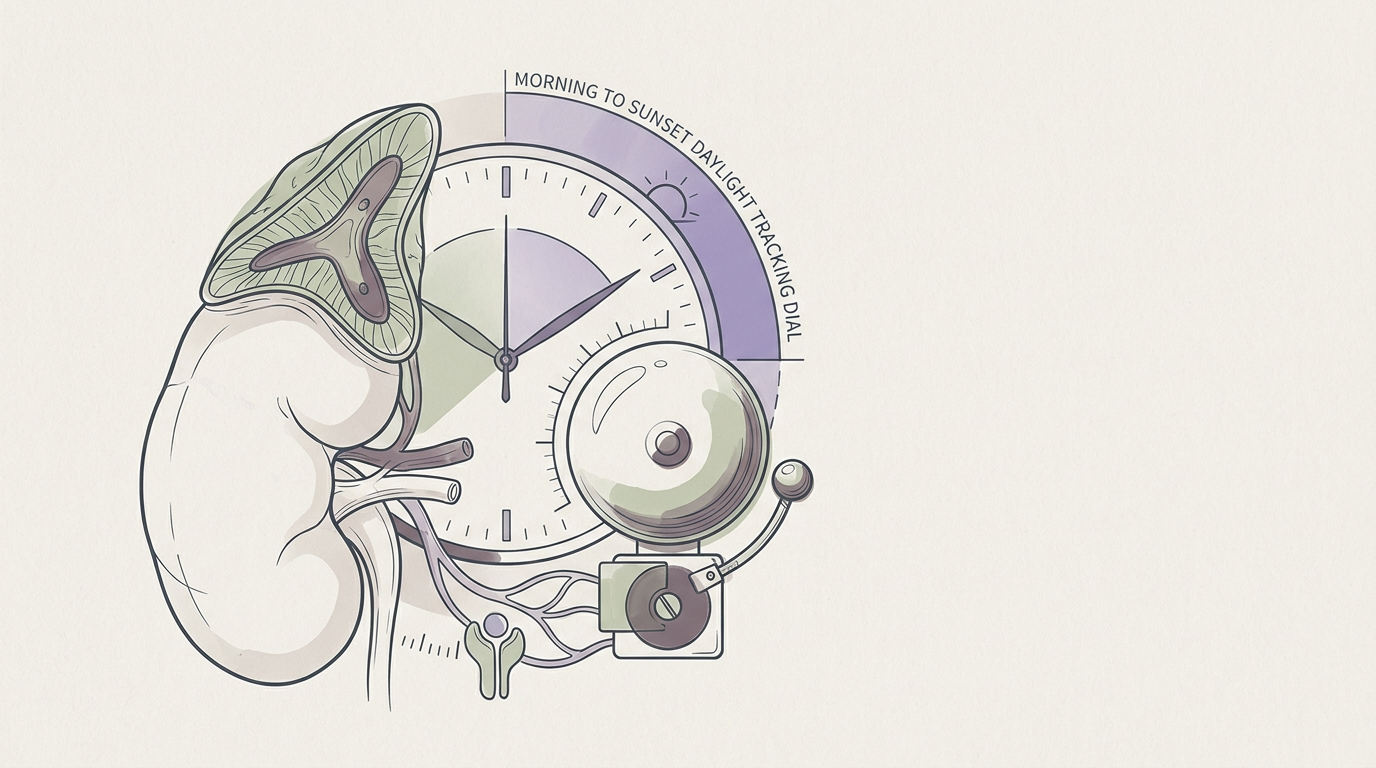
The supplement aisle wants you to declare war on your own adrenal glands. Every expensive powder and punishing protocol promises to crush, block, or completely eradicate cortisol. I've stopped recommending interventions that treat a vital biological messenger like a pathogen. Cortisol is the hormone that gets you out of bed and keeps you alive. If you actually managed to zero it out, you wouldn't feel zen—you'd be in a coma. The trouble with the mandate to lower cortisol naturally is that everyone's heard of it, and nobody knows what the hormone actually does. Kokorology actually want a rhythm.
You already know the exact physical texture of a rhythm that's collapsed. It’s the buzz behind your eyes at 11:47pm when you're staring at a screen, completely exhausted but can't rest. It’s the open fridge with zero hunger, the jaw that simply won't unclench during a Tuesday afternoon meeting, and the half-finished sentences that trail off into space. You wake up at 3am every night with your heart hammering against your ribs, mentally drafting replies to emails that don't matter. You're caught in that uniquely modern state of being tired but wired. Positive thinking can't reach this deep into the brainstem. The system's stuck in gear.
Common Questions
What is cortisol?
It is an alarm hormone, and also your primary wake-up signal. Produced by the adrenal glands, its main job is to mobilise energy. Its healthy daily pattern involves a sharp peak in the morning to get you moving, followed by a gradual, steady decline until you fall asleep.
Why does chronic activation matter?
Because acute mobilization is meant to be a temporary state. When the signal stays high, the body diverts resources away from cellular repair. Over time, this constant alert state suppresses digestion, disrupts sleep staging, breaks down muscle tissue, and alters immune function.
Can you test your cortisol levels at home?
A single blood test at your doctor's office is mostly useless because it only captures one moment in time. The diagnostic standard is a four-point saliva or dried urine test that measures your levels upon waking, at midday, in the evening, and before bed to reveal the actual shape of your daily curve.
The morning spike is mandatory
The internet’s obsession with lowering your numbers everywhere entirely misses how the endocrine system works. A regulated nervous system requires a massive, aggressive spike of cortisol first thing in the morning. This is the Cortisol Awakening Response, or CAR. It flips the lights on, dilates the pupils, and makes you feel alert.
A healthy curve looks like a steep cliff in the first thirty minutes after waking, followed by a long, slow glide path down to a trough at bedtime. That dynamic range signals a flexible, resilient capacity. When people tell me they want to flatten their cortisol, I have to explain that a flatline is the clinical definition of burnout.
The biology of the flatline
Let's look at the actual machinery. The HPA axis—the loop running from the hypothalamus in your brain, through the pituitary, down to the adrenal glands sitting on your kidneys—is designed to handle acute, immediate threats. A physical danger appears, the axis floods the body with adrenaline and cortisol, the threat resolves, and the HPA axis stands down.
The modern inbox has never once been impressed by your heart rate, but your brain processes a vague, threatening message exactly like a physical predator. Pushed by a low-grade, unending hum of threat, the axis eventually stops over-producing and simply goes on strike. Kokorology see a blunted, hyporesponsive profile. The morning peak vanishes entirely. The curve goes flat. The body's management has decided that sounding the alarm is a waste of metabolic energy.
The allostatic cost
This chronic activation carries a massive physiological cost called allostatic load. Allostasis is the body's method of achieving stability through change. It alters your heart rate, your breathing, and your blood pressure to meet the demands of the environment. The trouble starts when the environment demands constant vigilance.
This week I was reading a recent trial in the literature on workplace retention and stress. They found that a single, well-designed 45-minute session focused purely on employee belonging visibly dampened the stress axis for months. Belonging acts as a measurable brake pedal on the HPA axis. When workplaces ignore the physiological reality of their teams, the allostatic cost piles up until the system breaks. I cover these systemic drivers deeply in the performance course.
State dictates behaviour
Your nervous system ignores your intentions. It responds exclusively to your behaviour. You can repeat positive affirmations all morning, but if you drink black coffee on an empty stomach at 6am while scrolling the news, your HPA axis assumes you're under attack in a famine.
An exhausted system goes completely silent when it should be sounding the alarm.
Kokorology have to change the sensory inputs. The vagus nerve functions as the parking brake for the nervous system; pull it, and the engine quiets. Kokorology pull it through light, food, and deliberate breath. If you're struggling to map these inputs on your own, this is exactly where coaching changes the trajectory.
What to do this week
Forget about the supplement aisle. Give the body clear environmental signals.
- See the sun before the screen. For the next seven days, don't look at a phone until you've seen the sky. Step outside for five minutes. This one act sets your circadian clock and triggers that necessary morning peak.
- Eat protein early. Swap the pastry for thirty grams of protein within ninety minutes of waking. This stabilises blood sugar and tells the brain you're safe and fed.
- Nasal breathing cool-down. After any intense exercise, or a tense meeting, shut your mouth. Spend three minutes breathing exclusively through your nose. It shifts the autonomic state back to recovery. Keep this tool handy from the hacks library.
Where this fits in the Kokorology system
This is a core mechanism of the approach to nervous system regulation. You have to restore the biological rhythm before you can optimise the mind.
Closing
The work is to become a better partner to your own biology. When you stop fighting the messenger and start providing the sensory signals your body's waiting for, the system finds its way back to baseline. Start by opening the front door tomorrow morning.
- Start with the the Cortisol Reset Anchor.
- Track your daily energy dips in the Journal.
- Get started with the the free guide to nervous system regulation.
TL;DR
The goal is never to lower cortisol universally, but to restore its dynamic daily rhythm. A healthy system requires a sharp morning spike to wake up, followed by a slow decline toward evening. Chronic, low-grade stress flattens this curve entirely, driving up allostatic load and resulting in deep physical exhaustion. You repair this broken loop not with supplements, but by sending clear environmental signals to the brain through morning sunlight, early protein, and deliberate autonomic regulation.
Sources
- Adam, E. K., et al. (2017). Diurnal cortisol slopes and mental and physical health outcomes: A systematic review and meta-analysis. Psychoneuroendocrinology.
- Walton GM (2024). Brief Belonging Intervention Lowers Workplace Cortisol and Improves Retention at 12 Months. Nature Human Behaviour.
- McEwen, B. S. (1998). Stress, adaptation, and disease: Allostasis and allostatic load. Annals of the New York Academy of Sciences.
- Miller, G. E., et al. (2007). If it goes up, must it come down? Chronic stress and the hypothalamic-pituitary-adrenocortical axis in humans. Psychological Bulletin.