Research
Engineering Humanity S Grand Remodel Plans
They call it retail therapy. I call it borrowing dopamine from tomorrow's calm, with interest.
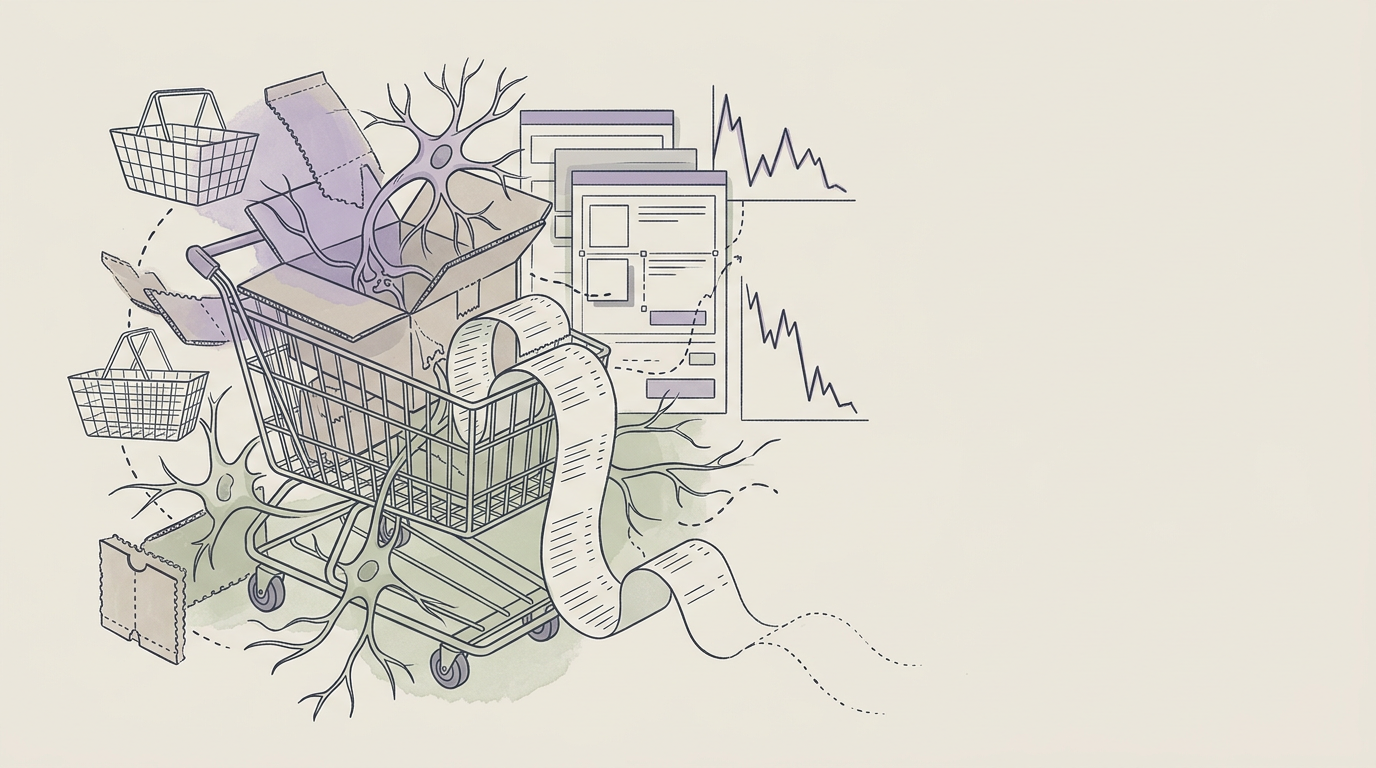
We’ve been taught to call it ‘retail therapy’. A cute, harmless term for the little lift we get from a new purchase, as if a cardboard box from Amazon contains a dose of wellbeing. This is a profound and convenient misreading of our own biology. That click-and-ship high isn't therapy; it's a short-term neurochemical loan. The thrill of the hunt is a surge of dopamine, and the bill—paid in the currency of cortisol, fatigue, and the quiet hum of dissatisfaction—always comes due. True regulation isn't about managing your shopping cart; it's about renovating the system that creates the compulsive need for dopamine shopping in the first place.
Common Questions
What is dopamine shopping?
It's the act of chasing the neurochemical sensation of wanting, not the pleasure of having. Dopamine is the molecule of pursuit. When you're scrolling through deals, your brain is releasing dopamine in anticipation of a potential reward. The shopping itself is just the endpoint of a neurochemical hunt that feels more compelling than owning the actual item.
Why does buyer's remorse feel so physically bad?
Because it is physical. Buyer’s remorse is the physiological crash after the dopamine fades. Your brain’s reward circuit goes quiet, and your stress system often comes online to take its place. The let-down, the anxiety, the "why did I buy this?" feeling is your nervous system balancing its books, often involving a rise in cortisol (the primary stress hormone).
Can't I just use more willpower to stop?
You can try, but willpower is a terrible long-term strategy. It's an energy-dependent process that's easily depleted by stress, poor sleep, or low blood sugar. This isn't a moral failing; it's an architectural problem. A chronically overloaded nervous system will always seek the path of least resistance to a feeling of reward, and one-click buying is a beautifully engineered slip road.
Related anchors: sleep anchor · gut-immune anchor · GLP-1 anchor
The Neurochemical Receipt for Your 'Retail Therapy'
The idea that you can 'shop yourself happy' is based on a fundamental misunderstanding of dopamine. We treat it like the pleasure molecule, the prize at the end of the race. It isn't. As Robert Sapolsky (2017) has exhaustively detailed, dopamine is about the anticipation of reward, not the reward itself. It's the agitated, forward-leaning energy of the chase. The online storefront, with its infinite scroll and algorithmically tailored "for you" section, is a perfect machine for generating it.
The problem is that this system wasn't designed for moderation. It gives you the hit of the hunt, but when the package arrives, the dopamine fades, as it must. What’s left? Often, a void. And to fill that void, the body’s architecturally-linked stress system—the HPA axis (hypothalamic-pituitary-adrenal)—can kick in. Buyer’s remorse isn't a psychological quirk; it's your physiology registering a prediction error. You were promised a feeling the object couldn't possibly deliver, and your body is paying the cortisol-laced price. It's the biological equivalent of eating a fistful of sugar and wondering why you feel shaky an hour later.
Dopamine isn't the joy of having; it's the agitated hum of wanting.
Your Brain on 'One-Click Buy'
Our brains are predictive organs. They are constantly making guesses about the world to save energy (Feldman Barrett, 2017). When you see a targeted ad for that perfect pair of trainers, your brain predicts the satisfaction, the status, the feeling they will confer. It releases dopamine based on that prediction. Clicking 'buy now' completes the loop and offers a momentary sense of resolution.
This is where the architecture of online retail is so brutally effective. It’s a casino where the chips are your attention and the slots are an endless feed of novel items. Each potential purchase is a mini-gamble, a new hit of anticipatory dopamine. The platforms are designed to keep you in that loop, hunting for the next thing, convinced that this one will be the one that finally delivers. It's a key reason why building awareness of these loops in a dedicated space like the Kokorology /journal is a fundamental first step to taking your power back. It's not about shaming the purchase; it's about mapping the anatomy of the urge.
The Locus Coeruleus: Your Brain’s Novelty Engine
Let’s get properly nerdy for a moment. Deep in your brainstem sits a tiny, bluish cluster of neurons called the locus coeruleus (LC). Think of it as your brain's novelty-detection and arousal hub. It’s the main source of the neurotransmitter norepinephrine, which primes your brain to pay attention to new and salient things. According to recent research from labs like Mara Mather's, the LC is exquisitely sensitive to novelty and is a key driver of explorative behaviour.
When you're tired, stressed, or bored—whether from the relentless 'hustle culture' in the US, the dense urban grind of a European city, or monsoon-season fatigue in Mumbai—your system is depleted. The LC, in this state, can drive a powerful urge to seek out something—anything—new to jolt the system back into focus. That blinking 'Prime Day Deal' is a perfect stimulus for a tired LC. It’s not just a good price; it’s a bright, shiny object that promises a moment of heightened arousal and focus in a sea of fatigue. This isn't a weakness of character; it's a predictable output of a system under load looking for the most efficient way to get a chemical lift.
That Little Box of Data Will Not Save You
Prime Day and its competitors are famous for deals on wearables. The promise is seductive: a device that will quantify your sleep, your stress, your steps, and finally give you the data you need to 'optimise' your life. Often, it just becomes another job. You aren't just living; now you're supervising your life via a wrist-based middle manager.
This constant monitoring adds a subtle but significant layer to your allostatic load (the cumulative wear and tear on the body from chronic stress), a concept defined by Bruce McEwen (2019). That new fitness tracker isn't just measuring your wellness; it's measuring your compliance with its algorithm's idea of wellness. Waking up to a bad 'readiness score' can itself trigger a stress response, creating a vicious cycle where the tool meant to reduce stress becomes a source of it. The real work of nervous system regulation isn't about collecting more data; it's about getting better at interpreting the data you already have through your own interoceptive senses.
What to do this week
This isn't about vowing to never shop again. It's about shifting from unconscious compulsion to deliberate choice.
- The 24-Hour Cart Hold. See something you want? Add it to the cart. Close the tab. Set a reminder for 24 hours later. When you come back, notice the difference in the urgency. The dopamine of the initial hunt has likely faded, leaving you with a clearer perspective.
- Log the Trigger, Not the Purchase. Before you click, take 60 seconds. Note the time, your physical state (tired, bored, hungry, agitated?), and what happened right before the urge hit. Using a simple tool like our system for daily tracking helps you map the entrance to the loop, which is the only place you can truly redirect it.
- Find a Non-Consumer 'Hunt'. Your brain wants novelty. Instead of giving it a shopping catalogue, give it something else to forage for. Go for a walk on a new route, listen to an album you've never heard, or try one of the five-minute pattern-interrupts from our library of nervous system hacks.
TL;DR
The urge for 'retail therapy', or dopamine shopping, is not a moral failing but a neurochemical loop. Our brains release dopamine in anticipation of a reward, not from the reward itself, creating a 'hunt' that online stores are designed to exploit. This cycle is driven by brain structures like the locus coeruleus, which seeks novelty when we're fatigued (Mather, 2020). The subsequent crash, or buyer's remorse, is a real physiological event involving the stress hormone cortisol (Sapolsky, 2017). The solution is not more willpower, but building system stability so you no longer need the cheap high.
Where this fits in the Kokorology system
This entire pattern is a classic example of a dysregulated system seeking an external solution for an internal state. Understanding it is a core part of our work on Nervous System Regulation. The impulse control element ties directly into the mechanisms we target with protocols like the Cortisol & GLP-1 Anchor, which helps stabilise the blood sugar and stress-hormone rollercoasters that often drive these urges.
Closing
The goal isn't to live an ascetic life, devoid of nice things. It's to get to a place where your purchases are conscious choices that bring genuine, lasting value, not frantic attempts to patch a leaky nervous system with a dopamine fix. The real project isn't curating your shopping cart; it's rebuilding the architecture of your own attention. Here's where to begin that work.
- Sit with this in the Kokorology Journal, our system for tracking the data that matters.
- Start with our 7-day Kokorology Reset to stabilise your system's foundation.
- Get our free 5-minute guide to nervous system regulation.
Sources
- Feldman Barrett, L. (2017). How Emotions Are Made: The Secret Life of the Brain.
- Mather, M. & Clewett, D. (2020). The Locus Coeruleus: A Hub for Arousal and Memory. Cold Spring Harbor Perspectives in Biology.
- McEwen, B. S. & Akil, H. (2019). Revisiting the Allostasis and Allostatic Load Model. PNAS.
- Sapolsky, R. M. (2017). Behave: The Biology of Humans at Our Best and Worst.