Nervous System
High Cortisol — What To Do (And What To Stop Doing)
Cortisol is an energy mobilization hormone that follows a strict 24-hour rhythm. Restoring this daily curve returns capacity to an exhausted system.
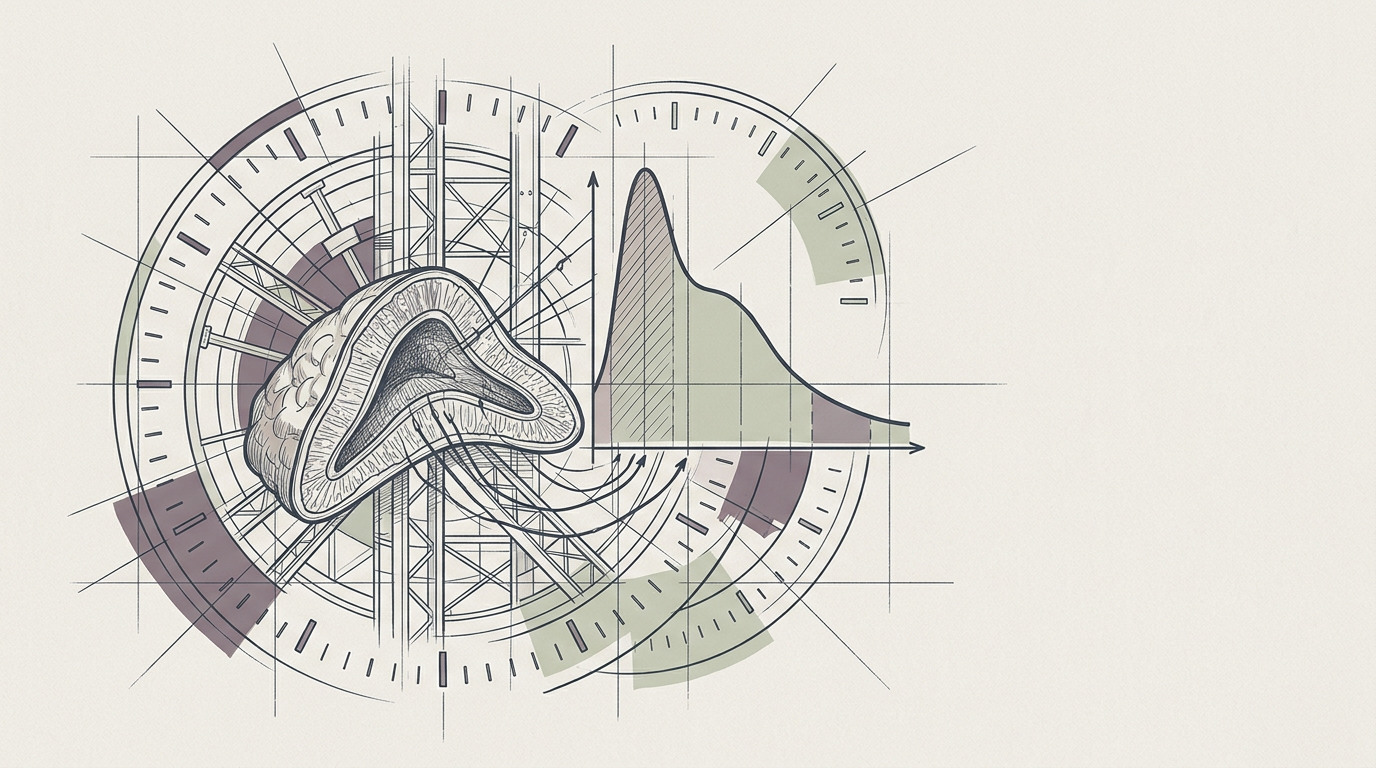
I've stopped believing a high cortisol reading means I am failing at basic adult functioning. The wellness industry treats this hormone like a toxic spill you need to mop up with expensive adaptogens and deep breathing. I don't buy it. Cortisol is simply the output of an HPA axis that perceives a continuous threat, keeping the engine running to keep you alive.
You sit at your desk at 3pm with your jaw clamped entirely shut and an open fridge that holds zero appeal. You're vibrating with a strange, thin energy that makes forming a coherent sentence feel like dragging a heavy weight uphill. People google "tired but wired" when they hit this exact wall. You drink a second coffee that doesn't do anything to clear the brain fog, and by the time you finally lie down, you're staring at the ceiling, anxious for no reason. You wake up at 3am every night, heart racing in the dark, furiously recalculating tomorrow's schedule. You feel entirely disconnected from your body. The tank is running dry, and the engine refuses to turn off.
Common Questions
What is cortisol?
It is a primary energy mobilization hormone produced by your adrenal glands. Your body releases it on a strict daily schedule, peaking sharply in the morning to wake you up and declining steadily toward midnight. The trouble starts when chronic demand flattens this natural rhythm.
How do I regulate my cortisol rhythm?
You provide the master clock in your brain with clear sensory inputs that anchor it in time. Consistent morning sunlight, protein-dense meals eaten at regular hours, and genuine evening darkness tell the nervous system when to produce energy and when to trigger recovery.
Why do I feel exhausted but unable to rest?
Your system is stuck in a state of hypervigilance. The daily cortisol curve has lost its contrast, leaving you with low energy in the morning and inappropriately high arousal at night. The body registers the constant demand and refuses to drop its guard.
Is all stress bad for my nervous system?
Short, intense physiological demands like exercise or cold exposure are highly beneficial. The system easily handles acute spikes in arousal and returns to baseline. Chronic, unrelenting psychological load causes the dysfunction, keeping the threat-detection circuits active for weeks without a break.
The Threat-Detection Machinery
The supplement aisle wants you to believe you can swallow a pill to lower a hormone. I see clients spending hundreds of dollars on ashwagandha gummies to force their bodies into submission, completely ignoring the fire alarm ringing in the background. The HPA axis—the brain-body circuit connecting your hypothalamus, pituitary, and adrenal glands—is doing exactly what it evolved to do. It perceives an environment that demands constant readiness, and it floods your bloodstream with the fuel required to survive it.
Kokorology've historically treated a high reading as an isolated bug in the software. I'm calling it. The high reading is a perfectly accurate readout of your current capacity and allostatic load. The body adapts to a brutal schedule by narrowing its focus to pure survival, rerouting resources away from digestion, immunity, and tissue repair. You can't hack your way out of a systemic threat response with a cup of chamomile tea. True nervous system regulation requires changing the physical inputs the brain is receiving.
The Shape of the Curve
The conversation usually centers on a single number from a lab test. The absolute level matters far less than the trajectory across the day. A healthy human system requires a massive, sharp spike in cortisol about 30 to 45 minutes after opening the eyes. This mechanism, known as the Cortisol Awakening Response (CAR), coordinates the transition from sleep inertia to full alertness.
When you chart this across 24 hours, you want a steep, contrasting slope. The peak drives morning energy, and the slow, steady decline through the afternoon allows the pineal gland to initiate melatonin production in the evening. A flattened diurnal curve means you've lost all contrast. The suprachiasmatic nucleus—the brain's master pacemaker—stops receiving clear signals about what time it is. The locus coeruleus continues dripping noradrenaline into the system. You spend your entire week humming at a low, miserable frequency, completely missing the bright morning peak and the deep evening recovery state. Just endless static.
The Reality of the Load
The physical sensation of this flattened diurnal curve is awful. I remember the year things came crashing down around me, sitting in endless meetings while my heart hammered against my ribs for absolutely no reason. My baseline state had shifted entirely.
This is what allostatic load looks like in practice. The system endures chronic stress by raising its own set point for vigilance, expecting the next crisis to arrive at any second. The physiological wear and tear accumulates in the tissues. Your body stops repairing faster than you burn out.
You cannot convince an exhausted nervous system that it is safe by shouting affirmations at it.
The body is desperate for clear, undeniable environmental cues that anchor it in reality. You support the rhythm by providing those missing sensory inputs. You can track this shift daily inside the Kokorology Journal, watching the physical symptoms change as you alter your routine.
Anchoring the System
Kokorology regulate the rhythm through physical intervention. The inbox isn't impressed by your heart rate, so trying to think your way out of a physiological stress loop is a waste of time. You have to use your sensory environment to force the master clock to update its timing.
Morning light on the retina is a non-negotiable biological command. It terminates melatonin production and sets the timer for the evening sleep window. Stable blood glucose prevents the adrenals from dumping emergency cortisol to keep you upright before lunch. You can deploy hacks like an extended nasal exhale to temporarily quiet the vagus nerve and slow a racing heart, but the long-term work requires consistency. You feed the system predictable timing, and the system slowly drops its guard.
What to do this week
This protocol establishes the sensory anchors your circadian clock requires. Do all four for seven days.
- Sunlight before screens. Step outside within ten minutes of waking. Let 10 minutes of unfiltered natural light hit your eyes. If you wake up in the dark, turn on the brightest overhead lights you own.
- Savoury protein early. Eat 30g of protein within an hour of getting out of bed. A sharp glucose spike and crash in the morning forces the body to release cortisol to stabilize your energy.
- Afternoon movement. Walk for 15 minutes after lunch. Muscular contraction helps clear metabolic waste and provides a clear daytime signal to the brain.
- A hard evening cutoff. Dim the lights 90 minutes before sleep. The HPA axis won't power down under the glare of a bathroom fluorescent bulb.
Where this fits in the Kokorology system
Understanding the daily curve is a foundational concept inside the Regulation curriculum. Kokorology treat hormonal outputs as downstream signals of nervous-system state. You can find the exact protocols for restoring this timing in the Cortisol Anchor, or use the Reset to structure your first seven days of practice.
Closing
You tend to the physical conditions that caused the alarm to ring. Your biology wants to fall back into a predictable, contrasting rhythm. Give it the inputs it needs, and watch the vigilance fade.
- Start with the full protocol inside The Cortisol Anchor.
- Practice regulating your rhythm with The 7-Day Reset.
- Track your daily curve shifts inside the Journal.
TL;DR
Treating high cortisol as a standalone enemy ignores the machinery driving the stress response. This hormone is simply the output of an HPA axis that perceives a constant environmental threat. A healthy system relies on a sharp morning peak and a steady evening decline, and losing this contrast causes chronic exhaustion. Restoring the natural diurnal rhythm requires clear sensory inputs—morning sunlight, early protein, and evening darkness—to convince the brain's master clock to drop its vigilance.
Sources
- Adam, E. K., et al. (2017). Diurnal cortisol slopes and mental and physical health outcomes: A systematic review and meta-analysis. Psychoneuroendocrinology.
- Stalder, T., et al. (2016). Assessment of the cortisol awakening response: Expert consensus guidelines. Psychoneuroendocrinology.
- Dijk, D. J., & Czeisler, C. A. (1995). Contribution of the circadian pacemaker and the sleep homeostat to sleep propensity, sleep structure, electroencephalographic slow waves, and sleep spindle activity in humans. The Journal of Neuroscience.
- Walton, G. M., et al. (2024). Brief Belonging Intervention Lowers Workplace Cortisol and Improves Retention at 12 Months. Nature Human Behaviour.