Woman · London, tech operator, 36
From 4am Dread to Deep Sleep: Crushing Anxiety Through Interoceptive Awareness
A 36-year-old London tech operator slashed her anxiety and 4am wake-ups by cultivating interoceptive awareness, improving HRV from 28 to 61 ms in 10 weeks.
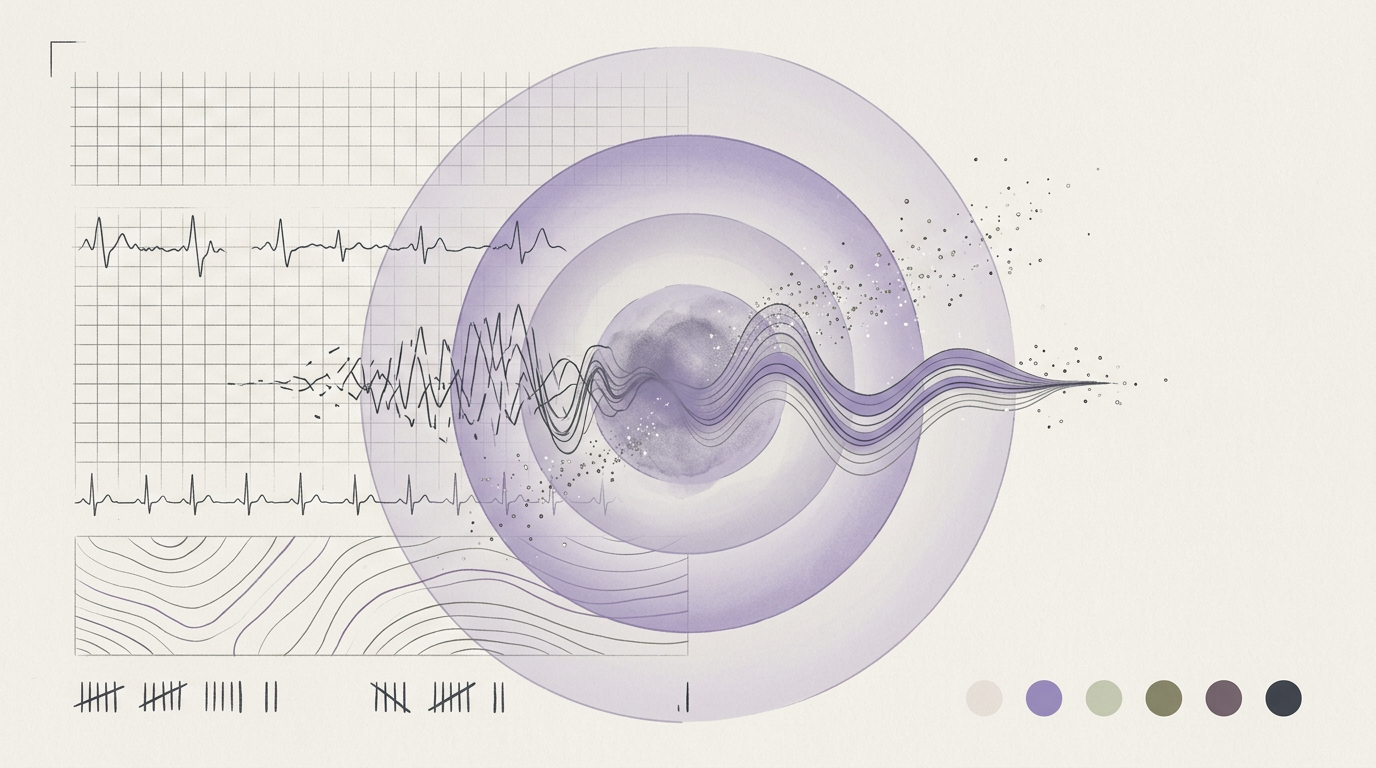
Crushing Anxiety Through Interoceptive Awareness
A 36-year-old tech operator in London significantly reduced her chronicanxiety and eliminated disruptive 4am wake-ups, improving her resting Heart Rate Variability (HRV) from a brittle 28ms to a robust 61ms over just 10 weeks. Most people would have called this burnout. It wasn't anything quite so dramatic, though the symptoms were certainly disruptive.
The presenting state
Most folks would hear "chronic anxiety" and "4am wake-ups" and immediately jump to cortisol dysregulation – the standard stress response narrative. While elevated cortisol certainly played a role in the sleep disturbance, the core issue wasn't simply 'too much stress' in the conventional sense. It was a persistent disconnect from the body's internal signals, a sort of background hum of physiological distress that felt like anxiety, because it felt bad, without a clear external trigger. This woman reported a constant undercurrent of unease, particularly noticeable as a clenching in her gut, which she mostly ignored during the day until the quiet of the early morning made it impossible to dismiss.
Her lab tests were 'normal' – frustrating, isn't it, when your experience screams otherwise? This often points to a functional issue rather than a pathological one. Her low HRV, specifically the rMSSD (root mean square of successive differences), pointed to a reduced vagal tone, meaning her system struggled to smoothly pivot between states of alertness and repair Kemp, 2017. The 4am wake-ups, often accompanied by a racing mind and internal agitation, were a classic sign of sympathetic nervous system overdrive, a body stuck in 'alert' even when it desperately needed rest. This wasn't just a sleep problem; it was an interoceptive blind spot, hindering her ability to accurately perceive and respond to her body's legitimate needs Khalsa, 2018.
The protocol
The goal wasn't to 'manage' anxiety, but to re-establish a clear, reliable two-way communication between her brain and body, specifically through enhanced interoceptive awareness and strengthening vagal function. When you can actually feel what's going on inside, you can intervene earlier, and with more precision, before the nervous system starts screaming. The protocol hinged on consistent, gentle practices that nudged her system back into balance, focusing on building resilience rather than just alleviating symptoms.
- Interoceptive body scans, daily
- Timed diaphragmatic breathing practice, 2x daily (4-6 breaths per minute)
- Mindful movement (slow walking, stretching) with internal focus
- Magnesium glycinate supplementation (400mg before bed)
- Optimised light exposure (morning sunlight, dim evening light)
- Temperature regulation (cool room, cold showers)
What changed
The headline numbers tell part of the story: HRV shot up from a rather concerning 28ms to a very healthy 61ms. Her 4am wake-ups? Gone. This wasn't merely a statistical improvement; it represented a fundamental shift in her nervous system's ability to regulate itself. She reported feeling a 'calm confidence' she hadn't experienced in years, especially when facing work pressures. The gut clenching, once a daily companion, became an occasional, much milder sensation she could address proactively with a few rounds of slow breathing, rather than letting it escalate.
The delightful geeky bit for me was watching her rMSSD improve while her heart rate slightly increased from 60bpm to 64bpm initially, before settling back down. Most people expect HRV to go up as heart rate goes down, but this early bump in heart rate, coupled with the dramatic HRV increase, suggests her system was re-establishing a more active, responsive vagal brake. It wasn't just slowing down; it was becoming more adaptable, capable of nuanced responses, as described by researchers like Julian Thayer Thayer, 2012. The system was no longer just running in low gear, it was learning to drive properly again.
Most 'anxiety' isn't really anxiety. It's often just a lack of clarity about what your body is actually trying to tell you, until it starts shouting at 4am.
TL;DR
A 36-year-old London tech operator suffering from chronic anxiety and 4am wake-ups, despite normal lab results, saw significant improvement. Ten weeks of interoceptive training, vagal breathwork, and targeted supplementation boosted her resting HRV from 28ms to 61ms, while eliminating her early morning awakenings. This wasn't about stress management, but about reconnecting her brain and body through enhanced interoceptive awareness, enabling better physiological self-regulation and a profound return to calm and consistent sleep.
Where to take this next
Recognising these early signals and understanding what to do about them is a skill, not a quick fix. If any of this resonates – the vague unease, the sleep disturbances, the feeling that you're 'fine' on paper but not in reality – it's time to build a robust internal compass. Your body is always communicating; are you listening?
Cultivating interoceptive awareness and vagal flexibility is foundational for genuine resilience. Don't wait for your body to start screaming at you. Start now.
- Explore foundational nervous system regulation with The Unf*ck Your Nervous System Anchor
- For personalised guidance, consider a 1:1 coaching session
- Get started with the Free 7-Day Nervous System Reset
Sources
- Kemp, A.H., et al., 2017 — PMC A critical appraisal of the use of heart rate variability for neurological and psychiatric research
- Khalsa, S.S., et al., 2018 — Frontiers in Psychology The Multidimensional Assessment of Interoceptive Awareness (MAIA)
- Thayer, J.F., et al., 2012 — PMC Heart Rate Variability: A Non-Invasive Technique to Index Neurocardiac Regulation and an Integrative Marker of Health