Nervous System
The Regulation Floor: Why Female Longevity Starts With the Nervous System
Sustainable female longevity isn't found in a bio-hack, but in mastering the distinct operational manual of the women's nervous system.
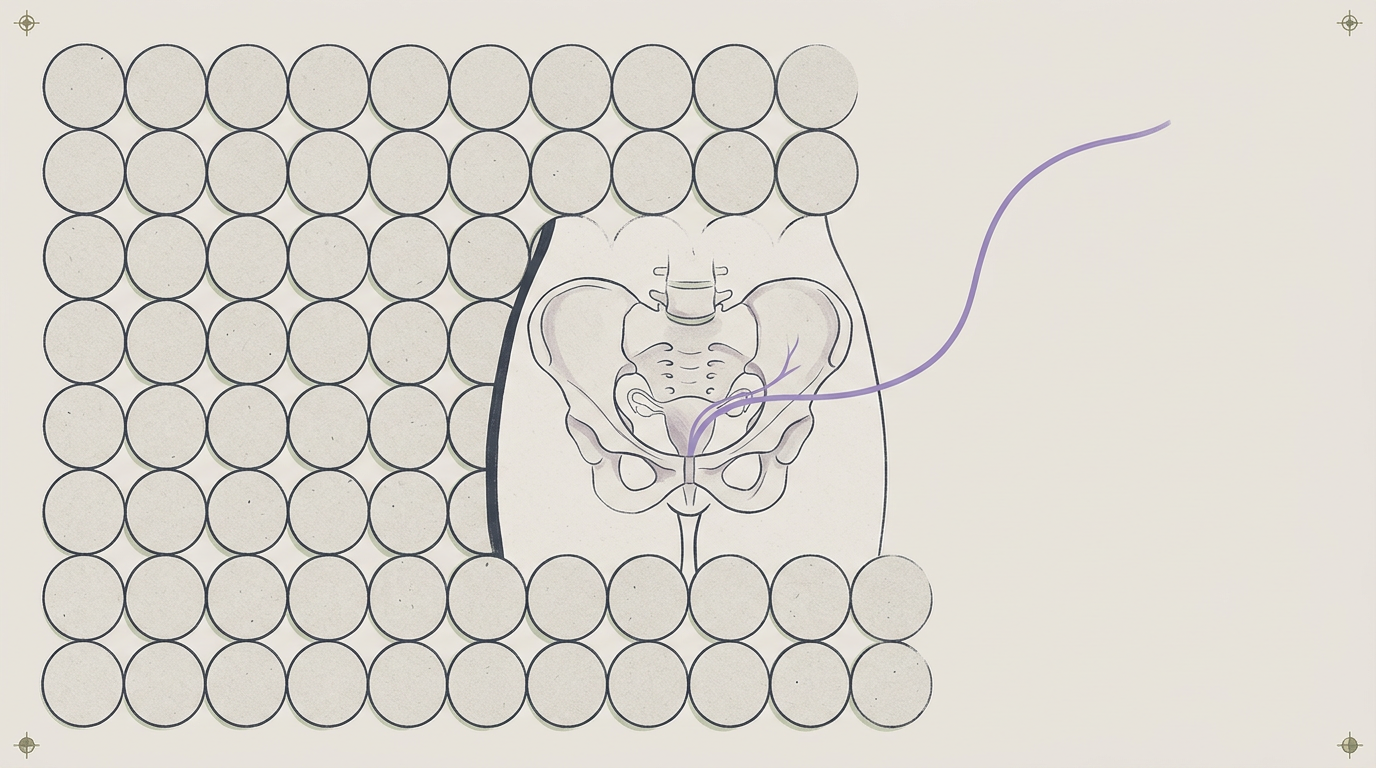
Almost every longevity protocol you see on the internet was designed for a 70 kg man. The wellness industry took a male-pattern autonomic nervous system, packaged its stress responses into a rigid routine, and sold it to women. I'm calling it out. Applying a high-intensity baseline to a shifting female hormonal lifespan guarantees burnout. The female HPA axis manages threat differently, and pretending otherwise is pure biological denial.
You already feel the friction of this mismatch. It shows up as the shoulders that won't drop in the shower after a perfectly executed morning routine. You're doing the cold plunge, the fasting, and the intense workout, but you walk into work tired but wired. You stare at an open fridge with no appetite, your jaw locked tight at 3pm, wondering why you feel anxious for no reason. You lie in bed exhausted but can't rest, tracing the ambient hum of your household's invisible mental load. Your body treats the very protocols meant to extend your life as acute threats, flooding the system with cortisol. You keep pushing through the resistance, assuming you just lack discipline.
Common Questions
Is this different from functional medicine?
Nervous system regulation sits underneath functional medicine. A body locked in a chronic threat response rejects nutrient absorption and stalls detoxification. You have to establish a regulated baseline before the expensive, targeted supplements can actually land and do their job.
What is the link between the mental load and physical health?
The mental load acts as a chronic psychosocial stressor that keeps the HPA axis simmering. Tracking everyone's schedule and anticipating needs elevates background cortisol and sympathetic tone. Over a lifetime, this constant low-grade activation accelerates cellular aging and disrupts metabolic health.
Can I still do high-intensity workouts?
Yes, when you have the capacity for them. Unrecovered stress causes the actual damage. You learn to gauge your autonomic state before you train. On a day your heart rate variability is robust, high intensity builds resilience. On a depleted day, it breaks tissue down.
The HPA axis is gendered
The body's primary threat-response machinery—the hypothalamic-pituitary-adrenal (HPA) axis—runs from your brain to your adrenal glands and back. When it detects a stressor, it floods the system with cortisol to prepare for movement. The standard advice assumes this loop behaves identically in everyone. I used to believe this myself, handing out the same rigidity to every client. I was wrong. The female HPA axis is measurably more reactive to psychosocial stressors. The ambient cognitive labor of managing a team or a household keeps the sympathetic nervous system on a constant low boil. Ignoring this heightened sensitivity keeps your resting heart rate permanently elevated.
The shifting baseline of the luteal phase
Optimization culture demands that you perform identically every Tuesday. A female body fundamentally rejects this premise. Autonomic function fluctuates wildly across a menstrual cycle. During the late luteal phase, parasympathetic activity—the vagal brake that governs your rest-and-digest state—measurably drops. Your nervous system becomes physiologically biased toward sympathetic fight-or-flight activation.
You cannot out-discipline a biological shift in your autonomic baseline.
The exact same deadline or heavy lift lands differently in a body that currently has less intrinsic access to calm. Demanding peak output from a system in a luteal-phase dip actively drains your capacity. I track my own cycle using the Journal now just to know when to back off.
The cortisol cost of the morning routine
Kokorology've somehow turned the first hour of the day into a competitive sport. I'm constantly amazed by the punishing routines women force themselves through before 7am. Fasting, high-intensity intervals, and ice baths are all acute stressors. If your HPA axis is already simmering from chronic daily life, stacking three more stressors on top floods an already overwhelmed system. I've stopped recommending this aggressive stacking entirely. If you want to support your longevity, start your day by finding a simple protocol in Anchors to signal safety to your physiology.
Mental load as a physiological variable
The wellness industry loves to talk about macros while completely ignoring the cognitive labor of running a life. Anticipating needs, tracking schedules, and noticing what's missing in the fridge is an input your brain has to process. Your nervous system reads this constant vigilance as a demand for activation. The inbox has never once been impressed by your heart rate. A regulated state requires periods where absolutely nothing is expected of you.
What to do this week
- Audit your morning stressors. Pick one high-intensity morning habit and swap it for ten minutes of plain, unstructured breathing before you look at a screen.
- Track your luteal phase. Note the week before your cycle begins and actively reduce your exercise intensity by twenty percent.
- Stand up and discharge. When you finish a tense meeting, don't immediately open another tab. Stand up, shake your hands out, and do five squats to metabolize the acute stress chemistry.
Where this fits in the Kokorology system
This foundational understanding sits at the core of the Regulation course. You cannot force your way into longevity by using tools built for someone else's biology. Kokorology teach you how to read your own capacity first, establishing the regulated baseline that makes deeper Performance work possible.
Closing
Start by noticing the friction. The goal is to build an environment where your nervous system can actually drop its guard.
- Start with the foundations in Regulation L1.
- Manage acute spikes with the 60-second tools in Hacks.
- Work through chronic stuck patterns in 1:1 Coaching.
TL;DR
Most longevity protocols are built on male physiology, ignoring the unique reactivity of the female HPA axis and menstrual cycle. The female nervous system shifts across the month, dropping parasympathetic capacity during the luteal phase and reacting more intensely to psychosocial stress. Stacking aggressive optimization routines on top of a chronically elevated baseline guarantees burnout. True female longevity requires a regulation-first approach—learning to read your autonomic state and adjust your demands, working with your biology instead of against it.
Sources
- Kajantie, E., & Phillips, D. I. (2006). The effects of sex and hormonal status on the physiological response to acute psychosocial stress. Psychoneuroendocrinology.
- Schmalenberger, K. M., et al. (2021). Changes in autonomic nervous system activity across the menstrual cycle. Psychophysiology.
- Julianne Holt-Lunstad (2024). Loneliness and HPA-Axis Dysregulation: Meta-analysis of 47 Studies. Psychological Bulletin.