Sleep
The Orthosomnia Paradox: When Measuring Sleep Prevents It
Orthosomnia arises when the tool you use to measure sleep, like a wearable tracker, becomes the very source of your sleep anxiety and insomnia.
The Orthosomnia Paradox: When Measuring Sleep Prevents It
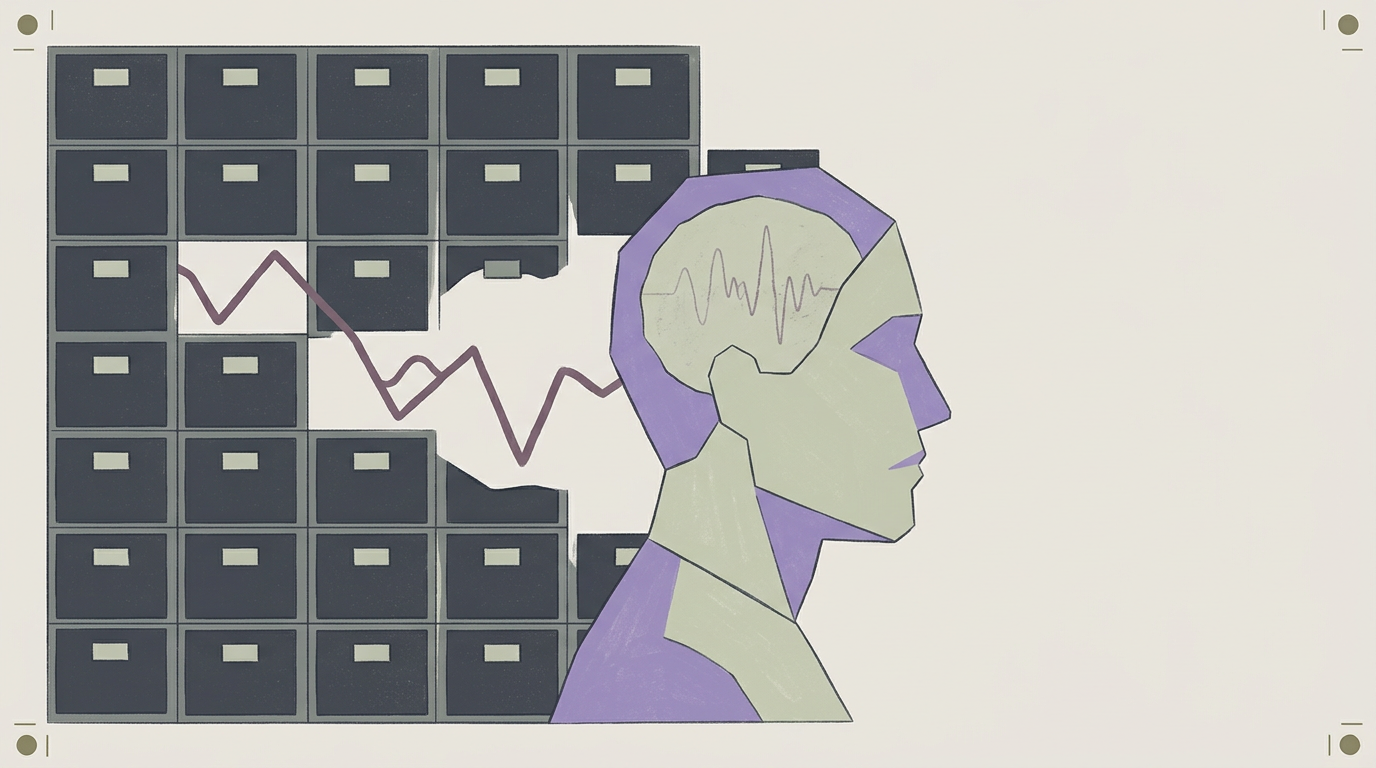
Orthosomnia is a clinical term for an obsessive quest for 'perfect' sleep, driven by data from tracking devices, which paradoxically generates anxiety and disrupts sleep. This fixation on metrics creates a state of hypervigilance, activating the body’s stress response and preventing the very deep rest it is striving to measure. The phenomenon of orthosomnia is becoming increasingly documented in sleep medicine literature as a direct consequence of the rise in consumer wearables.
This pattern is not unique to sleep. We see it in the obsessive tracking of skin imperfections, where daily scrutiny with magnifying apps can exacerbate stress-related breakouts. We see it in the fixation on hair-fall counts, where the anxiety of counting lost strands can itself contribute to telogen effluvium, a form of stress-induced hair shedding. In each case, the tool intended for monitoring becomes a source of physiological stress, creating a feedback loop where the measurement of a problem perpetuates the problem itself. The root of this cycle is not in the data, but in the nervous system’s response to it.
The Loop of Hypervigilance and Sympathetic Arousal
To understand why sleep tracker anxiety is so disruptive, we must look at the body through the lens of polyvagal theory. Our autonomic nervous system has three primary operational states which dictate our physiological and psychological landscape. These are the ventral vagal complex (the parasympathetic branch governing safety, connection, and rest), the sympathetic nervous system (our system for mobilisation, associated with 'fight or flight'), and the dorsal vagal complex (an older parasympathetic branch responsible for shutdown or 'freeze' responses).
Deep, restorative sleep is a biological necessity that can only occur in a state of safety. It requires a profound downshift from the activity of the day into a ventral vagal parasympathetic state. This is when heart rate variability (HRV) increases, a sign of the nervous system’s flexibility and capacity for rest. In this state, the body initiates crucial repair processes, from memory consolidation in the brain to cellular regeneration throughout the body. Parasympathetic sleep is not a passive state, but an active process of healing.
Rest is not a score to be achieved, but a state to be inhabited.
The daily ritual of checking wearables sleep data creates a neuroceptive trap. Waking up to a poor ‘sleep score’ can instantly trigger a sympathetic nervous system response: a subtle surge of cortisol, a quickening pulse, a feeling of frustration or failure. This state of hypervigilance—an enhanced state of sensory sensitivity accompanied by an exaggerated intensity of behaviours whose purpose is to detect threats—does not simply vanish. It sets a new, elevated baseline of arousal for the day, making it significantly harder to access the calm ventral vagal state required for sleep the following night. As described by researchers, this preoccupation with perfecting sleep data is a cognitive and behavioural driver of insomnia (Baron et al., 2017). The device becomes a daily purveyor of perceived threat.
From External Metrics to Interoceptive Awareness
Wearable technology outsources our felt sense of wellbeing to an external authority: an algorithm and a screen. We are conditioned to trust the number on the device over the direct sensations within our own skin. This is the opposite of interoception, which is the perception of our body's internal state. Interoception involves sensing our own heartbeat, the rhythm of our breath, feelings of hunger, fatigue, or the subtle tension in our muscles. It is the bedrock of self-regulation.
Building interoceptive capacity means reclaiming the ability to sense your own internal world without judgement. Instead of asking "What score did I get?", you learn to ask "How do I feel?". Can you notice the heavy, pleasant fatigue at the end of a long day? Can you feel the shift in your breathing as you begin to relax? Can you sense the internal hum of anxiety when you think about your sleep performance? According to recent research, deficits in interoceptive awareness are closely linked with anxiety, as the inability to correctly interpret bodily signals can lead to misattributing them to threat (Paulus & Stein, 2010).
Cultivating this internal literacy is the direct antidote to orthosomnia. It returns the locus of control from the device back to the body. It builds trust in your own organism’s profound intelligence and its innate drive towards equilibrium. This shift does not reject data but places it in its proper context: as one point of information, not the definitive truth of your experience.
A 7-Night Protocol to Counteract Orthosomnia
This protocol is an experiment in disconnecting from an external metric to reconnect with your internal felt sense. The intention is not to achieve 'perfect' sleep, but to practise the skill of inhabiting a state of rest.
- Remove the Device. For seven nights, take off your sleep tracker at least 90 minutes before bed. Place it on its charger in a room other than your bedroom. This is to sever the automatic link between waking and checking data.
- Fix Your Wind-Down Time. Commit to a consistent 30-minute, screen-free wind-down routine. This signals to your nervous system that a state shift is imminent. This could include reading a physical book, gentle somatic stretching, or listening to non-lyrical music.
- Lower the Lights. For the final 60–90 minutes of your evening, dim all lights in your environment. Use low-wattage, warm-toned lamps. This is a powerful, primal cue for your brain to begin producing melatonin, supporting your natural circadian rhythm.
- Conduct a Waking Body Scan. Upon waking, before you move or get out of bed, lie still for three minutes. Guide your attention through your body, simply noticing sensations. Is there heaviness, lightness, tension, warmth? This is a practice in pure interoceptive observation.
- Use a Non-Linear Word Log. In a notebook by your bed, write down three words that capture your felt sense upon waking. There are no 'good' or 'bad' words. "Groggy, dense, slow" is as valid a report as "Rested, bright, clear". The aim is to notice, not to judge.
- Create a Sensory Anchor. Introduce a consistent sensory cue into your wind-down. This could be a specific essential oil on a tissue, the weight of a heavy blanket, or a particular herbal tea. Over time, the nervous system will associate this
sleep anchorwith rest, making the transition easier. - Seek Morning Light. Within the first hour of waking, expose your eyes to 10–15 minutes of natural daylight, ideally outdoors. This is one of the most effective ways to anchor your circadian rhythm, which plays a critical role in regulating your sleep-wake cycle (Cajochen, 2007).
Common questions
Can I ever use my sleep tracker again?
Yes, but the relationship should change. Consider using it as a periodic diagnostic tool—perhaps for one week per quarter—rather than a nightly report card. The aim is to use the data as supplementary information to be considered alongside your own felt sense, not as a definitive judgement on your rest.
What if I feel more anxious without the wearable data?
This is a very common response and indicates a dependency on external validation for feelings of safety. Acknowledge the anxiety as a signal of this dependency. Use your interoceptive practices, like a body scan or breath awareness, to stay present with the feeling without needing to 'fix' it. This is part of rebuilding trust in your body.
How is orthosomnia different from general insomnia?
While the result is similar—poor sleep and daytime fatigue—orthosomnia has a specific cause. The anxiety is generated directly by the act of sleep tracking and the performance pressure to achieve ideal data. General insomnia can have many triggers, but with orthosomnia, the 'solution' (the tracker) has become the primary problem.
TL;DR
Orthosomnia is sleep disruption caused by the anxiety of tracking sleep with wearables. This obsession with data creates hypervigilance, activating the body's sympathetic stress response and blocking the very parasympathetic sleep state needed for genuine rest. The way forward is to shift from relying on these external metrics to cultivating interoception—the awareness of your own body's internal signals. A temporary 'detox' from your tracker, combined with a consistent wind-down routine and a sensory sleep anchor, can help restore your nervous system's innate capacity for rest.
Where to take this next inside Kokorology
Moving from data-driven anxiety to embodied safety is a core practice of nervous system regulation. The principles discussed here—interoception, state-shifting, and sensory anchoring—are foundational to our work. They apply not just to sleep, but to every aspect of your wellbeing, from managing stress to improving relationships.
For a structured approach to embedding these principles, explore our Sleep Anchor course. If you require personalised guidance to address specific patterns of sleep tracker anxiety or hypervigilance, our 1:1 regulation coaching may be a more direct route. As a starting point, download our free regulation guide to begin exploring these concepts today.