Nervous System
The Felt Sense of Home: A Guide to Tolerating Safety in the Nervous System
Tolerating safety requires slowly expanding your capacity for calm when your body has become biologically habituated to chaos and high cortisol.
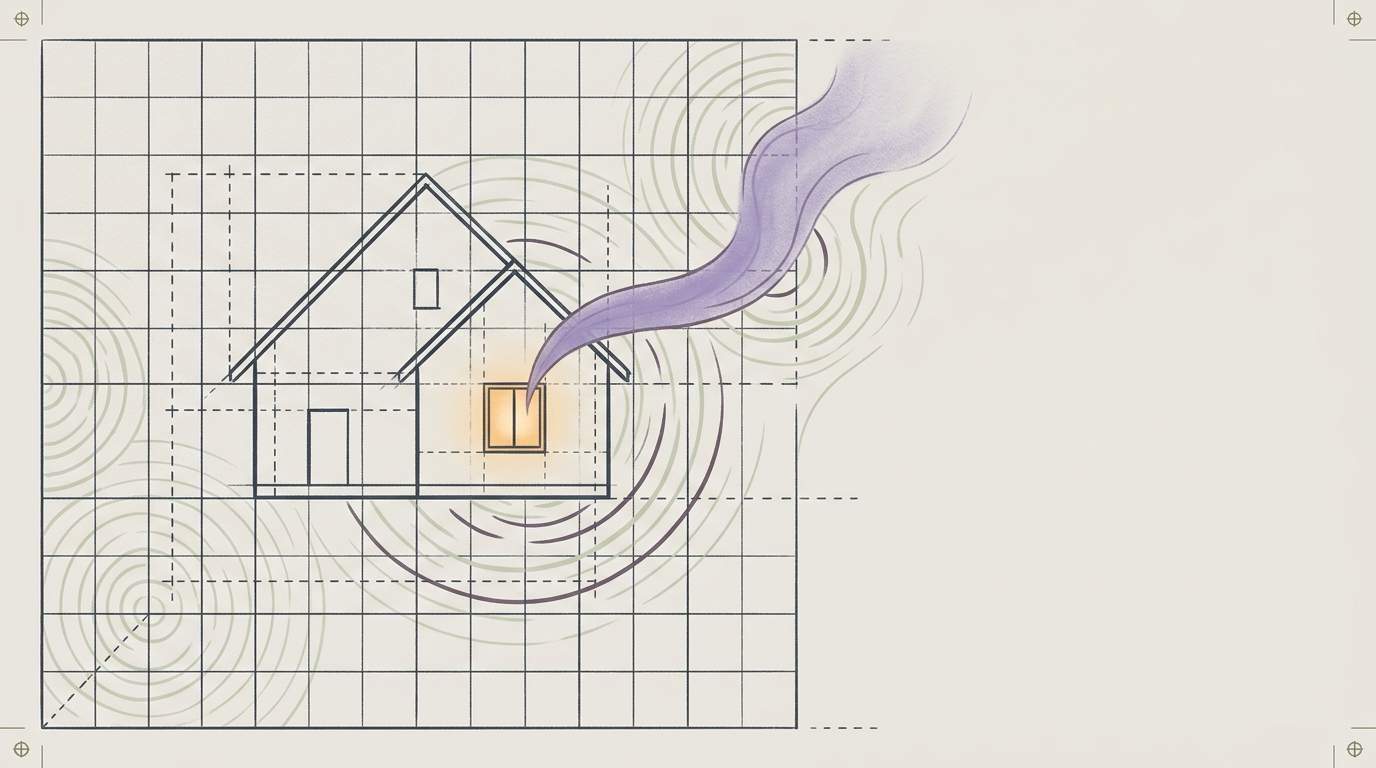
I spent the first four years of my practice telling exhausted people to sit down, close their eyes, and breathe. I genuinely believed that if they simply stopped moving, their threat detection circuitry would naturally power down. The wellness industry treats calm as a default resting state you effortlessly slide into once the noise stops. A nervous system holding a decade of allostatic load interprets sudden quiet as an ambush. When you're habituated to a five-alarm fire, a peaceful room registers as a massive vulnerability.
You know the exact physical texture of this mismatch. It hits on a Sunday afternoon when the schedule is finally clear, and instead of relief, a low-grade hum of dread settles right behind your ribs. You're officially tired but wired, staring at the wall while your jaw locks into place for the evening. You can't sleep even though exhausted, so you lie there at 11:47 PM looking for a problem to justify the adrenaline still circulating in your blood. You feel anxious for no reason during a perfectly pleasant dinner, convinced the other shoe is about to drop. The fridge is open, you have zero hunger, and your shoulders simply won't drop away from your ears.
Common Questions
Why does relaxing make me feel worse?
Your body relies on a specific amount of stress hormone to maintain its daily rhythm. When you drop that operational tempo, the system assumes something is horribly wrong. The familiar hum of anxiety feels safer to your brain than the unnerving silence of its absence.
How do I know if I am stuck in hypervigilance?
You feel a constant, low-level restlessness when things are going well. You might experience an overpowering urge to pick a fight, start a dramatic project, or doomscroll until your eyes physically ache. The body treats the lack of a crisis as a problem to solve.
Can you rebuild a tolerance for quiet?
Yes, through extreme titration. You expand your capacity by introducing tiny, manageable doses of calm and physically completing the stress cycle when the urge to panic arises. You train your sensory pathways to accurately read neutral environments.
The threat of the empty room
Everyone wants to talk about the vagus nerve as if it's a friendly houseplant you just need to water. The vagus nerve is actually the parking brake of the nervous system; pull it, and the engine quiets. When a chronically stressed person yanks it in a desperate attempt to relax, the car goes into a violent spin. Kokorology mistake the sudden numbness of total shutdown for peacefulness. The body intelligently learns to avoid the feeling of calm entirely to prevent that immobilizing plunge.
The work of nervous-system-regulation requires feeding your neuroceptive circuits better data. You do this by noticing objective, boring cues of non-threat: the solidness of the floor under your feet, the neutral color of a wall, the low hum of a computer fan. These are undeniable signals of a non-threatening present. They provide the raw data required to recalibrate your internal scanner.
Your stress loop demands friction
The stress response is run by a command-and-control loop called the HPA axis, which runs from the hypothalamus in your brain down to your pituitary and adrenal glands. Chronic stress cranks this loop up. Your system gets habituated to a high-cortisol rhythm. The cortisol spike and the adrenaline that follows become the known, stable environment your body expects to encounter every morning.
A sudden drop in that friction feels like an alarming loss of altitude. Your body begins to physiologically crave the very stress that wears it out. Kokorology refresh bad news, argue with strangers on the internet, and invent interpersonal problems at work to generate the chemical environment that feels like home. You recreate the crisis because your machinery doesn't know how to operate in peacetime.
Reading a blurry map
Your ability to accurately feel your own internal state—your heart rate, your breathing, the knot in your stomach—is a sense called interoception. A nervous system stuck in hypervigilance has terrible interoceptive acuity. Excitement registers as anxiety. Contentment feels entirely indistinguishable from a hostage situation.
A nervous system wired for survival will interpret the absence of crisis as abandonment.
You can't trust the feeling of calm because you literally lack the sensory data to distinguish it from impending doom. Sharpen the sensor before you try to change the state. Spend one minute trying to locate a specific physical sensation without altering it. Find your heartbeat in your neck. Notice the temperature of the air in your throat. This is data collection for a sensor that has forgotten how to read neutral inputs. I test every protocol I teach on myself first, and this specific practice is what finally broke my own cycle of Sunday dread.
What to do this week
- Dose your quiet. Abandon the thirty-minute meditation. Commit to three separate one-minute intervals of doing absolutely nothing. Sit in a chair, look out a window, and let the timer run. When it rings, immediately return to an engaging task.
- Notice the neutral. Once a day, find one thing in your immediate environment that is simply not bad. The coffee is hot. The drive was easy. You found your keys on the first try. Name it out loud to give your threat detection a piece of non-hostile data. The inbox has never once been impressed by your heart rate, so stop giving it your adrenaline.
- Move on the impulse. When you feel that internal itch to stir something up or check your email at midnight, intercept the behavioral loop. Do sixty seconds of vigorous movement. Shake your hands, push against a wall, or walk briskly. Discharge the energy through your muscles instead of your relationships. Kokorology offer a library of these sixty-second tools inside Hacks.
Where this fits in the Kokorology system
Building your capacity to tolerate safety is the baseline required for everything else. You can't access states of high Performance or develop secure relationships if your body treats non-threats as emergencies. Kokorology rebuild this capacity from the ground up inside the foundational Regulation curriculum.
Closing
The process of down-regulating a chronically activated state is a cautious negotiation with your own survival machinery. You introduce your body to the novel concept that an empty inbox is just an empty inbox. You slowly convince your oldest biological loops that they are finally allowed to stand down.
- Start rebuilding your capacity for calm inside the structured 7-day Reset.
- Practice tiny doses of this work daily inside the Journal.
- Get the Free Guide to the Nervous System to understand your own threat detection.
TL;DR
The inability to relax is a predictable feature of a nervous system habituated to high stress. A chronically activated body misreads calm as a threat because its threat-detection circuitry expects a high-cortisol environment. Tolerating safety requires addressing faulty signal processing in your neuroceptive pathways and a dysregulated HPA axis. You expand your capacity for quiet through extreme titration, physically completing the stress cycle when the urge to panic arises, and slowly improving your ability to read your own internal sensory data.
Sources
- Craig, A. D. (Bud) (2002). How do you feel? Interoception: the sense of the physiological condition of the body. Nature Reviews Neuroscience.
- Holt-Lunstad J, et al. (2024). Loneliness and HPA-Axis Dysregulation: Meta-analysis of 47 Studies. Psychological Bulletin.
- Lisa Feldman Barrett (2017). How Emotions Are Made: The Secret Life of the Brain. Houghton Mifflin Harcourt.