Nervous System
Slack Notifications Are an Exteroceptive Load Problem (and How to Fix It Without Going Async)
Unmanaged digital communication is a leading driver of workplace stress, but new governance rules can reduce nervous system threat without going fully async.
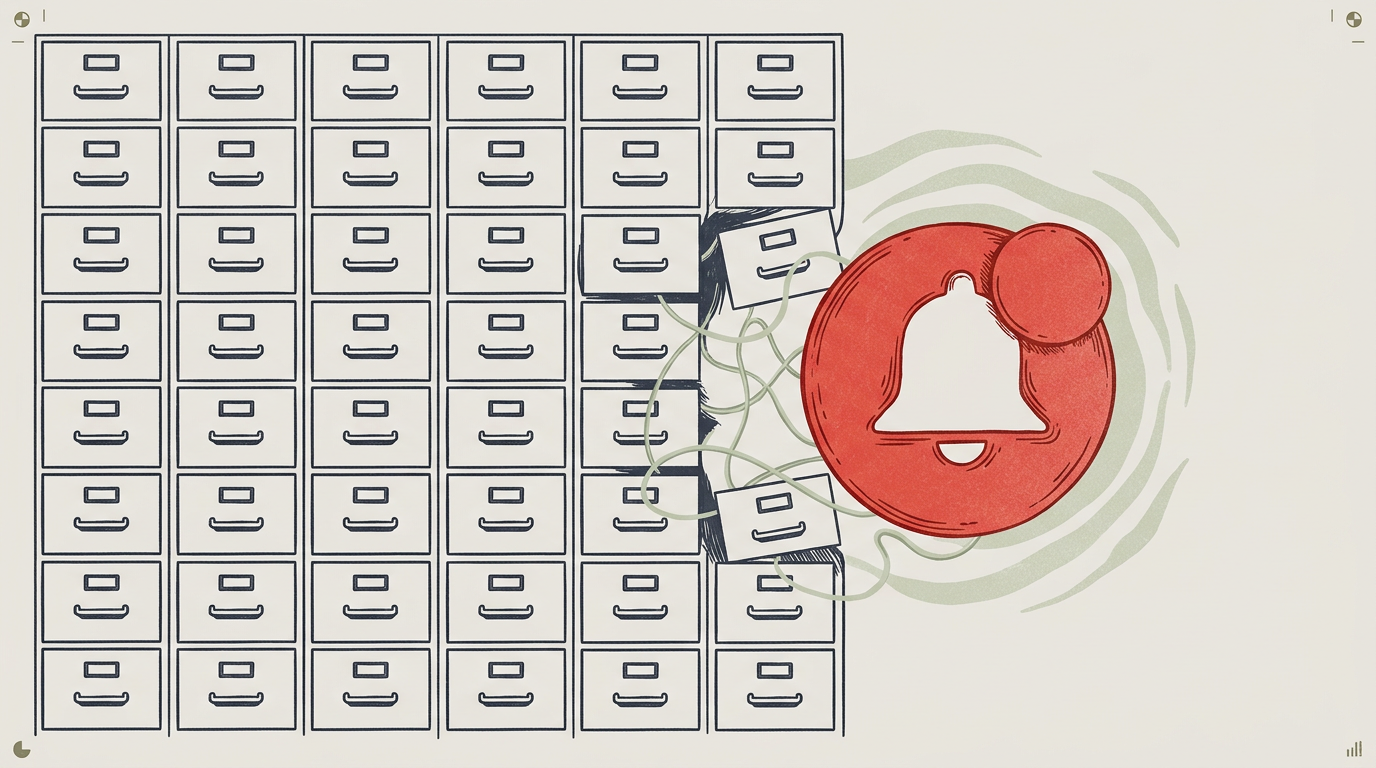
I used to believe my inability to focus on a Friday afternoon was a discipline issue. I would sit staring at a screen while the little red dots multiplied, trying to force my brain to care about a strategy document. The standard corporate advice for this friction is to embrace asynchronous work and turn all notifications off permanently. I’ve stopped recommending this. Complete silence just replaces the anxiety of the interruption with the anxiety of the void. Unregulated exteroceptive load drives the friction in your inbox.
You know the exact physical sensation of a poorly managed digital channel. It’s the tight chest when the laptop chimes, the open fridge with no hunger, the jaw that won't unclench while you stare at a flashing icon. You feel anxious for no reason every time the phone lights up, scanning for emergencies that do not exist. By late afternoon, you are tired but wired, unable to look at a screen but too agitated to step away. Your shoulders live up by your ears in the shower. You wake up at 3am every night because your system is still bracing for a message that never arrives.
Common Questions
What is exteroceptive load?
It is the total volume of sensory information your nervous system has to process from the outside world. Sounds, lights, movement, and digital alerts are all exteroceptive inputs. When this volume is high and unpredictable, the body reads the environment as fundamentally unsafe.
Why do digital notifications trigger a physical response?
Each ping forces your attention-switching machinery to activate. Because your brain does not know the content of the message before reading it, it treats the interruption as a potential threat. It initiates a microscopic stress response to prepare you for action.
Does going asynchronous solve the problem?
No. Complete silence creates a different kind of vigilance. Sending a question into a void and waiting 24 hours for a reply forces the system to stay on high alert for the answer. The nervous system requires predictability to downregulate, not isolation.
The architecture of the threat response
Kokorology tend to treat digital communication as a purely intellectual exercise. You read the words, you type the words, you close the window. The reality is that your stress response machinery is beautifully, brutally dumb. The HPA axis—the control loop running from your brain to your adrenal glands—evolved to handle acute physical threats. It lacks a setting for "annoying but not life-threatening."
When a notification appears, the brain has to make a split-second decision about safety. Without context, it defaults to a low-grade alert. A tiny release of cortisol. A subtle shift in breathing. A slight elevation in heart rate. Your #urgent channel is not impressed by your elevated heart rate, by the way. Over time, this constant low-grade activation changes your baseline state. The capacity to handle friction narrows. You snap at the dog. You forget the word for spatula.
I see this constantly in coaching sessions. People assume they are failing at their jobs. In reality, this is exactly what successfully adapting to a chaotic sensory environment looks like: a system permanently guarded.
The locus coeruleus and the high-gain state
Let’s look at the actual machinery. Deep in the brainstem sits a tiny cluster of neurons called the locus coeruleus. This is the hub of the brain's salience network. It constantly scans the room, deciding what matters and what can be ignored. It is why a baby’s cry cuts through the noise of a crowded restaurant.
An unpredictable, high-volume environment of digital pings trains the locus coeruleus to be pathologically vigilant. It learns that a demand could materialise from anywhere, at any moment. This forces the system into a high-gain state, where every stimulus seems highly salient. The static gets louder. You can't focus on the actual work because your brain is busy scanning for the next potential interruption. It is the physiological equivalent of trying to read a novel while someone stands behind you, randomly shouting your name every thirty to ninety seconds.
The degradation of your concentration is a predictable biological outcome. I break the literature on this down inside the Library.
Allostatic load and the narrowing pipe
The physical wear-and-tear of this vigilance is called allostatic load. This happens when the body is forced to constantly adapt to chronic, low-level stressors. Each tiny cortisol spike from a ping adds to the pressure in the system.
This is a measurable biological reality. The result looks like brain fog. It looks like irritability. It looks like the heavy, dragging exhaustion that hits at 2pm. The pipe is simply narrower. The nervous system is working so hard to manage the unpredictable environment that there is no capacity left for complex thought.
Complete silence just replaces the anxiety of the interruption with the anxiety of the void.
Kokorology often try to solve this by purchasing noise-cancelling headphones and hoping for the best. Trying to meditate your way out of a hostile sensory environment is a losing game. The environment itself has to change.
Designing for predictability
The nervous system actually handles communication beautifully. Unpredictable demands on its resources are what cause the damage. The intervention is governance. This requires team-wide agreements rather than individual willpower.
When a team establishes clear rules of engagement, the threat level drops. If everyone knows that urgent requests go into a specific channel, and that standard messages will not be checked until 1pm, the locus coeruleus can stand down. The vigilance is no longer necessary. The system can repair faster than it burns out.
I used to think setting these boundaries made me look inflexible. Now I understand it is basic structural engineering for the human body. Treat it as infrastructure, or it's just theatre.
What to do this week
- Turn off the non-essential chimes. Go into your settings and disable sound and banner notifications for everything except direct messages.
- Implement a three-block check-in. Commit to clearing your communications three times a day: morning, after lunch, and before signing off. Put these blocks on your calendar.
- Draft a predictability charter. Propose two new rules of engagement to your team. For example: all non-urgent pings expect a four-hour response time.
- Practise an active down-regulation. Step away from the screen once a day to shift the physical state. The Physiological Sigh is highly effective for clearing acute arousal.
Where this fits in the Kokorology system
Managing sensory input is a core component of nervous system regulation. While you can use micro-practices from the Hacks catalog to manage the acute spikes in arousal, the deeper work is architectural. Kokorology teach leaders how to design predictable, low-threat communication environments inside the Performance L2 certification.
Closing
The constant state of digital alert is a design flaw, not a required element of modern work. Your fatigue is a readout from a system under sustained, pointless siege. The next move is to stop reacting to the noise and start defining the structure.
- Work through these patterns in the Journal.
- Build structural capacity for your team in Performance L2.
- Start the groundwork with the free guide to nervous system regulation.
TL;DR
The constant, unpredictable stream of notifications creates an unregulated exteroceptive load. This triggers the HPA axis and trains the brain’s salience network into a state of hypervigilance. Over time, this vigilance creates high allostatic load, wearing down your physical capacity and shrinking your ability to focus. Predictable rules of engagement, rather than asynchronous silence, allow the nervous system to safely stand down.
Sources
- Khalsa SS, et al. (2018). Interoception and mental health: a roadmap. Biological Psychiatry: Cognitive Neuroscience and Neuroimaging.
- Aston-Jones G, Cohen JD (2005). An integrative theory of locus coeruleus-norepinephrine function: adaptive gain and optimizing performance. Annual Review of Neuroscience.
- Epel ES, et al. (2024). Caregiver Load and Telomere Attrition: A 10-Year Longitudinal Study. Molecular Psychiatry.
- Kivimäki M. (2018). Work stress and risk of death in men and women with and without cardiometabolic disease: A multicohort study. The Lancet Diabetes & Endocrinology.